In a salon, cleaning removes dirt, debris, and some germs using soap and water, making surfaces look visibly clean but not killing all germs. Disinfecting uses chemical agents to kill most bacteria, viruses, and fungi on surfaces, which is essential for areas touching clients. Sterilizing, the highest level, destroys all microbial life, including spores, often used for tools that penetrate the skin. Understanding these differences helps guarantee client safety—keep exploring to learn how to apply these practices correctly.
Key Takeaways
- Cleaning removes dirt and debris but doesn’t kill germs; it prepares surfaces for effective disinfection or sterilization.
- Disinfecting uses chemicals to kill most bacteria, viruses, and fungi on surfaces, reducing infection risks.
- Sterilizing destroys all microbial life, including spores, and is essential for tools that penetrate the skin or contact sterile areas.
- Proper technique and adherence to instructions are crucial for all sanitation steps to ensure safety and effectiveness.
- Combining cleaning, disinfecting, and sterilizing maintains hygiene, prevents cross-contamination, and protects client and staff health.
Maintaining a clean and safe salon environment is essential for protecting your clients and staff from infections. When you understand the differences between cleaning, disinfecting, and sterilizing, you can better guarantee customer safety and keep your equipment in top condition. Each step plays an important role in creating a hygienic space and preventing the spread of germs and bacteria.
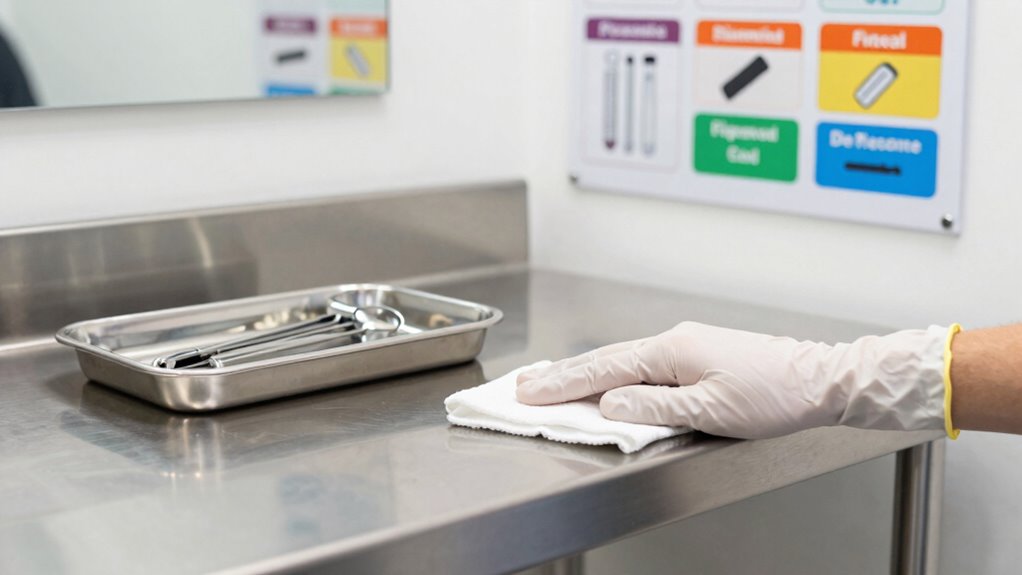
Cleaning is the first line of defense. It involves removing dirt, debris, and some germs from surfaces and tools using soap and water or a detergent. This process doesn’t kill germs but makes the surface visibly clean, which is critical because organic matter can shield bacteria and viruses from disinfectants. Regular cleaning helps maintain equipment and tools, preventing buildup that could compromise their effectiveness or lead to cross-contamination. It’s the foundation for all subsequent disinfection and sterilization steps, so you should always start here. Proper cleaning also helps ensure that disinfectants and sterilizers work effectively since residual dirt can hinder their action. Additionally, using appropriate cleaning techniques reduces the likelihood of spreading contaminants between clients. Implementing proper cleaning methods also involves understanding the proper cleaning techniques, which are crucial for effective sanitation.
Disinfecting takes cleaning a step further. It involves applying chemical agents, such as EPA-registered disinfectants, to surfaces and tools to kill most bacteria, viruses, and fungi. Disinfection is especially essential for items that come into direct contact with clients or are used on multiple clients. When you disinfect properly, you reduce the risk of transmitting infections, safeguarding customer safety. It’s important to follow the manufacturer’s instructions, guaranteeing proper contact time and dilution, so the disinfectant is effective. Regular disinfecting also helps prolong the lifespan of your equipment by preventing the buildup of harmful microorganisms that can corrode or damage surfaces over time. Additionally, understanding proper sterilization techniques ensures the highest level of sanitation when necessary.
Sterilizing is the highest level of sanitation, aimed at destroying all forms of microbial life, including spores. This process is typically used for tools that penetrate the skin or come into contact with sterile areas, like manicure and pedicure tools. Autoclaves are common sterilizers in salons, using high-pressure saturated steam to eliminate all microorganisms. Proper sterilization is essential for customer safety, especially when dealing with invasive procedures. It requires meticulous attention to detail and adherence to safety protocols, but it’s necessary for preventing serious infections. By sterilizing your tools correctly, you guarantee that no harmful pathogens are transferred between clients. Furthermore, implementing sterilization protocols consistently is vital for maintaining high standards of hygiene and client trust.
EPA-registered disinfectant for salons
As an affiliate, we earn on qualifying purchases.
As an affiliate, we earn on qualifying purchases.
Frequently Asked Questions
How Often Should Salon Tools Be Sterilized?
You should sterilize salon tools after each client to maintain proper tool maintenance and guarantee infection control. Regular sterilization prevents the spread of bacteria, fungi, and viruses, reducing health risks. For reusable tools like scissors or forceps, sterilize them before reuse. Always follow your salon’s protocols and manufacturer instructions, and incorporate sterilization into your routine to keep clients safe and uphold high hygiene standards.
Are All Disinfectants Safe for Salon Use?
While some disinfectants are effective for salon use, not all are safe. You must prioritize chemical safety and proper equipment maintenance to protect clients and staff. Look for disinfectants approved by health authorities, ensuring they’re labeled for salon environments. Avoid harsh chemicals that could cause skin or respiratory issues. Always follow manufacturer instructions and regularly verify that disinfectants are suitable for your specific tools and surfaces, maintaining a safe, hygienic space.
What’s the Difference Between Sanitizing and Disinfecting?
Sanitizing reduces surface contamination to safe levels by using milder chemicals, making it ideal for items like towels or salon tools. Disinfecting, on the other hand, kills more germs and is necessary for surfaces with frequent contact. You must prioritize chemical safety and follow instructions carefully; improper disinfectants can pose health risks. Always choose the right method based on the surface and potential contamination to keep your salon safe and clean.
Can Cleaning Remove All Germs and Bacteria?
Cleaning alone can’t remove all germs and bacteria because it primarily targets surface contamination, like dirt and debris. While cleaning improves chemical efficacy for disinfectants, it doesn’t kill all pathogens. To effectively eliminate germs and bacteria, you need to disinfect after cleaning. Disinfection reduces microbial presence, ensuring safety, especially in a salon setting where hygiene directly impacts client health.
Which Methods Are Best for Salon Equipment?
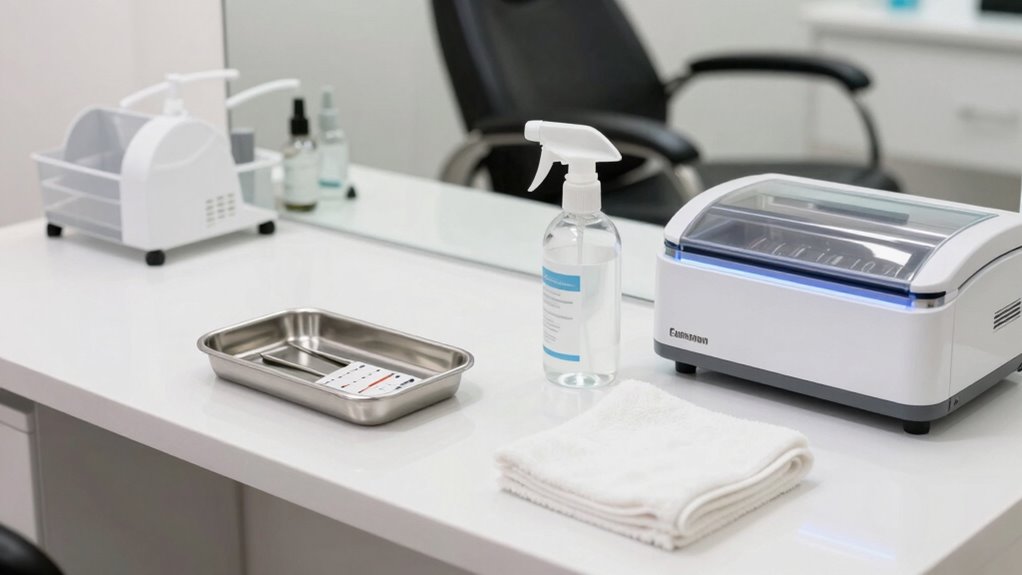
Sure, using just a cloth might seem enough, but for salon equipment, you need stronger methods. UV sterilization is a tech-savvy way to zap germs, while chemical disinfectants provide thorough coverage. Combining these guarantees your tools are truly safe for clients. Don’t rely on just one; a mix of UV and disinfectants guarantees your equipment stays spotless, healthy, and professional—because no one wants a surprise germ party on their chair.
Conclusion
Understanding the differences between cleaning, disinfecting, and sterilizing helps you maintain a safer salon environment. Did you know that proper disinfection and sterilization can reduce the risk of infections by up to 99%? By implementing these practices consistently, you’re not only protecting your clients and staff but also boosting your salon’s reputation. Remember, staying informed and diligent in your hygiene routines guarantees a healthier, safer space for everyone who walks through your doors.