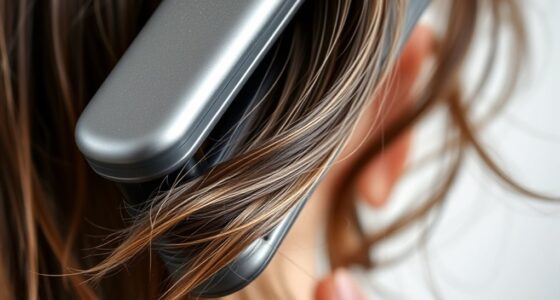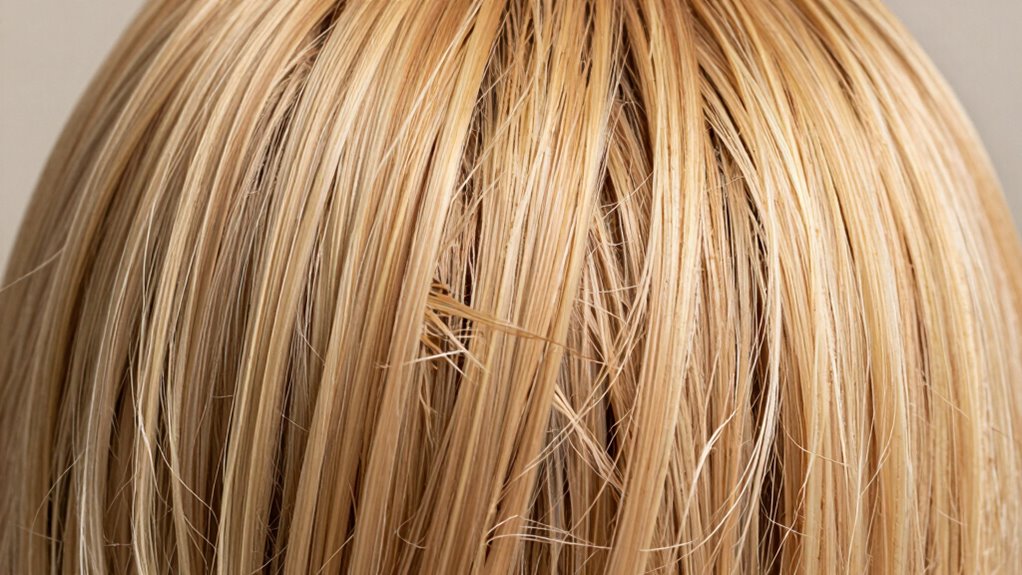

Your hair ends are usually in worse condition than your roots because they’ve endured more chemical damage, environmental stress, and aging effects over time. Chemical treatments like dyeing and bleaching weaken the strands, especially at the ends, making them dry, brittle, and prone to breakage. Environmental factors and heat styling also cause uneven fading and damage. If you want to understand how to improve your hair’s health and bring some balance, keep going.

Get beauty and skincare favorites delivered free with Prime
- Fast, free delivery on millions of items
- Prime Video, Amazon Music and more included
- Member-only deals all year
Key Takeaways
- Chemical treatments and heat styling weaken and dry the ends more than the roots, causing uneven condition.
- Hair ends are older, more exposed, and less elastic, making them more prone to damage and deterioration.
- Sun exposure and environmental factors accelerate fading and dryness at the ends compared to the protected roots.
- Regular trims and deep conditioning help restore moisture and improve the uniformity between ends and roots.
- Proper hair care, including minimizing heat and using moisturizing products, maintains consistent condition throughout the hair.
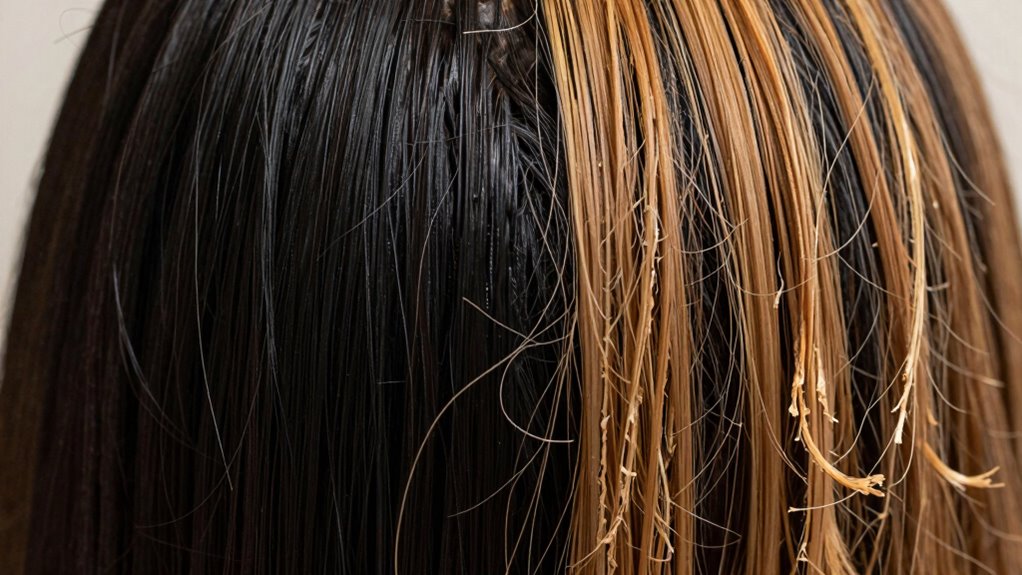
If you’ve ever noticed that your hair ends look completely different from your roots, you’re not alone. Many people see a stark contrast in their hair’s condition from the scalp to the tips. The reason for this mismatch comes down to how your hair ages and the different treatments it endures over time.
Hair ends often look different from roots due to aging and various treatments over time.
One major factor is hair color. When you dye or bleach your hair, the chemical process can weaken the strands, especially at the ends, which are older and more vulnerable. Your roots, being newer growth, tend to hold color better and remain more vibrant and intact. Over time, the ends can fade, become dull, or develop a different hue due to exposure to sunlight, heat styling, and environmental contaminants. This uneven fading creates the illusion of a mismatch in hair color, making your ends look less lively compared to your roots.
However, hair condition isn’t solely about color — hair elasticity plays a vital role as well. Hair elasticity refers to your hair’s ability to stretch without breaking. As hair ages, especially with repeated chemical treatments or heat styling, its elasticity diminishes. The ends, being older, have endured more stress and are often less elastic than the roots. When your hair loses elasticity, it becomes more prone to breakage and split ends, further contributing to a damaged appearance at the tips. Meanwhile, the roots are typically healthier, more elastic, and better able to withstand styling and environmental damage.
The cumulative effects of chemical treatments, heat styling, and environmental exposure cause the ends to become drier, more brittle, and less elastic over time. This deterioration affects not only how your hair looks but also how it feels and behaves. You might notice your ends feel rough or break easily, while your roots remain smooth and resilient. Recognizing that hair aging plays a significant role can help you better tailor your hair care routine. Understanding that chemical treatments can accelerate damage emphasizes the importance of protective practices for healthier hair. Additionally, incorporating protective styling and minimizing heat exposure can help preserve your hair’s condition and reduce damage at the tips. Regularly using moisturizing products also helps counteract dryness and restore some elasticity to your ends.
Implementing preventative care strategies, such as regular deep conditioning treatments, can also significantly improve the overall health of your hair ends. The key to addressing this mismatch lies in understanding that your hair isn’t uniform in age or condition. Regular trims help remove damaged ends, restoring uniformity in appearance. Deep conditioning treatments and products that boost elasticity can also improve the health of your ends, making them less prone to breakage and dullness. Ultimately, embracing a routine that caters to your hair’s unique needs can bring your entire head of hair closer in condition, making your color and elasticity more consistent from root to tip.
deep conditioning hair mask for damaged ends
As an affiliate, we earn on qualifying purchases.
As an affiliate, we earn on qualifying purchases.
Frequently Asked Questions
Can Hair Dye Cause Mismatched Ends and Roots?
Yes, hair dye can cause mismatched ends and roots. When you dye your hair, color fading happens over time, especially at the ends, making them look lighter or uneven. Additionally, improper application or frequent coloring can lead to root damage, which affects how your hair absorbs color. This mismatch is often due to differences in hair condition and exposure to chemicals, so maintaining proper care helps keep your color consistent.
How Often Should I Trim My Ends?
You should trim your ends every 6 to 8 weeks to prevent split ends from worsening and to promote healthy hair growth. Regular trims help keep your hair looking fresh and prevent damage from traveling up the strand. If your ends are especially damaged or prone to splitting, you might want to trim more frequently. Consistent care guarantees your hair stays healthy, shiny, and balanced in condition.
Do Hair Treatments Affect Root and End Health Differently?
Yes, hair treatments can affect your root and end health differently. While treatments like deep conditioners boost scalp health, they often don’t reach the split ends, leaving them vulnerable. This discrepancy can create a surprising gap in your hair’s condition, making it seem like your roots are thriving while your ends suffer. Keep an eye on split ends and prioritize targeted treatments to guarantee both your scalp and ends stay healthy.
Can Diet Impact the Condition of My Hair Ends?
Yes, your diet can impact the condition of your hair ends. Proper nutrition supports hair growth and keeps your ends healthy. Nutritional deficiency, especially lacking vitamins and minerals like biotin, zinc, and iron, can lead to brittle, dry ends that break easily. Eating a balanced diet rich in fruits, vegetables, and protein helps nourish your hair from root to tip, promoting stronger, healthier ends and overall hair health.
Is It Normal for Hair Color to Fade Faster at the Ends?
Yes, it’s normal for hair color to fade faster at the ends. Hair fading occurs because the ends are older and more exposed to environmental damage, making them more porous and prone to losing pigment. Root discoloration stays vibrant longer because the roots are newer and less exposed. To prevent uneven fading, consider regular deep conditioning, using color-protecting products, and minimizing heat styling, which can accelerate pigment loss.
Conclusion
So, next time you notice your ends are dull while your roots shine, remember—they’re like separate stories of your hair’s journey. Your roots tell one tale of health and energy, while your ends reveal the wear of time and neglect. By nurturing both, you create harmony—a seamless narrative from root to tip. Don’t let neglect write your story. Instead, give each part the love it deserves, and watch your hair tell a unified, lively tale.
Halloween Picks
halloween
As an affiliate, we earn on qualifying purchases.