Glycolic acid's the ultimate game-changer in skincare, and it's known for its powerful exfoliating properties. By breaking down dead skin cells, it promotes a smoother texture and a brighter complexion. You'll find that it stimulates collagen production, helping to reduce fine lines and improve firmness. Many use it to tackle issues like acne and hyperpigmentation as well. Start with lower concentrations to avoid irritation, and remember to monitor your skin's reaction. There's so much more to uncover about how glycolic acid can fit into your routine and boost your skincare journey.

Get beauty and skincare favorites delivered free with Prime
- Fast, free delivery on millions of items
- Prime Video, Amazon Music and more included
- Member-only deals all year
Key Takeaways
- Glycolic acid promotes deep exfoliation, enhancing skin texture and revealing a smoother complexion by accelerating cell turnover.
- It stimulates collagen production, helping to reduce fine lines and firm the skin for a more youthful appearance.
- Glycolic acid effectively clears clogged pores, making it a beneficial treatment for acne and preventing future breakouts.
- The acid reduces hyperpigmentation and evens skin tone, targeting issues like sunspots and melasma for a brighter complexion.
Understanding Glycolic Acid

Glycolic acid, the smallest alpha-hydroxy acid, penetrates your skin effectively to promote deep exfoliation and enhance texture.
This powerful ingredient works by breaking down the bonds between dead skin cells, which accelerates cell turnover. As a result, you can notice improvements in skin texture, reduced hyperpigmentation, and diminished fine lines and acne scars.
Incorporating essential oils like lavender oil can complement your skincare routine by promoting relaxation and overall well-being.
Glycolic acid comes in various concentrations, typically ranging from 5% to 30%. If you have sensitive skin, it's vital to start with lower concentrations to minimize irritation.
The ideal pH for glycolic acid is around 4; higher pH levels can reduce its exfoliating properties and skin penetration capabilities.
Key Benefits for Skin

One of the standout benefits of using glycolic acid in your skincare routine is its ability to greatly enhance skin texture and promote a radiant complexion. As an alpha hydroxy acid (AHA), glycolic acid boasts powerful exfoliating properties that effectively remove dead skin cells, revealing smoother and brighter skin underneath. This process not only improves skin texture but also stimulates collagen production, helping to firm your skin and reduce the appearance of fine lines.
Incorporating natural elements, such as essential oils through aromatherapy techniques, can complement the effects of glycolic acid by promoting relaxation and enhancing overall skin health.
Glycolic acid is also an excellent acne treatment, as it clears clogged pores and diminishes acne lesions. By preventing future breakouts, it's a game-changer for those struggling with acne-prone skin.
Additionally, its ability to reduce hyperpigmentation makes glycolic acid particularly effective in addressing sunspots and uneven skin tone, further enhancing your skin radiance.
Even if you have sensitive skin, regular use of glycolic acid in concentrations of 5-10% can minimize irritation while providing significant benefits.
Incorporating glycolic acid into your routine can lead to a noticeable transformation, making your skin look healthier and more youthful.
Recommended Usage Guidelines
When you start using glycolic acid, stick to a low concentration of 5-10% and limit your applications to just 1-2 times a week.
It's essential to monitor how your skin reacts and adjust the frequency as needed, ideally capping it at 1-3 times per week for the best results.
Remember, consistency is key, so pay attention to your skin's response throughout your routine.
It's beneficial to incorporate mindful practices to enhance your overall skincare routine, as holistic lifestyle approaches can improve skin health.
Start Low Concentration
To minimize irritation, it's best to start with glycolic acid at lower concentrations of 5-10%. This is especially essential if you have sensitive skin.
By beginning your journey with glycolic acid, you'll help your skin adapt gradually, allowing it to build tolerance over time. Using it 1-2 times a week is recommended at first, enabling your skin to adjust without overwhelming it.
Always conduct a patch test before full application to verify compatibility and monitor for any potential irritation.
Once you feel comfortable, you can gradually increase the frequency of use to 2-3 times per week for best results.
When applying glycolic acid, do so on cleansed skin at night, and follow up with a moisturizer to enhance its effectiveness. This routine also minimizes sun sensitivity, protecting your skin during the day.
Frequency of Application
After you've established a tolerance for glycolic acid, it's important to understand the recommended frequency of application to maximize its benefits while minimizing irritation.
If you have sensitive skin, start with lower concentrations of glycolic acid (5-10%) and limit use to 1-2 times a week. This approach helps reduce irritation as your skin adjusts.
Once your skin tolerance improves, you can gradually increase the frequency to 1-3 times per week for ideal results.
Apply glycolic acid to cleansed skin at night, as its exfoliating properties can increase sun sensitivity, making daytime use less advisable.
Always incorporate a broad-spectrum sunscreen with SPF 30 during the day to protect your skin from UV radiation. This is vital since glycolic acid can heighten your skin's sensitivity.
Monitor Skin Response
Monitoring your skin's response to glycolic acid is crucial for determining the right usage guidelines tailored to your individual needs. Start with lower concentrations (5-10%) and limit usage to 1-2 times per week, especially if you have sensitive skin. This approach minimizes irritation while you're monitoring skin response.
As your skin builds tolerance, you can gradually increase the frequency to 1-3 times per week. After each application, keep an eye out for signs of irritation, such as redness or excessive peeling. Adjust your routine accordingly based on your skin's reaction.
Using a skincare journal can be beneficial for tracking how your skin responds over time. Document your frequency, concentration, and any irritation experienced to refine your regimen.
| Skin Response | Recommended Action |
|---|---|
| No irritation | Gradually increase use |
| Mild irritation | Reduce frequency |
| Severe irritation | Discontinue use |
Regularly re-evaluate your skin condition, especially when introducing new active ingredients or during seasonal changes. This proactive approach guarantees your skincare routine remains effective and safe.
Safe Ingredient Combinations
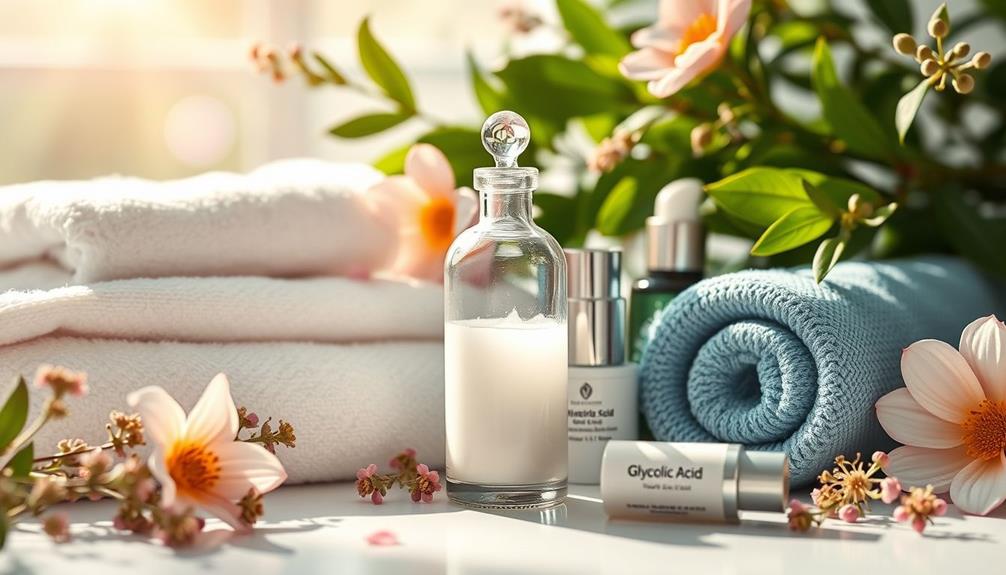
What ingredients can you safely combine with glycolic acid to enhance your skincare routine?
You'll find that combining glycolic acid with hyaluronic acid is a great choice. Hyaluronic acid helps retain moisture and reduces potential irritation from exfoliation.
Another excellent pairing is niacinamide, which soothes the skin and improves barrier function while addressing issues like hyperpigmentation and uneven skin tone.
Peptides also complement glycolic acid by promoting collagen synthesis, enhancing its anti-aging effects while minimizing dryness and irritation.
When incorporating glycolic acid into your regimen, it's best to avoid mixing it with strong actives like retinoids, benzoyl peroxide, or salicylic acid, as doing so can lead to excessive irritation.
After applying glycolic acid, consider using ceramide-rich moisturizers. These products help reinforce your skin barrier and mitigate any dryness caused by the exfoliation process.
Research and Clinical Insights
Recent clinical research highlights the significant benefits of glycolic acid in skincare, particularly in improving skin texture and reducing hyperpigmentation. Clinical studies demonstrate that glycolic acid can enhance epidermal renewal, leading to increased viable epidermal thickness and improved skin elasticity.
This ingredient effectively targets issues like melasma, especially mixed and epidermal forms, while showing limited effectiveness on dermal melasma.
Chemical peels using glycolic acid, particularly at higher concentrations, have shown promising results in skin rejuvenation. For instance, a study comparing 70% glycolic acid peels with other treatments for striae distensae revealed its strong potential in improving skin appearance.
Additionally, glycolic acid boosts collagen production in a concentration-dependent manner, meaning that higher concentrations, such as 25%, yield more significant increases in total collagen levels.
Emerging pilot studies indicate that combining glycolic acid with other active ingredients, like tranexamic acid, may enhance its efficacy in treating melasma and various skin conditions.
Future Trends in Skincare

The future of skincare is evolving rapidly, with personalized formulations and innovative delivery systems set to revolutionize how ingredients like glycolic acid are used to address individual skin concerns.
You'll likely see a surge in personalized skincare, thanks to advancements in genetic research that allow for products tailored specifically to your skin type and unique needs. This approach maximizes the effectiveness of glycolic acid and other active ingredients.
Innovative delivery systems, such as liposomes and nanoparticles, promise enhanced penetration and stability in topical formulations, improving outcomes for users like you.
Additionally, expect to find more products combining glycolic acid with complementary ingredients like niacinamide and peptides, creating synergistic effects that promote overall skin health.
Moreover, the rise of clean beauty is influencing the formulation of glycolic acid products, focusing on naturally derived sources and reducing harmful additives.
Ongoing studies are delving into the long-term effects and best concentrations of glycolic acid, paving the way for safe and effective use across diverse skin types.
As these trends unfold, you can look forward to skincare that's not only more effective but also aligns with your values and specific needs.
Frequently Asked Questions
What Are the Benefits of Glycolic Acid in Skincare?
Glycolic acid offers numerous skincare benefits, including improved texture, reduced hyperpigmentation, and enhanced collagen production. You'll likely notice smoother skin, fewer breakouts, and diminished fine lines with consistent use. Your complexion will glow!
What Is the Biological Importance of Glycolic Acid?
Think of glycolic acid as a gardener for your skin. It aids in cell renewal, boosts collagen, and enhances elasticity. By breaking down dead cells, it fosters a healthier, smoother complexion you'll love to show off.
Does Glycolic Acid Rebuild Collagen?
Yes, glycolic acid does rebuild collagen. By stimulating fibroblasts, it boosts collagen production, improving skin texture and reducing fine lines. Regular use enhances cellular turnover, supporting ongoing collagen regeneration for firmer, more youthful skin.
Is Glycolic Acid Good for Aging Skin?
Yes, glycolic acid's exfoliating properties help rejuvenate aging skin. It boosts collagen production, improves texture, and reduces fine lines, giving your skin a firmer, more youthful appearance when used consistently in your routine.
Conclusion
Incorporating glycolic acid into your skincare routine can be like planting seeds for a radiant garden.
With its powerful exfoliating properties and ability to boost collagen, you're not just treating your skin; you're nurturing it.
By following the recommended guidelines and combining it wisely with other ingredients, you can reveal a brighter, smoother complexion.
As research continues to disclose its potential, you're on the brink of a skincare revolution that promises to elevate your beauty game.
Halloween Picks
halloween
As an affiliate, we earn on qualifying purchases.