
To follow the complete hair oiling checklist, start by understanding your hair type, porosity, and scalp sensitivity to select suitable oils. Prepare your hair by cleaning and detangling to make certain of even application. Apply warm oil evenly to your scalp and strands with gentle massaging techniques, and leave it on for the ideal time, depending on your routine. Finish with proper washing and hair care practices. Keep exploring these steps to achieve healthier, shinier hair with fewer issues.
Key Takeaways
- Understand your hair type, porosity, and scalp sensitivity to personalize oil selection and application methods.
- Choose appropriate oils and warm them slightly to enhance absorption and target specific hair needs.
- Apply oil gently using fingertips, focusing on scalp and roots, with massages to stimulate blood flow and absorption.
- Follow a consistent timing and washing routine, using gentle shampoos and proper drying techniques to maintain hair health.
- Maintain overall scalp and hair care with regular massages, protective styles, and avoiding harsh chemicals or heat styling.
Understanding Your Hair Type and Needs
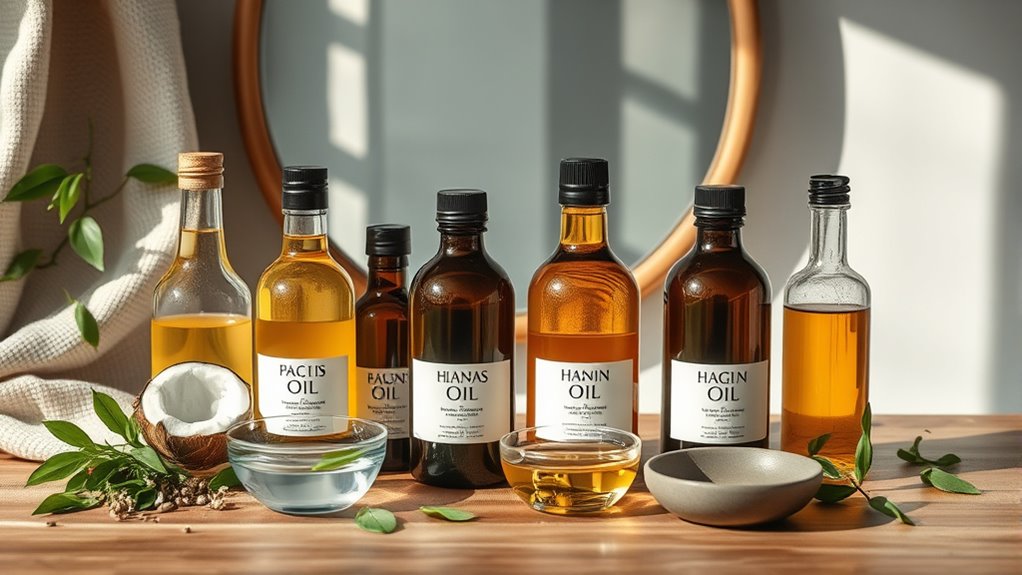
Understanding your hair type is vital before you start oiling. Knowing your hair porosity helps determine how much oil your strands can absorb—high porosity hair needs lighter oils, while low porosity hair benefits from heavier, penetrating oils. Additionally, evaluating scalp sensitivity is important. If your scalp is sensitive or prone to irritation, choose gentle oils that won’t clog pores or cause discomfort. For example, sensitive scalps often respond better to lighter oils like argan or jojoba, rather than heavier castor oil. Recognizing these factors ensures you select oils that nourish without causing issues. Tailoring your approach based on your hair’s porosity and scalp sensitivity will lead to healthier, more manageable hair with fewer problems.
Selecting the Right Oils for Your Hair

Choosing the right oil depends on your hair type and what nutrients it needs. Some oils work better for nourishing, while others focus on strengthening or moisture. Let’s explore popular options and how they match your hair’s unique requirements. For instance, understanding different hair oil benefits can help you select the most suitable oil for your hair care routine.
Hair Type Compatibility
Ever wonder which oils work best for your hair type? Choosing the right oil depends on your hair’s texture and needs. If you have fine or thin hair, opt for lightweight oils like argan or jojoba that won’t weigh you down. Those with curly or coarse hair benefit from richer oils such as coconut or castor, which help with moisture and manageability. For hair dyeing or frequent hair styling, select oils that protect and nourish without stripping color or causing buildup. Fine hair needs less dense oils, while thicker hair can handle more intensive treatments. Understanding your hair type guarantees you don’t clog follicles or weigh your hair down, making oiling more effective and tailored to your specific needs.
Nutrient Benefits Overview
Selecting the right hair oils involves more than just matching them to your hair type; it’s about choosing oils that deliver essential nutrients to strengthen, hydrate, and protect your strands. The right oil enhances your hair nutrient intake and promotes scalp nourishment, leading to healthier hair. Imagine applying oils that:
- Penetrate deeply, nourishing each strand from root to tip
- Boost moisture, leaving your hair soft and shiny
- Deliver antioxidants to fight damage and aging
- Strengthen hair fibers, reducing breakage
- Soothe the scalp, calming irritation and dryness
- Incorporate insights from AI-driven data analysis to select the most effective oils for your unique needs
Popular Oil Options
Are you overwhelmed by the variety of hair oils available? Don’t worry—there are popular options suited to different needs. Coconut oil is a classic for deep nourishment, while argan oil adds shine and softness. Castor oil promotes hair growth, and jojoba mimics natural scalp oils. To personalize your treatment, consider exploring essential oil blends—like rosemary and peppermint—to stimulate your scalp. You can also create DIY oil recipes by mixing these oils with carrier oils to target specific concerns. For example, blending tea tree oil with coconut oil helps combat dandruff. Choosing the right oils depends on your hair type and goals, so experiment with different combinations to find what works best for you. These options provide a versatile foundation for effective hair oiling routines and maintaining healthy hair.
Preparing Your Hair and Scalp Before Oiling

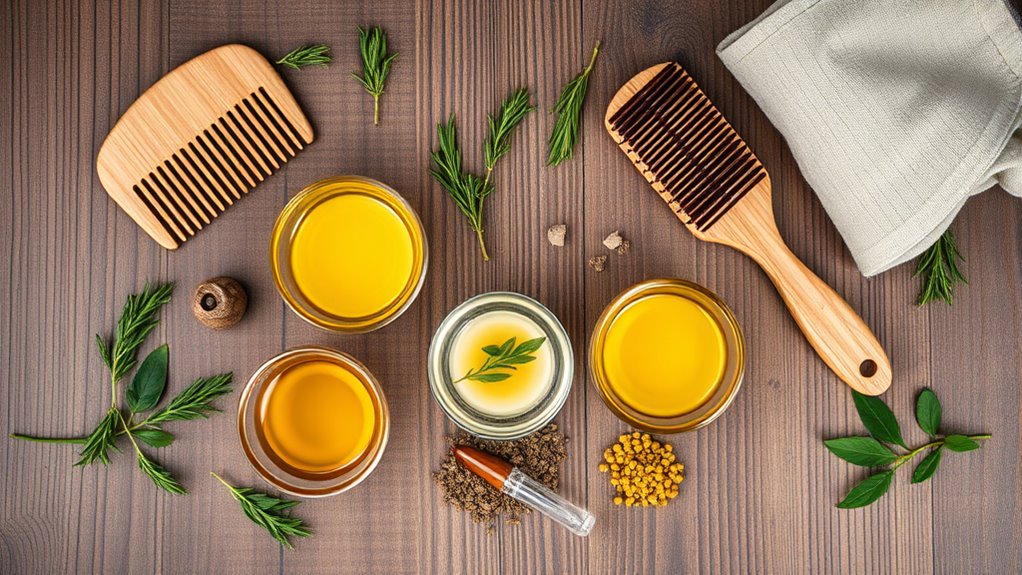
Before applying oil, it’s important to prepare your hair and scalp to guarantee maximum absorption and effectiveness. Start with scalp cleansing to remove dirt, excess oil, and product buildup, ensuring a fresh base. Next, gently detangle your hair to prevent breakage and make oil application easier. Consider a warm towel wrap to open hair cuticles, enhancing oil absorption. Use a wide-tooth comb to evenly distribute natural oils and reduce knots. Finally, make sure your scalp is dry and free of moisture to avoid diluting the oil’s benefits. Recognizing the importance of spiritual connection in love can also motivate a positive mindset during your routine. Visualize a clean, tangle-free scalp, ready to soak up nourishing oils for healthier, shinier hair. Proper preparation sets the perfect stage for effective hair oiling.
Proper Technique for Applying Hair Oil
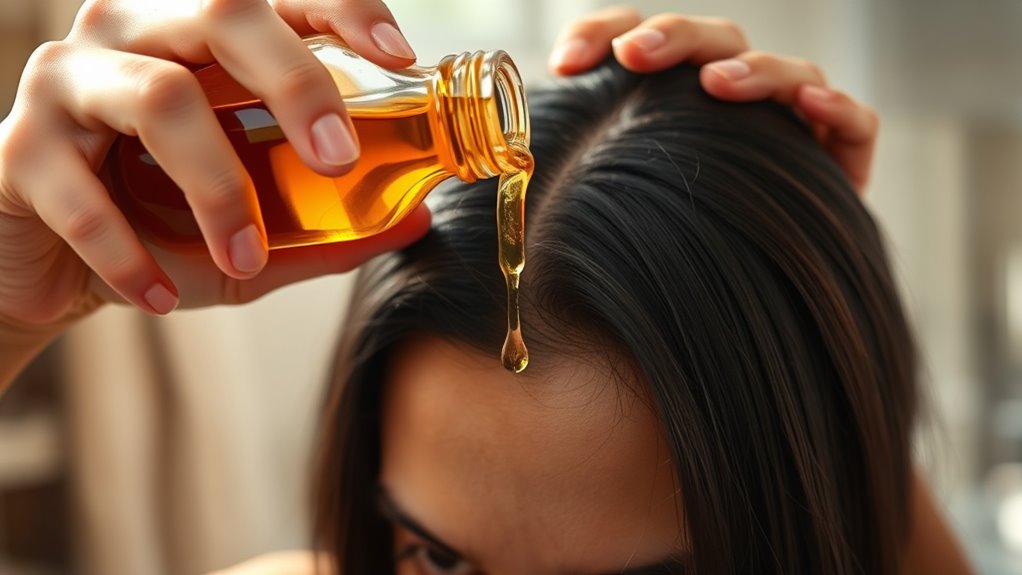
To get the best results, warm your hair oil slightly before applying it. Use gentle, circular motions to massage the oil into your scalp, ensuring even coverage. This method helps stimulate blood flow and allows your hair to absorb the nutrients more effectively.
Warm Oil Application Techniques
Applying warm hair oil correctly can substantially enhance its benefits. To do this, make sure the oil is warm but not hot, maintaining a comfortable oil temperature to avoid scalp burns. Warm oil helps open hair cuticles and improves absorption. When applying, focus on the scalp and roots, distributing the oil evenly. Imagine:
- Gently warming the oil until it feels comfortably warm to the touch
- Testing the oil on your wrist to check the scalp temperature
- Pouring small amounts for better control
- Massaging the oil into your scalp in circular motions
- Using a wide-tooth comb to spread the oil through your hair evenly
Gentle Massaging Methods
Gently massaging the oil into your scalp guarantees better absorption and stimulates blood circulation. Use your fingertips to apply light pressure, moving in circular motions across your scalp. This technique promotes a scalp detox by loosening buildup and encourages healthier hair growth. Be careful not to apply too much pressure, as aggressive rubbing can cause irritation. As you massage, verify the oil reaches your roots evenly, enhancing nutrient penetration. Proper oil storage techniques, like keeping your oil in a cool, dark place, preserve its quality and effectiveness. Consistent, gentle massage not only maximizes benefits but also transforms your hair oiling routine into a relaxing self-care ritual. Remember, patience and proper technique are key to achieving luscious, healthy hair. Incorporating pinball as a fun way to unwind can also help reduce stress, which benefits overall hair health.
Best Timing and Frequency for Oiling

Choosing the right time and frequency for oiling your hair can make a significant difference in its health and appearance. The ideal hair oil duration varies based on your scalp type and hair condition, but generally, sticking to an optimal oiling schedule yields the best results. Incorporating personalized recommendations based on your unique hair needs can further enhance the benefits of hair oiling. Imagine these scenes:
- Applying oil early morning before your day begins
- Oiling twice a week for dry scalp relief
- Shorter sessions of 30 minutes for fine hair
- Longer, overnight treatments for deep nourishment
- Consistent routine to prevent over-oiling or under-oiling
Massage Tips to Enhance Oil Absorption
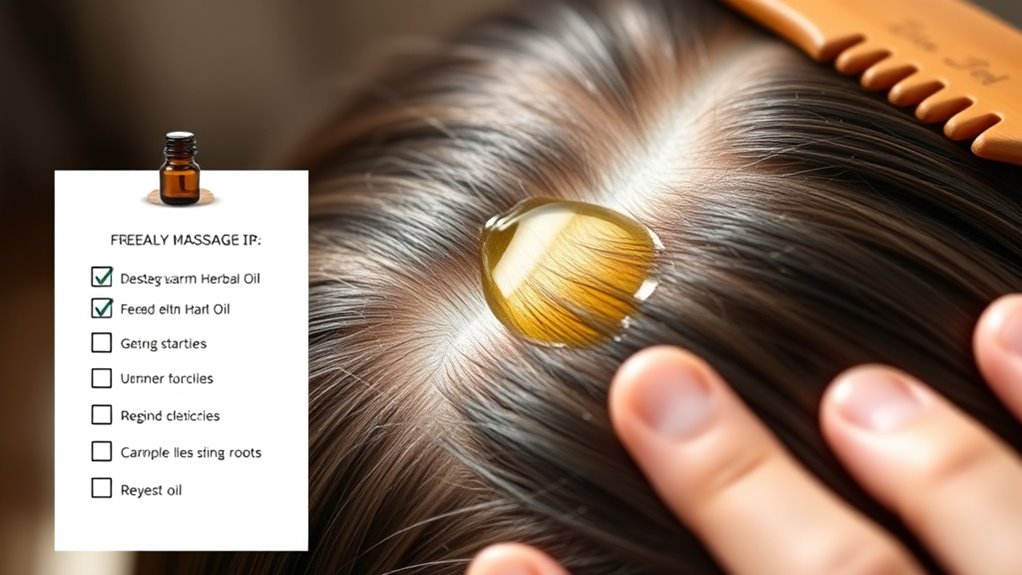
To maximize the benefits of your hair oil, massaging your scalp effectively is essential. Use the right scalp pressure and finger techniques to improve absorption and stimulate hair growth. Light, circular motions with your fingertips help distribute oil evenly while increasing blood flow. Avoid pressing too hard, as excessive pressure can damage follicles. Instead, focus on gentle yet firm movements to encourage oil penetration. Incorporating proper massage techniques can further enhance the effectiveness of your hair oil treatment.
Washing and Post-Oiling Hair Care
After you finish oiling your hair, it’s important to wash it properly to remove excess oil and prevent buildup. Use lukewarm water and a gentle shampoo suited for your hair color to avoid fading or dullness. Focus on the scalp, massaging lightly to lift the oil, then rinse thoroughly. Be mindful of hair accessories like clips or bands; remove them beforehand to prevent tangling. As you rinse, imagine the oil washing away, revealing shiny, vibrant hair. After washing, gently pat your hair dry with a soft towel—avoid rubbing. Finish with a light conditioner if needed, especially if your hair has a delicate color or texture. Proper post-oiling care keeps your hair healthy, shiny, and free from residue. Incorporating gentle hair care practices can also help maintain your hair’s natural shine and health.
Additional Tips for Maintaining Healthy Hair
Maintaining healthy hair goes beyond proper washing and oiling techniques; it also involves adopting daily habits that support hair strength and shine. You should be mindful of hair styling practices, avoiding excessive heat or tight styles that strain your scalp. Prioritize scalp health by massaging regularly and using gentle products. To help you stay on track, here’s a quick guide:
| Tip | Benefit |
|---|---|
| Limit heat styling | Prevents damage and breakage |
| Use gentle shampoos | Keeps scalp clean without irritation |
| Avoid tight hairstyles | Reduces tension and scalp stress |
Implementing these habits ensures your hair remains resilient, shiny, and healthy from root to tip. Incorporating hydrotherapy techniques such as scalp soaking or warm water rinses can further promote scalp health and hair vitality.
Frequently Asked Questions
Can Hair Oil Help With Scalp Conditions Like Dandruff or Dryness?
Yes, hair oil can help with scalp conditions like dandruff and dryness. When you regularly oil your scalp, it boosts scalp hydration, which can reduce dryness and flakiness. Oils like coconut or tea tree have antifungal and soothing properties that promote dandruff relief. Consistent oiling nourishes your scalp, keeps it moisturized, and helps control dandruff, leaving your hair healthier and more comfortable.
Are There Any Scalp or Hair Types That Should Avoid Certain Oils?
Like a delicate garden, your scalp and hair need tailored care. If you have an oily scalp, avoid heavy oils like castor or coconut that may clog pores. Curly hair benefits from lighter oils such as argan or jojoba to prevent weighing down curls. Recognize your unique nature, and choose oils wisely to nurture your scalp and hair, avoiding reactions or build-up.
How Long Should I Leave Oil in My Hair Before Washing?
You should leave oil in your hair for about 30 minutes to 2 hours, depending on your hair type and oil absorption rate. If you have oily or fine hair, sticking to 30 minutes prevents greasiness, while dry or thick hair benefits from longer durations. To maintain healthy hair, adjust your washing frequency accordingly, ensuring you don’t overwash or underwash, which can affect oil retention and scalp health.
Can Hair Oil Promote Hair Growth or Prevent Hair Loss?
Hair oil benefits include promoting hair growth and preventing hair loss, but don’t fall for hair growth myths that suggest overnight results. Regular oiling nourishes your scalp and strengthens hair roots, helping you see healthier growth over time. Keep consistent with your routine, and remember, while oil can support hair health, it’s not a magic fix for all hair loss issues. Patience and proper care are key.
Is It Safe to Use Homemade Hair Oils or Mixtures Regularly?
Imagine a gentle stream of warm homemade mixtures softly nourishing your scalp, but you should be cautious. Regularly using homemade hair oils is generally safe if you refrain from chemical additives. Always test small patches first to prevent allergic reactions, and choose natural ingredients. If you notice irritation or discomfort, stop use immediately. Staying mindful ensures your hair stays healthy and radiant while enjoying the benefits of your homemade blends.
Conclusion
Now that you’ve got this complete hair oiling checklist, you’re all set to nurture your hair like a true modern-day Rapunzel. Remember, consistency is key—think of it as your own personal Renaissance, where healthy, shiny hair becomes your crown. Stick to the right oils, apply with care, and enjoy the process. With patience and these tips, your hair will thank you and shine brighter than a knight’s armor!