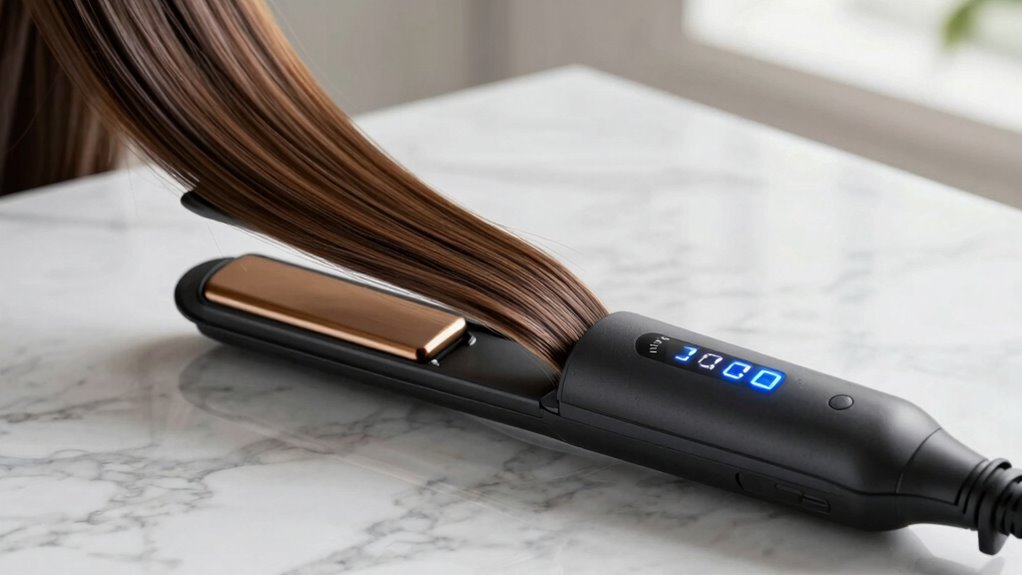
To protect your hair’s length, aim to use the lowest effective temperature on your styling tools, typically between 300°F and 350°F. For fine or damaged hair, keep it even lower, around 250°F to 300°F. Avoid cranking your tools to maximum heat, as it causes irreversible damage over time. Proper heat control and protective measures help maintain your hair’s length and health; keep exploring to learn more about best practices.

Get beauty and skincare favorites delivered free with Prime
- Fast, free delivery on millions of items
- Prime Video, Amazon Music and more included
- Member-only deals all year
Key Takeaways
- Use the lowest effective temperature, typically between 300°F and 350°F, to style hair safely.
- Fine or damaged hair should be styled at 250°F to 300°F to prevent breakage.
- Avoid maximum heat settings; increase gradually if higher temperatures are necessary.
- Regularly trim ends to prevent split ends caused by heat damage.
- Apply heat protectant products to create a barrier and minimize long-term damage.
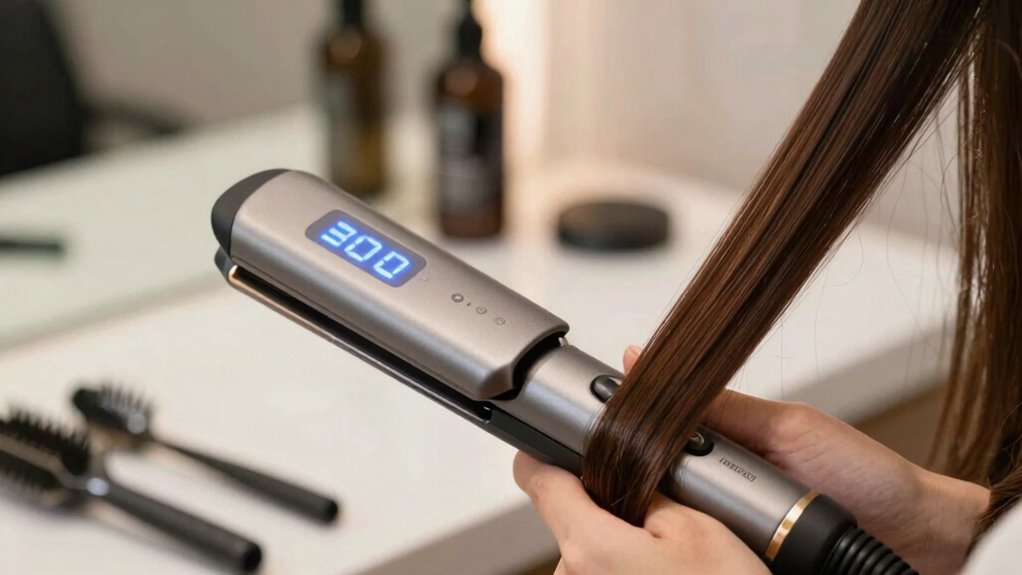
Using the right temperature setting on your hair tools is essential to maintaining healthy hair. When you don’t regulate the heat properly, you risk exposing your strands to unnecessary heat damage, which can lead to breakage, split ends, and dullness. The key is understanding how temperature regulation plays a role in protecting your hair’s length while still achieving your desired style. High heat may seem like a quick fix for stubborn curls or sleek straightening, but it often comes at the cost of your hair’s health. Every strand has a limit for how much heat it can tolerate before it becomes compromised. That’s why setting your tools at the right temperature isn’t just a matter of comfort—it’s a fundamental step in preventing long-term damage.
A common mistake is cranking up the heat to the maximum setting, especially if you’re in a hurry. However, even a few seconds of exposure to excessive heat can cause irreversible damage to your hair’s cuticle, leading to weakened fibers and increased brittleness. To better protect your hair, understanding the heat tolerance of different hair types can help you make informed choices about styling. Adjusting your styling techniques to suit your hair’s specific needs is another important aspect of healthy hair maintenance. Using proper heat protection products before styling can provide an additional barrier against heat damage. Additionally, regular trimming can help prevent split ends and maintain hair length, especially when using heat styling tools frequently. It’s also beneficial to be aware of heat distribution, as uneven heat can cause localized damage and weaken strands over time. Instead, focus on adjusting your tools to the lowest effective temperature. For most hair types, a temperature between 300°F and 350°F is sufficient for styling without risking heat damage. Fine or damaged hair benefits from even lower temperatures, around 250°F to 300°F, to avoid further harm. Thicker, coarser hair may require slightly higher settings, but it’s best to start low and increase gradually if necessary. Remember, the goal is to find a balance—enough heat to style effectively but not so much that it damages your hair.
As an affiliate, we earn on qualifying purchases.
Frequently Asked Questions
How Often Should I Adjust My Hair Tool Temperature?
You should adjust your hair tool temperature whenever your hair feels a bit too hot or starts showing signs of damage, like dryness or breakage. Keep heat protection in mind and aim for consistent temperature settings to prevent unnecessary damage. Regularly check your tool’s heat level, especially if you’re switching between different hair types or styles, to maintain temperature consistency and protect your hair’s health.
Does the Type of Hair Affect the Ideal Temperature Setting?
It’s true that hair type influences the ideal temperature setting. Thinner, more heat-sensitive hair requires lower temperatures to prevent damage, while thicker or coarser hair can often withstand higher heat. You should adjust your styling tool based on your hair texture and heat sensitivity. Investigating this helps you protect your hair’s health, ensuring you use just enough heat to style effectively without risking unnecessary damage or breakage.
Can Using Lower Heat Damage Hair Over Time?
Using lower heat can protect your hair from damage over time because it reduces heat penetration, which minimizes the risk of weakening hair strands. Your hair porosity plays a role here—higher porosity hair absorbs heat more quickly, so lower temperatures are better. Consistently applying lower heat settings helps prevent long-term damage, keeping your hair healthier, stronger, and less prone to breakage.
What Are Signs My Hair Is Being Damaged by Heat?
If your hair shows signs of heat styling damage, you might notice brittle, dry strands or split ends. It could feel rough or look dull and lack shine. You may also see increased breakage or hair that doesn’t hold curls or styles well. These are clear indicators your hair is suffering from heat damage. To prevent further harm, use lower heat settings and always apply a heat protectant before styling.
Are There Specific Tools Better for Protecting Hair Length?
Think of your hair as a delicate garden, and your tools as gardeners. Use tools with built-in heat protection features to shield your plants from damage. Opt for ceramic or tourmaline tools—they distribute heat evenly and lessen hot spots. Regular tool maintenance, like cleaning and checking temperature settings, keeps the heat gentle. These choices help preserve your hair’s length, ensuring your garden remains lush and vibrant over time.
Conclusion
Remember, your hair’s health depends on respecting the temperature rule—think of it as a shield that guards your length. By keeping your styling tools within the recommended range, you’re not just preventing damage; you’re investing in beautiful, resilient hair that tells your story. Don’t let high heat be the villain in your hair care journey. Instead, be the hero who chooses wisdom over damage—because your length deserves nothing less than the best.
Halloween Picks
halloween
As an affiliate, we earn on qualifying purchases.