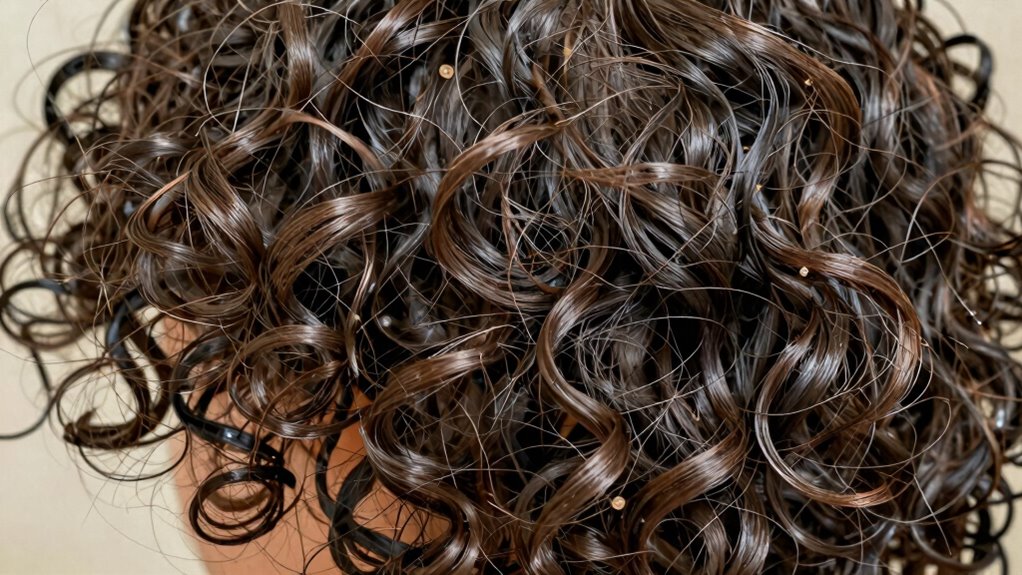

If your hair won’t hold a curl, it’s likely due to its structure and how chemical treatments or damage have altered it. Chemically processed hair tends to lack elasticity and moisture, making curls less resistant and more prone to falling flat. Also, your hair’s porosity affects how well it absorbs and retains moisture, influencing curl longevity. External factors like humidity further challenge curl retention. Explore further to discover how adjusting your routine can improve stubborn curls.

Get beauty and skincare favorites delivered free with Prime
- Fast, free delivery on millions of items
- Prime Video, Amazon Music and more included
- Member-only deals all year
Key Takeaways
- Chemical treatments weaken hair’s structural integrity, reducing elasticity and making curls less resistant to hold.
- High porosity hair absorbs moisture quickly but also loses it fast, impairing curl retention.
- External factors like humidity cause curls to loosen or frizz, affecting curl longevity.
- Proper styling products and techniques tailored to hair type enhance curl durability.
- Damaged or processed hair has diminished strength, making it harder for curls to maintain their shape.
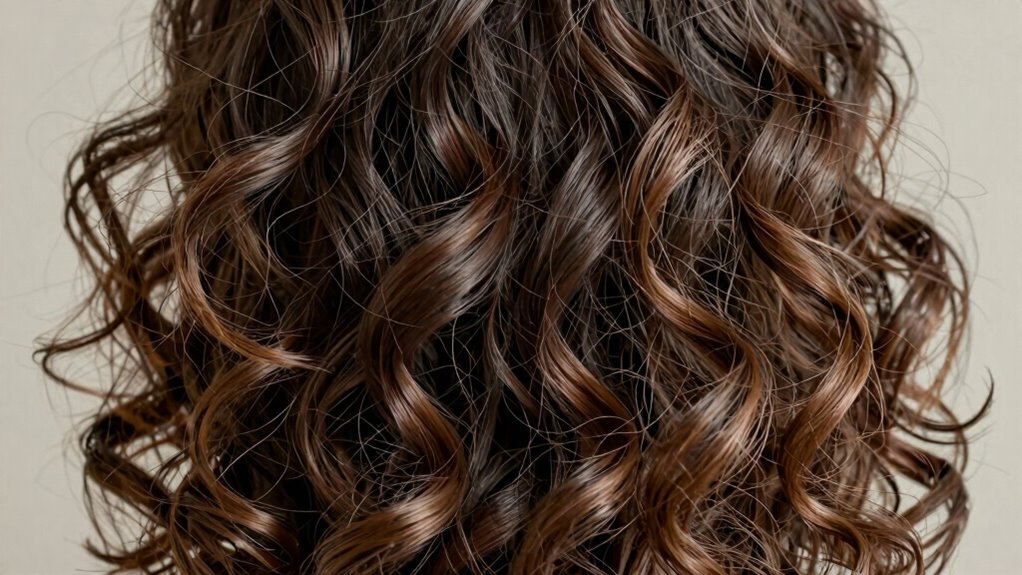
If your curls fall flat just moments after styling, you’re not alone. Many people struggle with hair that refuses to hold a curl, and understanding the science behind it can help you find better solutions. Several factors influence whether your curls stay in place, but two key elements are chemical treatments and hair porosity. Chemical treatments like relaxing or relaxing and perming alter the hair’s structure, often making it more resistant to holding curls. If your hair has undergone these treatments, it might lack the natural elasticity needed to maintain a curl, leading to a limp appearance soon after styling. You might notice that chemically treated hair feels different—possibly drier or more brittle—because these treatments strip away some of your hair’s natural moisture and strength. As a result, your hair’s ability to hold a curl diminishes, especially if you’re not using the right styling products or techniques. Additionally, hair porosity plays a vital role in how well your curls last. Porosity refers to your hair’s ability to absorb and retain moisture. High-porosity hair, which often results from damage caused by chemical treatments or heat styling, tends to absorb moisture quickly but also loses it just as fast. This makes it difficult for curls to set and stay in place because the hair cannot maintain the moisture needed for a defined curl. Conversely, low-porosity hair resists absorbing moisture altogether, making it challenging for styling products to penetrate and hold a curl effectively. Medium porosity is usually the most manageable, but even then, external factors like humidity and product buildup can influence curl longevity. Understanding your hair porosity can help you select the right products and techniques to improve your styling results. Recognizing how external factors such as humidity impact your hair can help you adapt your styling routine for better curl retention. Your hair’s porosity is influenced by genetics and external factors, so understanding your hair type can help you choose the right products and techniques. For high-porosity hair, lightweight products that lock in moisture and provide hold, like mousses or gels, can help improve curl retention. For low-porosity hair, you might need to use warm water or heat to open the cuticles before applying styling products. Chemical treatments can also alter your hair’s porosity, either increasing or decreasing it, which impacts how well your curls hold. Some styling methods, such as diffusing or wrapping hair while damp, can also influence curl formation and longevity. If your hair has been chemically treated, it’s essential to adjust your styling routine accordingly, using products formulated for damaged or processed hair. Knowing the role of external factors like humidity and environmental exposure can also make a significant difference in maintaining your curls. Ultimately, knowing the role of chemical treatments and hair porosity helps you understand why your curls don’t last and guides you toward tailored solutions. Whether it’s switching to more nourishing products, adjusting your styling methods, or giving your hair time to recover from chemical processing, being informed empowers you to get better-looking, longer-lasting curls.
best curl holding styling products for damaged hair
As an affiliate, we earn on qualifying purchases.
As an affiliate, we earn on qualifying purchases.
Frequently Asked Questions
Can Diet Affect Hair Curl Retention?
Yes, your diet can affect hair curl retention. Nutritional deficiencies, like lacking biotin, iron, or zinc, weaken hair strands, making curls fall flat. Hormonal imbalances, such as those from stress or thyroid issues, also impact hair texture and curl hold. Eating a balanced diet rich in vitamins and minerals supports healthy hair, helping your curls stay defined longer. Proper nutrition and managing hormones are key for maintaining your desired curl pattern.
Do Environmental Factors Impact How Long Curls Last?
Environmental factors are like weather patterns for your curls—they can make or break their hold. Humidity fluctuations cause your hair to swell or shrink, weakening curls, while pollution effects coat strands with particles that weigh them down. When you step outside, these elements challenge your hairstyle’s longevity. To protect your curls, consider anti-humidity sprays and regular clarifying washes, helping your hair resist nature’s unpredictable mood swings.
Is Hair Porosity Related to Curl Hold?
Yes, hair porosity affects how well curls hold. Higher porosity hair absorbs moisture quickly, making curls more prone to losing shape, while low porosity hair resists moisture, helping curls stay longer. Many porosity misconceptions exist, but understanding curl permeability is key. When you know your hair’s porosity, you can choose the right products and techniques to enhance curl retention and avoid common issues like limp or frizzy curls.
Can Hair Treatments Weaken Curl Longevity?
You get what you pay for, and that’s true for hair treatments too. Chemical damage and product buildup can weaken your hair’s structure, making it harder for curls to hold. Overuse of harsh chemicals or heavy products strips natural oils and damages bonds, reducing curl longevity. To keep your curls bouncing, opt for gentle treatments and clarify your hair regularly, so your curls stay defined and lively.
How Does Hair Texture Influence Curl Retention?
Your hair texture, specifically the hair fiber and curl pattern, plays a big role in how well curls hold. Coarser hair fibers tend to retain curls longer because they’re thicker and less prone to frizz. Conversely, finer hair fibers might struggle with curl longevity. Curl pattern also matters—tight curls usually hold better than loose waves. Understanding your hair fiber and curl pattern helps you choose the right products for longer-lasting curls.
Conclusion
Now that you understand the science behind hair that won’t hold a curl, you’re better equipped to troubleshoot your styling struggles. Remember, hair isn’t a one-size-fits-all, much like the unpredictable weather of a Victorian London morning. By choosing the right products and techniques, you can turn your hair into a canvas of perfect, long-lasting curls—no need to rely on magic, just science and patience. So, go ahead, style with confidence and enjoy your flawless locks!
Halloween Picks
halloween
As an affiliate, we earn on qualifying purchases.