
TL;DR

Get beauty and skincare favorites delivered free with Prime
- Fast, free delivery on millions of items
- Prime Video, Amazon Music and more included
- Member-only deals all year
A Glamour UK guide featuring professional makeup artists recommends applying foundation in thin layers with a clean, slightly damp sponge. The artists describe tapping or bouncing the sponge over product first placed on the hand and applied to the face, then adding coverage only where needed.
Glamour UK has published a step-by-step guide to applying foundation with a makeup sponge, drawing on advice from New York-based professional artists Christian Briceno, Tim Quinn and Kasey Spickard. The method centers on a clean, slightly damp sponge and light layers, offering readers a way to blend foundation and add coverage selectively rather than applying an even, heavy layer across the face.
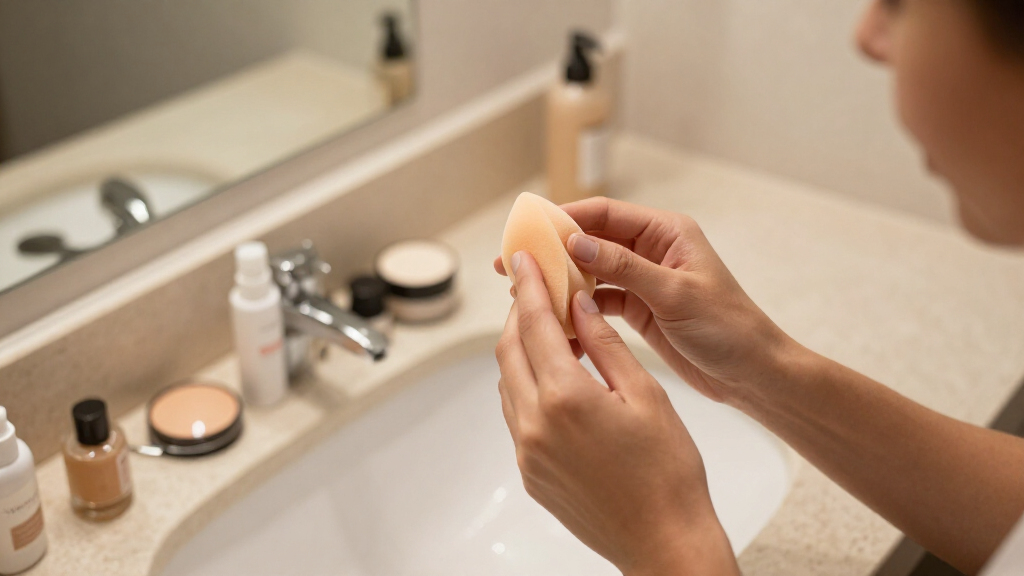
The guide recommends starting with a slightly damp, not saturated sponge. Quinn advises wetting the sponge, squeezing out excess water and pressing it in a clean towel. The report says the artists it consulted cautioned that a dry sponge can leave foundation looking patchy or streaky, while Quinn said a dry tool may be useful for more concentrated coverage but is less suited to a soft finish.
For application, Quinn suggests placing a few drops of foundation on the back of the hand to control the amount. He then recommends picking up product with a foundation brush and dotting it onto the centre of the face before working outward. The next step is to use the sponge’s rounded end to tap or bounce the product into the skin, adding more only in areas that need it. Spickard recommends a bouncing or stippling motion to blend without lifting away too much coverage.
The sponge’s pointed end can help reach areas around the nose and beneath the eyes, Quinn says. He also recommends using leftover product on the tool along the jawline and hairline to soften the edges. The guide advises beginning with a clean sponge, repeating the process until the desired coverage is reached, and finishing with concealer where needed, setting powder and setting spray. It does not provide a test comparing the technique with other application methods.
A Layered Approach to Foundation
The advice matters to readers looking for a practical way to control how much foundation they apply and where it goes. Working in thin, buildable layers gives users the option to keep some areas sheer and add product elsewhere, rather than treating the whole face as needing identical coverage. The artists present this as a technique for blending and managing product, not as a guarantee of a particular wear time or finish.
Quinn says a sponge can soften makeup and help create a more seamless, natural-looking result. Briceno says the tool lets him blend areas with different levels of coverage and lift excess product without disturbing the rest of the makeup. Those are the artists’ professional assessments, not findings from a controlled comparison. For readers, the useful point is the sequence: use a little product, tap it in, and reassess before adding more.
Products Worth Considering

Philips Sonicare 5950 Rechargeable Electric Toothbrush with 2 Brush Heads, Navy

Oral-B iO Series 3 Rechargeable Electric Toothbrush for Adults, Black, with 2 Brush Heads and Travel Case

Oral-B iO Series 5 Rechargeable Electric Toothbrush with Travel Case and 3 Brush Heads, Black
As an affiliate, we earn on qualifying purchases.
How the Sponge Technique Works
The article distinguishes structured makeup sponges from the thin applicators sometimes included in makeup compacts. It also mentions beauty blenders and powder puffs, though its foundation instructions focus on a damp makeup sponge. The report favors liquid foundation for this approach and lists several products, but it does not establish that a particular brand or formula is necessary.
The technique pairs a brush with a sponge rather than asking the user to choose only one tool. The brush places small amounts of product near the centre of the face; the sponge then blends those dots outward. This reflects the guide’s broader emphasis on targeted coverage. The article also says a damp sponge may give a more natural appearance, while a dry sponge can concentrate coverage; these distinctions are attributed to Quinn and should be understood as expert guidance rather than universal results.
““What I particularly like about sponges is that they let me work with very thin layers, soften transitions between areas with more and less coverage, and gently lift excess product without disturbing the rest of the makeup.””
— Christian Briceno, celebrity makeup artist
Results Depend on Skin and Product
The source is a technique guide, not a clinical study or a head-to-head test of sponge, brush and finger application. It does not establish that a sponge will make foundation last longer for every wearer, or that the method prevents cracking, patchiness or other makeup issues. The source’s statements about a softer finish and wear are professional recommendations, and results may vary with formula, skin and application.
The material also does not specify a cleaning schedule for sponges, beyond recommending that users start with a clean tool to reduce the risk of bacteria buildup. It gives no product-by-product comparison and does not assess how the technique performs with every foundation formula. Readers should treat the listed products as examples from the guide, not as a tested ranking or a requirement for using the method.
A Technique Readers Can Test
The guide does not announce a product launch, study or follow-up test. Its next step for readers is practical: use a clean sponge, dampen and squeeze it out, start with a small amount of foundation and tap product into the skin. Add coverage gradually, using the pointed end for smaller areas, then decide whether setting powder or spray is needed for the desired finish.
Readers comparing tools can try the sponge method alongside their usual application routine and judge the result on their own skin and with their own foundation. The source offers no measured standard for wear time or coverage, so any conclusion about which tool works best remains personal rather than established by the report.
Key Questions
Should a foundation sponge be wet or dry?
The guide recommends using a slightly damp sponge, after squeezing out excess water. Quinn says a dry sponge may provide more concentrated coverage but is less suited to the soft finish he describes.
How should foundation be applied with a sponge?
Place a small amount of foundation on the back of your hand, dot it onto the centre of the face with a brush, then tap or bounce a damp sponge over the product. Work outward and build coverage only where wanted.
Why should the sponge be clean?
The guide recommends starting with a clean sponge to help limit bacteria buildup that can contribute to breakouts. It does not give a specific cleaning schedule.
Can a sponge replace a foundation brush?
In the method described, the tools have different jobs: a brush dots foundation onto the face, and the sponge blends it. The report does not establish that one tool is universally better than the other.
Source: rss