To maintain salon-quality color at home and prevent fading, wait 72 hours before washing your hair to let the color set. Use sulfate-free shampoos designed for color-treated hair, and rinse with cool water to close cuticles and lock in color. Limit washing to 2-3 times a week, and consider using dry shampoo to keep your roots fresh. Always apply heat protectant before styling and limit the use of hot tools. Finally, protect your hair from UV rays and chlorine by wearing hats or using UV sprays. By following these tips, you can keep your color vibrant and long-lasting. Learn more techniques to elevate your color care.
Key Takeaways
- Wait 72 hours after dyeing before washing hair to ensure color sets properly and cuticles close.
- Use sulfate-free shampoos and color-safe conditioners to minimize color stripping and enhance moisture.
- Rinse hair with cool water after washing to seal cuticles and lock in color vibrancy.
- Limit heat styling and use a heat protectant to prevent damage and fading of color-treated hair.
- Protect hair from UV rays and chlorine by using leave-in conditioners and wearing hats when outdoors or swimming.
Understanding Hair Color Fading
Understanding hair color fading is important for anyone looking to maintain vibrant, salon-quality hues. Hair color fading occurs naturally over time as the color molecules in your dye break down and wash out. Most dyes have an average lifespan of 4 to 6 weeks, so it's essential to know what accelerates fading.
Factors such as the air quality in your environment can also influence how well your hair color lasts; using an air purifier with effective filtration can help reduce pollutants that might affect your hair's vibrancy.
UV exposure from sunlight weakens the chemical bonds in your hair dye, leading to degradation and potential brassiness. To protect your color-treated hair, consider wearing hats or using UV protection sprays.
Frequent washing, especially with hot water, strips your hair of natural oils, making it crucial to limit washes to just 2-3 times a week.
Environmental factors like hard water, humidity, and pollution also contribute to hair color fading by impacting the hair's structure and cuticle integrity.
Additionally, chlorine from swimming pools can wreak havoc on your color, causing significant loss and dryness. By understanding these elements, you can take proactive steps to preserve your gorgeous hues and enhance the longevity of your hair color.
Pre-Dye Preparation Steps
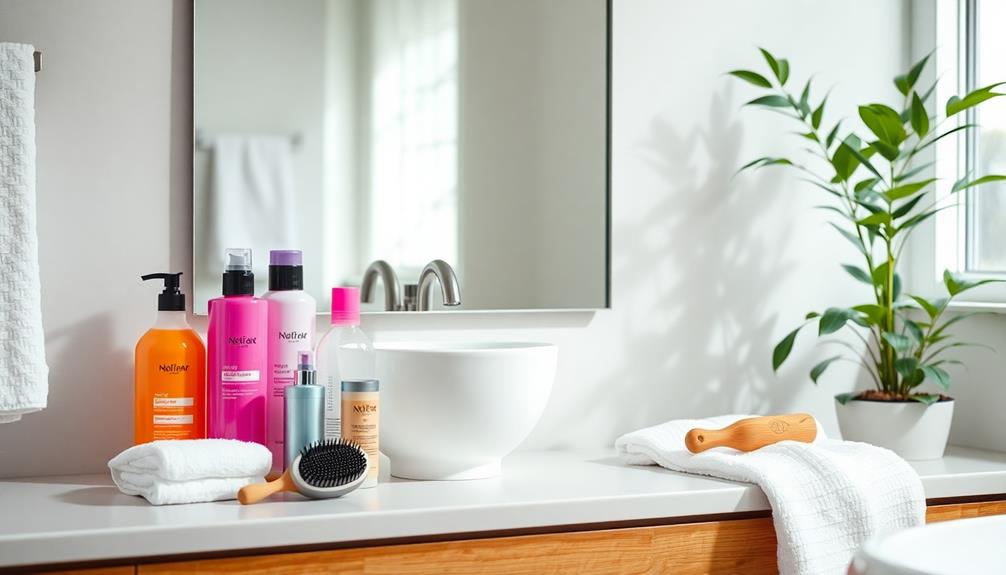
Preparing your hair before dyeing is vital to achieving vibrant, long-lasting color. Start with a patch test to confirm you won't have an allergic reaction to the hair dye. This step is essential for avoiding discomfort or damage during the coloring process.
The day before dyeing, use a clarifying shampoo to remove any product buildup. This cleans your hair and opens the cuticle, allowing for better color absorption. Additionally, understanding the importance of proper preparation can be compared to the due diligence required when considering an IRA rollover to gold, guaranteeing you achieve the best results.
Avoid washing your hair immediately before applying the dye; natural oils act as a protective barrier for your scalp, minimizing irritation.
Additionally, consider doing a deep conditioning treatment about a week prior. Strengthening your strands will enhance moisture levels and help the color adhere more effectively.
Ideal Post-Dye Care
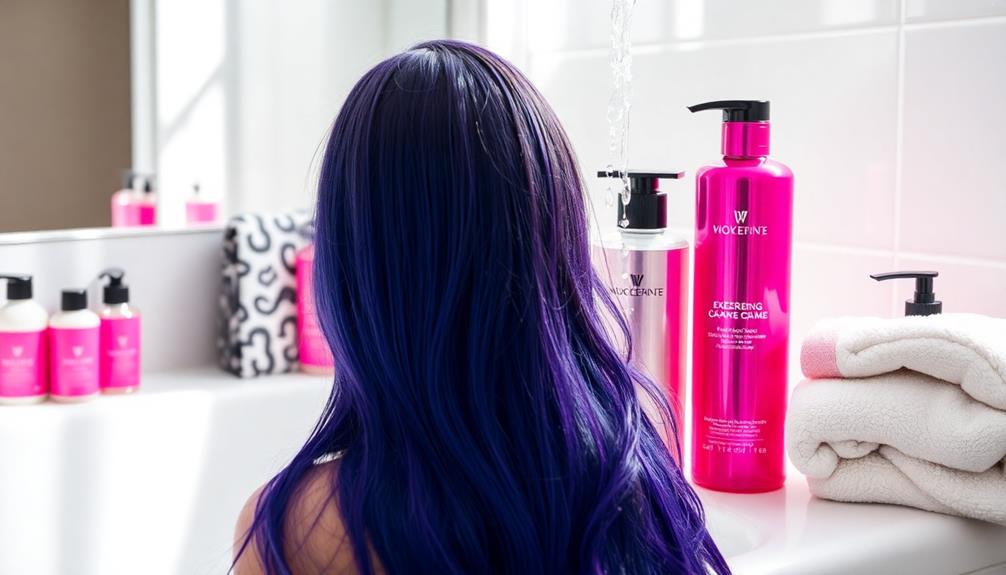
After dyeing your hair, you'll want to wait at least 72 hours before washing it to let the color set properly.
During this time, you might also consider sipping on certain teas, as specific teas increase serotonin production naturally, which can help elevate your mood and enhance your overall well-being.
Rinsing with cool water after washing helps seal the cuticles, locking in that vibrant hue.
Wait Before Washing
To keep your newly dyed hair looking vibrant, it's essential to wait at least 72 hours before washing it. This waiting period allows the hair cuticle to close, trapping the dye effectively and maximizing color retention.
While it might be tempting to wash your hair right away, doing so can strip your fresh hair color of its vibrancy. Additionally, using essential oils, such as rosemary oil, can promote scalp health and enhance the overall appearance of your hair.
Here are some key points to remember:
- Avoid Shampooing Immediately: Your hair needs time to absorb the dye, so skip the shampoo for the first few days.
- Limit Washes: Aim to wash your hair every 2-3 times a week. Frequent washing can strip natural oils and fade your color quickly.
- First Wash Goals: The initial wash should only aim to remove excess color. Rinsing with cool water helps seal the hair cuticle, enhancing color longevity.
- Let Your Hair Rest: For best results, allow at least a week before your first wash to fully lock in that fresh hair color.
Cool Water Rinses
Rinsing your hair with cool water is a simple yet effective step in maintaining vibrant, salon-quality color. When you use cooler temperatures after shampooing, you help close the hair cuticles, locking in color and enhancing shine. This not only contributes to longer-lasting vibrancy but also helps prevent fading, keeping your color-treated hair looking fresh and lively.
Additionally, using the best shampoos for highlighted hair can further support your color retention efforts. Studies show that a cool water rinse can greatly boost color retention compared to hot water washes, which tend to strip color and cause dullness. To optimize color preservation, make sure to follow up your shampoo with a cool water rinse for at least 30 seconds. This practice seals in the color and supports the integrity of your hair.
Incorporating cool water rinses into your hair care routine can lead to healthier-looking hair and improve color longevity, delivering those salon-quality results right at home.
Gentle Scalp Cleansing
While you might be enthusiastic to wash your hair right after dyeing it, giving your locks a break for at least 72 hours is essential for ideal color retention. This waiting period allows the cuticle to close, locking in your gorgeous new hue.
During this time, it's beneficial to align your mindset with feelings of confidence and self-acceptance, as these vibrations can enhance your overall beauty experience, much like the principles of vibrational alignment with youthfulness and energy.
When you're ready to cleanse, opt for gentle scalp cleansing techniques to keep your color-treated hair looking vibrant. Here are some tips:
- Choose sulfate-free shampoos: They're specifically formulated for color-treated hair and help minimize stripping of your hair's natural oils and color.
- Focus on your scalp: Apply shampoo mainly to your scalp and roots, using gentle massaging motions. This cleanses without stressing the mid-lengths and ends.
- Rinse with cool water: This seals the cuticle, locking in color and helping to enhance shine.
- Limit washing frequency: Stick to 2-3 times a week, using dry shampoo in between to manage oiliness while preserving color vibrancy.
Choosing the Right Products

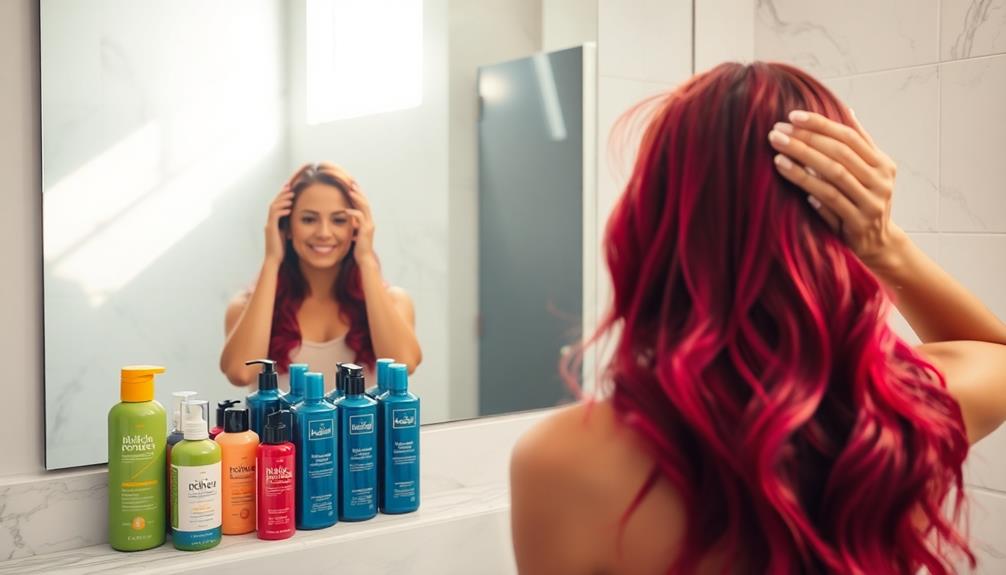
Choosing the right products is essential for maintaining your salon-quality color at home. Start with sulfate-free shampoos, like Christophe Robin Color Fixator Wheat Germ Shampoo, which won't strip your hair of its natural oils and help preserve color. Pair this with color-safe conditioners, such as Davines Alchemic Conditioners, to enhance vibrancy and keep your color-treated hair moisturized.
Here's a quick guide to help you choose the best products:
| Product Type | Recommendations |
|---|---|
| Sulfate-Free Shampoos | Christophe Robin Color Fixator Wheat Germ Shampoo |
| Color-Safe Conditioners | Davines Alchemic Conditioners |
| Moisturizing Treatments | Leave-in conditioners with argan oil |
Incorporate leave-in conditioners and hair masks containing moisturizing ingredients to restore shine while protecting your color. Be cautious of harsh chemicals, like alcohol and parabens, as these can lead to quicker color fading and hair damage. Finally, consider using color-depositing products, such as root concealers, to refresh and enhance your color between salon visits. These steps will help you enjoy vibrant, beautiful hair longer!
Proper Washing Techniques
Proper washing techniques are essential for preserving your salon-quality color. By following these tips, you'll help maintain the vibrancy of your color-treated hair and prevent fading. Using a best purple shampoo can also greatly help in neutralizing any brassy tones that may develop over time.
- Wait 72 Hours: After dyeing, don't shampoo for at least 72 hours. This allows the cuticle to close and trap the color, enhancing its longevity.
- Lukewarm Water: Use lukewarm water for washing. Hot water can lift the cuticle and cause fading, while cool rinses help seal it, locking in your color.
- Limit Washing: Aim to wash your hair only 2-3 times a week. In between washes, dry shampoo can be a lifesaver, preserving natural oils and preventing color stripping.
- Gentle Application: Apply shampoo primarily to your scalp and roots. Avoid the mid-lengths and ends to minimize color loss. Use gentle massaging motions instead of vigorous rubbing.
Heat Styling Safeguards
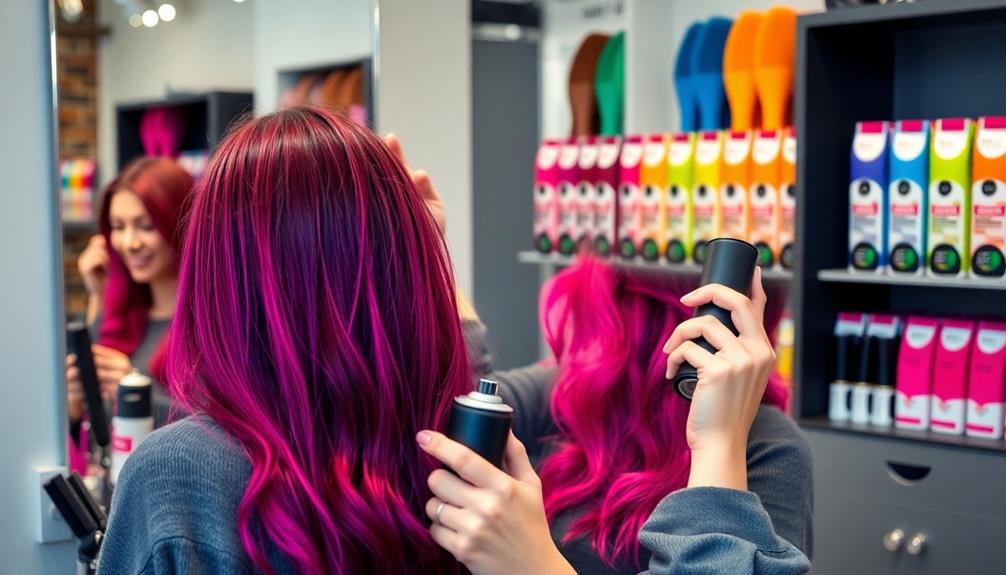
To keep your salon-quality color looking vibrant, it's important to pay attention to how you style your hair with heat. Always apply a heat protectant before using any hot styling tools, as this can reduce heat damage by up to 50% and help maintain color vibrancy. Limit the use of these tools to once or twice a week to prevent accelerated color fading.
When you do style, use the lowest heat setting necessary—temperatures above 350°F can damage color-treated hair. Embrace heat-free styling methods like braiding or air-drying whenever possible to avoid cuticle lifting and preserve your color's integrity. Regular trims every 6-8 weeks also help keep your hair healthy and lessen dullness.
Here's a quick reference table for your heat styling routine:
| Action | Benefit | Recommendation |
|---|---|---|
| Apply heat protectant | Reduces heat damage | Always before styling |
| Limit hot tool usage | Prevents color fading | Once or twice a week |
| Use low heat settings | Protects color-treated hair | Below 350°F |
| Regular trims | Maintains hair health | Every 6-8 weeks |
Sun Protection Methods

To keep your color vibrant, you need to protect it from the sun's harmful UV rays.
Using UV protection products, wearing hats, and being cautious while swimming can make a big difference.
UV Protection Products
How can you keep your hair color vibrant while enjoying the sunshine? The key is using UV protection products specifically designed for color-treated hair.
UV rays can speed up color fading, but with the right products, you can combat sun damage effectively. Additionally, take into account incorporating essential oils into your hair care routine, as they can provide added benefits for hair health and shine, while also improving indoor air quality unlock aromatic cleaning power with essential oils.
Here are some essential items to take into account:
- Hair Sunscreen Products: Apply sprays or leave-in conditioners that contain UV filters to shield your hair from harmful rays.
- Fade-Resistant Hair Care: Use shampoos and conditioners formulated to protect your vibrant hair color and prevent fading.
- Regular UV Protection: Make it a habit to apply UV protection sprays before heading outdoors, ensuring your hair stays vibrant longer.
- Leave-In Conditioners: Choose products with sun protection, helping retain color integrity while keeping your hair moisturized.
Protective Headwear Options
While UV protection products are essential for maintaining your hair color, protective headwear provides an additional layer of defense against sun damage. Wearing hats, especially those with wide brims, can effectively shield your hair from harmful UV rays during outdoor activities. This greatly reduces the risk of color fading and damage.
Opt for hats made from tightly woven fabrics, as they offer better protection against UV radiation compared to loosely woven materials. Additionally, consider the cost of maintaining protective accessories, as investing in quality headwear can be similar to the average cost of home security systems regarding protecting your valuable assets.
In addition to hats, scarves and bandanas also serve as stylish and effective protective headwear. They provide coverage for your hair while enhancing your overall look. You can incorporate these accessories into your wardrobe to not only protect your color but also express your personal style.
Remember to pair your protective headwear with UV protection sprays designed specifically for hair. These sprays add an extra layer of defense against sun exposure, helping to maintain color vibrancy and prevent dryness.
Swimming Precautions
Swimming can be a fun way to cool off, but it's essential to take precautions to protect your hair color from chlorine and UV damage. Without proper care, you risk color fading and dullness. Regular maintenance of protective measures can help maintain your color's vibrancy.
Here are some effective swimming precautions to take into account:
- Pre-Swim Protection: Always apply a leave-in conditioner or a UV protection spray before you plunge in. This creates a barrier against chlorine and harmful UV rays, similar to how regular cleaning is essential for ideal performance of air purifiers.
- Rinse Before Swimming: Rinse your hair with fresh water before entering the pool. This saturates your hair, reducing chlorine absorption and minimizing potential color loss.
- Wear a Swim Cap: Invest in a good swim cap. It greatly reduces direct exposure to chlorinated water, helping protect your vibrant color.
- Post-Swim Care: After swimming, wash your hair immediately with a color-safe shampoo. This removes chlorine and prevents it from lingering, which can dull your color's vibrancy.
Think about a clarifying shampoo occasionally to eliminate buildup, but use it sparingly to avoid stripping your color.
Water Quality Considerations
When it comes to maintaining your salon-quality color at home, water quality plays an essential role. Hard water, which contains high levels of minerals like calcium and magnesium, can strip moisture from your hair and lead to color fading and dullness. To combat this, consider installing a shower filter. This can greatly reduce your exposure to chlorine and other harmful minerals that can affect your color-treated hair.
Additionally, always wash your hair with lukewarm water. Hot water opens the hair cuticles, which can result in color loss, while cold water helps seal those cuticles and lock in your vibrant hue. For an extra boost, rinse your hair with cool water at the end of each wash; this not only enhances shine but also helps further protect your color by closing the cuticles.
Regularly checking and treating the water quality in your shower is vital. By taking these steps, you can mitigate the damaging effects of hard water and guarantee that your salon-quality results last longer at home.
Nutritional Support for Hair
Taking care of your hair goes beyond just addressing water quality; nutrition plays a significant role in maintaining your color-treated locks. By focusing on what you eat, you can boost your hair health and keep those vibrant hues intact.
Here are some key nutrients to incorporate into your diet:
- Vitamins A, C, and E: These vitamins promote scalp circulation and hair growth, fundamental for vibrant color retention.
- Omega-3 Fatty Acids: Found in fish, flaxseeds, and walnuts, they enhance shine and reduce dryness, helping maintain the appearance of your color-treated hair.
- Antioxidants: Foods like berries and green leafy vegetables combat oxidative stress, which can lead to premature fading of color.
- Biotin: This supplement supports hair strength and growth, preventing thinning that affects color vibrancy.
Additionally, staying hydrated is essential for overall hair health.
Drinking enough water improves hair elasticity and strength, preventing breakage and color loss.
Frequently Asked Questions
How Can I Make My Salon Color Last Longer?
To make your salon color last longer, wait 72 hours before shampooing, use sulfate-free products, wash only 2-3 times a week with cooler water, and incorporate deep conditioning to maintain moisture and vibrancy.
How Do I Make Sure My Color Doesn't Fade?
Did you know that 85% of color-treated hair fades within the first month? To prevent this, wait 72 hours before shampooing, use sulfate-free products, and limit washes to keep your vibrant color intact.
How Can I Keep My Hair Color From Fading?
To keep your hair color from fading, wait 72 hours before washing, use sulfate-free products, limit washes to 2-3 times weekly, rinse with cool water, and protect your hair from UV rays and chlorine.
Why Does My Salon Hair Color Fade so Quickly?
If your hair color's fading faster than a New York minute, it's likely due to UV exposure, hot water washing, harsh shampoos, pollution, or hard water. These factors can really take a toll on vibrancy.
Conclusion
To keep your salon-quality color vibrant at home, it's crucial to follow the right care routine. Did you know that up to 70% of hair color fades within the first few washes? By preparing properly before dyeing, using suitable products, and adopting gentle washing techniques, you can greatly extend your color's lifespan. Don't forget sun protection and hydration, too! With these tips, you'll enjoy your gorgeous hue for longer, saving you time and money on frequent touch-ups.