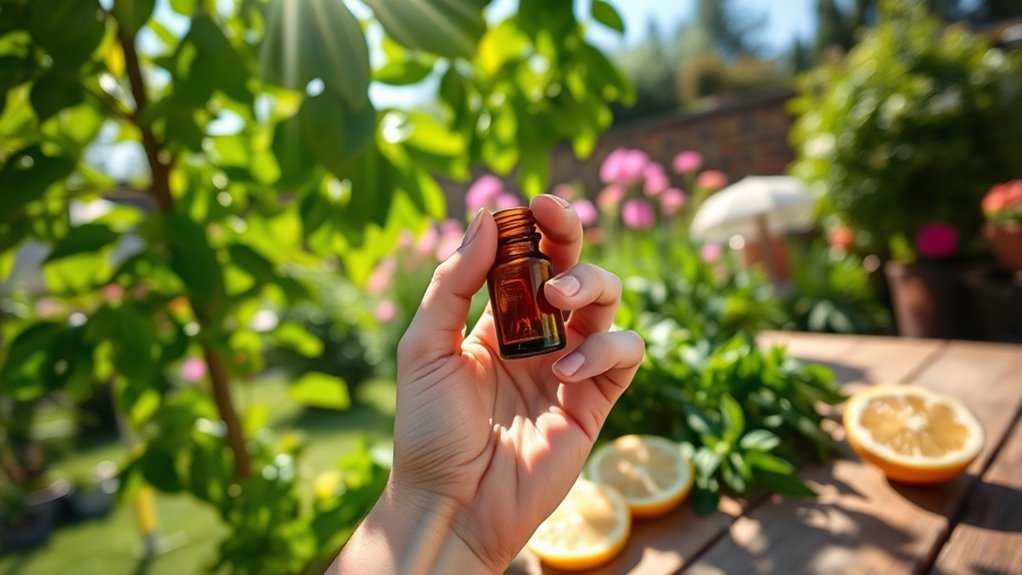

When using essential oils outdoors, you need to be aware of phototoxicity risks from oils like bergamot, lemon, and grapefruit, which can cause skin burns or pigmentation when exposed to sunlight. Always dilute these oils with a carrier, apply them in the evening, or opt for non-phototoxic options indoors. Proper storage and patch testing also help prevent adverse reactions. If you keep these tips in mind, you’ll guarantee safe and enjoyable outdoor use—more insights await.
Key Takeaways
- Identify phototoxic essential oils like bergamot, lemon, and grapefruit to avoid applying before outdoor sun exposure.
- Dilute essential oils to 1-2% with carrier oils to minimize skin irritation and phototoxic risk.
- Apply photosensitive oils in the evening or indoors, and avoid direct sunlight immediately after application.
- Store essential oils in a cool, dark place to preserve their chemical stability and reduce adverse reactions.
- Perform patch tests and follow safety guidelines to ensure proper usage and prevent skin sensitivities outdoors.

Have you ever wondered how natural remedies like essential oils can enhance your well-being? These potent extracts from plants offer numerous benefits, but it’s vital to use them safely, especially when spending time outdoors. One important aspect to consider is phototoxicity, a reaction that can occur when certain oils are exposed to sunlight. Some essential oils, like citrus varieties such as bergamot, lemon, and grapefruit, contain compounds that become reactive under UV rays. When applied to your skin and then exposed to sunlight, they can cause burns, blisters, or pigmentation changes. To prevent this, it’s crucial to be aware of these phototoxic oils and avoid applying them before outdoor activities.
Before using essential oils outdoors, you should pay attention to blending techniques. Proper dilution is key — using carrier oils like coconut, jojoba, or almond oil helps reduce the risk of skin irritation and phototoxic reactions. When blending, make sure to follow recommended dilution ratios, typically 1-2% for topical application. Always perform a patch test on a small skin area first to check for sensitivities. If you plan to be outside, opt for oils that are non-phototoxic or use your essential oils in diffusers indoors instead of applying them directly to your skin. Additionally, be cautious about the timing of application; applying oils in the evening minimizes the risk of sunlight exposure and phototoxic reactions. Incorporating knowledge about heat pump systems can also help you better understand how to maintain your environment for optimal safety and comfort.
Storage tips also play a significant role in maintaining the safety and potency of your essential oils. Keep your bottles in a cool, dark place, away from direct sunlight, heat, and humidity. Exposure to light can degrade the oil’s chemical composition, increasing the likelihood of adverse reactions. Always keep the caps tightly sealed after each use to prevent oxidation and contamination. Label your bottles clearly, noting any photosensitive oils so you remember to avoid applying them before outdoor activities. Proper storage not only prolongs the shelf life of your essential oils but also ensures you’re using them safely, especially when considering phototoxic effects.
essential oils diffuser for indoor use
As an affiliate, we earn on qualifying purchases.
As an affiliate, we earn on qualifying purchases.
Frequently Asked Questions
Can Essential Oils Be Used Safely on Children Outdoors?
When considering essential oils for outdoor application on children, prioritize child safety above all. It’s best to avoid direct application on young kids, especially in sunlight, due to phototoxic risks. Always dilute oils properly and choose those known to be safe for children. Before outdoor use, do a patch test and consult a healthcare professional. By taking these precautions, you can make certain of safe and enjoyable outdoor experiences with essential oils and your child.
Are There Specific Essential Oils to Avoid Before Sun Exposure?
Before basking in the bright sun, be mindful of certain essential oils that heighten your phototoxic risk and increase sun sensitivity. Oils like citrus (lemon, lime, bergamot) can cause skin irritation or burns when exposed to sunlight. Avoid applying these oils topically before outdoor activities. Instead, opt for soothing, non-phototoxic oils to protect your skin while soaking up the sunshine safely and sensibly.
How Long Should I Wait After Applying Oils Before Going Outside?
You should wait at least 6 hours after applying essential oils before going outside. This allows time for the application timing and skin absorption to occur, reducing the risk of phototoxic reactions. If you’ve applied oils like citrus or bergamot, it’s best to be cautious and give your skin ample time to process the oils before sun exposure. Always follow safety guidelines to protect your skin.
Do Carrier Oils Reduce the Phototoxic Effects of Essential Oils?
Using carrier oils can help with phototoxic reduction when applying essential oils. When you dilute essential oils with a carrier oil, it reduces their concentration, which can lessen the risk of phototoxic reactions. Carrier oil dilution acts as a protective barrier, decreasing the intensity of UV absorption. So, if you’re concerned about phototoxicity, always dilute your essential oils properly with a suitable carrier oil before outdoor use.
Can Essential Oils Cause Skin Hyperpigmentation When Exposed to Sunlight?
Yes, essential oils can cause skin hyperpigmentation when exposed to sunlight. This results from phototoxic reactions, which lead to skin discoloration or hyperpigmentation. If you apply photosensitive oils like citrus before sun exposure, you risk these effects. Always patch test and avoid direct sunlight after applying such oils, especially during peak hours, to prevent skin damage and unwanted discoloration.
Conclusion
Remember, while essential oils can brighten your outdoor moments, they also carry risks like phototoxicity. Don’t assume all oils are safe under the sun—some can cause painful burns or skin damage. Trust the science and be cautious. If you believe in nature’s power, respect its limits. Protect your skin, enjoy your time outside, and always follow safety guidelines. Your well-being depends on awareness—so choose your oils wisely and stay safe.