When seasons change, your scalp flakes can worsen because cold air and low humidity draw moisture away from your skin, weakening its barrier. Indoor heating often dries out the air, causing additional dryness and irritation. Harsh weather conditions and temperature fluctuations make sensitive skin more reactive, leading to increased redness, itching, and flakes. To better understand how you can protect your scalp during these times, keep exploring the factors that affect your skin and ways to care for it.

Get beauty and skincare favorites delivered free with Prime
- Fast, free delivery on millions of items
- Prime Video, Amazon Music and more included
- Member-only deals all year
Key Takeaways
- Cold air and low humidity strip moisture from the scalp, increasing dryness and flaking.
- Indoor heating reduces humidity, leading to scalp dehydration and more flakes.
- Sensitive skin reacts more intensely to environmental changes, worsening inflammation and scaling.
- Harsh hair products and temperature shifts irritate the scalp, aggravating existing conditions.
- Fluctuating conditions weaken the skin barrier, making flakes more prominent during seasonal transitions.
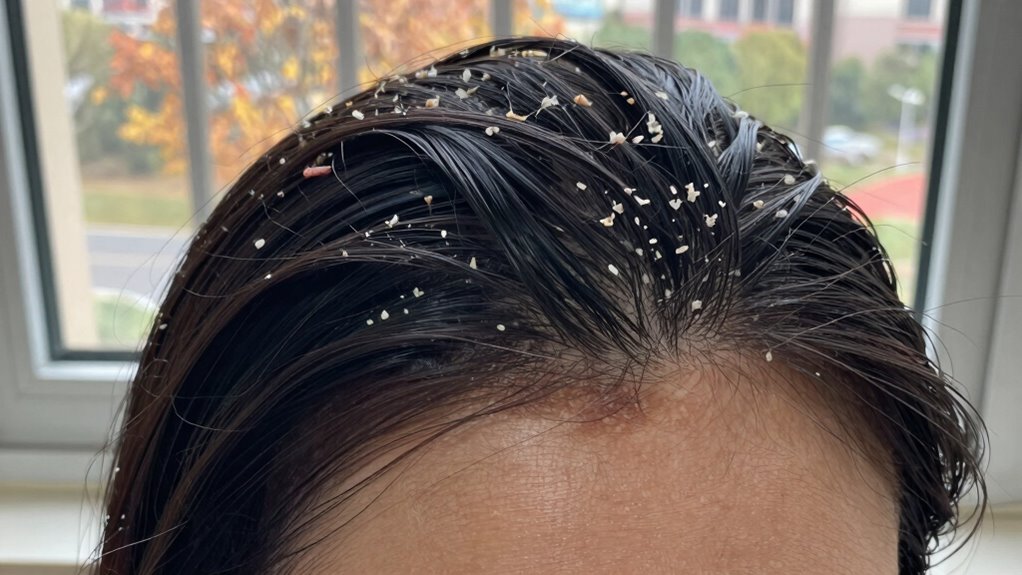
As the seasons shift from summer to fall and winter, many people notice their scalp flakes become more noticeable and persistent. You might find yourself scratching more often or feeling self-conscious about the white specks on your shoulders. This increase in flakes isn’t just coincidence; environmental triggers and skin sensitivity play significant roles in why your scalp reacts this way during seasonal changes. Cold air, lower humidity, and indoor heating strip moisture from your skin, including your scalp, making it more prone to dryness and flaking.
During colder months, the air outside contains less moisture, and indoor environments become dry due to heating systems. This combination causes your scalp’s skin barrier to weaken, leading to increased flaking. When your skin is exposed to these environmental triggers, it struggles to maintain its natural moisture balance. If you already have sensitive skin, these changes can exacerbate your condition, making your scalp more reactive and prone to irritation. Skin sensitivity means your scalp reacts more intensely to external factors, like temperature fluctuations or harsh hair products, which are common during seasonal changes. As a result, even simple irritants can trigger inflammation, redness, and excessive shedding of skin cells that manifest as flakes.
You might also notice that your usual scalp care routine doesn’t seem as effective during these months. The dry air and increased skin sensitivity mean you need to adapt your approach. Using moisturizing shampoos or scalp treatments with ingredients like tea tree oil or aloe vera can help soothe irritation and restore moisture. Avoiding overly harsh or medicated shampoos, which strip natural oils, is also essential. Additionally, it’s helpful to limit the use of heated styling tools, as they can further dry out your scalp and worsen flakes. Recognizing environmental triggers and understanding their impact enables you to better protect your scalp during these challenging months. Incorporating proper indoor air quality strategies, such as using a humidifier, can significantly help maintain your scalp’s moisture levels and reduce irritation. Improving scalp hydration through targeted treatments can also make a noticeable difference in managing flakes.
Being mindful of skin sensitivity can also assist in choosing the right hair products that won’t aggravate your condition. Furthermore, understanding the connection between seasonal changes and skin health can motivate you to adopt preventative measures earlier in the year. Wearing a hat or scarf when you’re outside can provide a barrier against cold air and wind, reducing the impact on your skin. When indoors, use a humidifier to add moisture to the air and prevent your scalp from drying out. If you notice your symptoms worsening, it could also be worth consulting a dermatologist. They can recommend specific treatments or identify underlying issues, such as seborrheic dermatitis or eczema, which tend to flare up during seasonal changes. Recognizing these factors allows you to take proactive steps to keep your scalp healthy, even as the seasons turn colder.
moisturizing scalp shampoo for dry scalp
As an affiliate, we earn on qualifying purchases.
As an affiliate, we earn on qualifying purchases.
Frequently Asked Questions
Can Diet Affect Seasonal Scalp Flakiness?
Yes, your diet influence can affect seasonal scalp flakiness. If you maintain a nutritional balance rich in vitamins like B, D, and E, it can support scalp health and reduce flakes. Conversely, poor diet choices lacking essential nutrients may worsen dryness and flakiness, especially during seasonal changes when your scalp is more sensitive. Focus on a well-rounded diet to help manage and prevent increased flakiness naturally.
Are There Specific Hair Products That Worsen Flakes?
Yes, certain hair products can worsen flakes. Avoid anti dandruff shampoos with harsh chemicals that strip your scalp’s natural oils, making flakes worse. Instead, opt for gentle formulas that promote scalp hydration, helping to soothe dryness and reduce flakiness. Be cautious with styling products containing alcohol or fragrances, as they can irritate your scalp. Using hydrating treatments regularly can keep your scalp healthier, especially during seasonal changes.
How Does Weather Impact Scalp Oil Production?
Weather impacts your scalp oil production through environmental humidity and your hair follicle response. When humidity drops, your scalp produces less oil, leading to dryness and flaking. Conversely, high humidity can cause your scalp to overproduce oil, worsening flakes. Your hair follicles react to these changes by adjusting oil secretion, but fluctuations can upset the balance, making flakes more noticeable, especially during seasonal shifts.
Do Indoor Heating Systems Dry Out Scalp Skin?
Indoor heating systems can dry out your scalp skin by reducing indoor humidity levels. When the air is dry, your scalp loses moisture, leading to flakiness and irritation. To combat this, you should use a good hair moisturizer to keep your scalp hydrated. Additionally, consider using a humidifier indoors to maintain ideal humidity, which helps prevent dryness and keeps your scalp healthy during colder months.
Is Seasonal Flaking Linked to Underlying Scalp Conditions?
You might think seasonal flaking is just a nuisance, but it often hints at underlying scalp conditions. Surprisingly, increased scalp sensitivity and environmental triggers like cold air or dry indoor heating worsen flakes. These factors irritate your scalp, making it more prone to dryness and flaking. So, if your scalp’s acting up during seasonal shifts, it’s worth exploring underlying issues rather than just blaming the weather.
Conclusion
As seasons shift, your scalp reacts, making flakes worse. Understanding the changes helps you take better care and prevent flare-ups. Think of it like a changing weather pattern—you adapt your wardrobe, so why not your scalp routine? By staying proactive, you can keep those flakes at bay and enjoy a healthier scalp year-round. Remember, a little prevention goes a long way—don’t let seasonal changes catch you off guard.
Halloween Picks
halloween
As an affiliate, we earn on qualifying purchases.