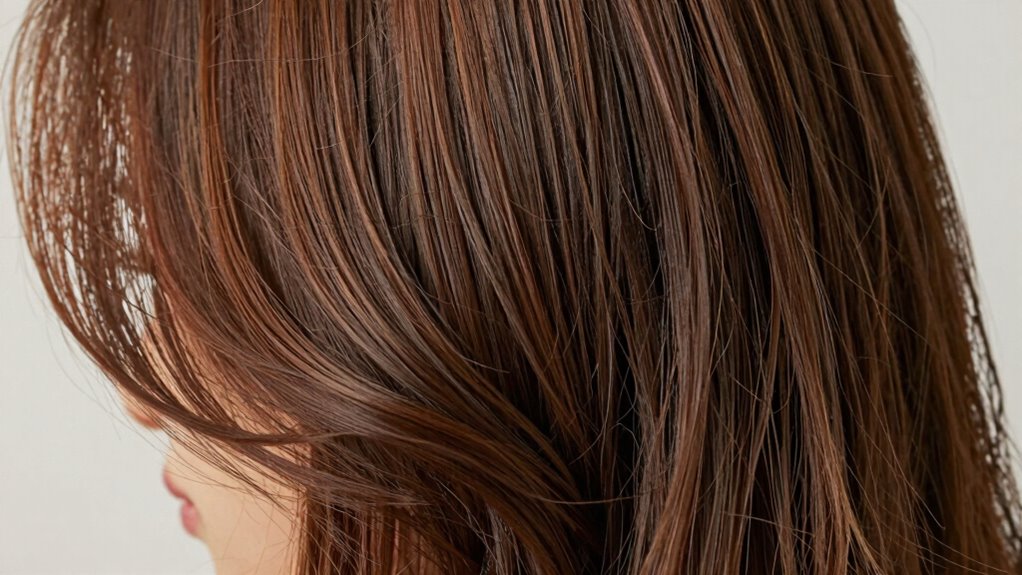

Your hair texture changes over time because aging, hormonal shifts, and environmental exposure affect your scalp health and hair structure. As you age, your hair may become finer, coarser, or more textured, depending on these factors. Changes in moisture, porosity, and scalp condition also play a role. External elements like sun, pollution, and chlorine damage your hair further, causing noticeable shifts. Keep exploring to discover how you can better care for your evolving hair.

Get beauty and skincare favorites delivered free — and shop member deals
- Fast, free delivery on millions of items
- Access to Prime Big Deal Days deals on October 6–7
- Prime Video, Amazon Music and more included
Key Takeaways
- Aging and hormonal shifts alter hair follicle activity, affecting strand diameter and texture.
- Environmental exposure, such as sun and pollution, damages hair cuticles, increasing porosity and roughness.
- Changes in scalp health, like dryness or oiliness, influence hair’s appearance and texture.
- External factors like chlorine or salt water strip moisture, leading to dryness and frizz.
- Internal aging processes cause hair to become finer, coarser, or more textured over time.
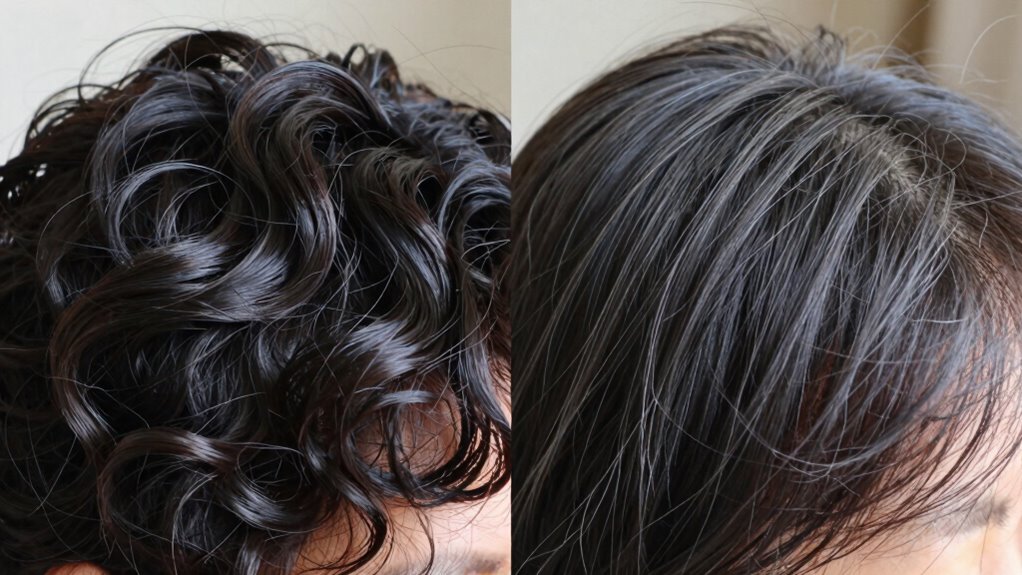
Hair texture can change considerably over time, influenced by factors like aging, hormonal shifts, and environmental exposure. As you age, your hair’s structure and appearance evolve, often becoming finer, coarser, or more textured. These changes are closely linked to alterations in hair porosity and scalp health. When your hair becomes more porous, it absorbs and loses moisture more easily, which can lead to dryness, frizz, or brittleness. Conversely, less porous hair tends to be more resistant to styling products and environmental damage but may also feel weighed down or lack volume. Recognizing how your hair’s porosity shifts over time helps you adapt your hair care routine effectively.
As you age, your hair’s porosity and texture naturally change, affecting moisture retention and overall appearance.
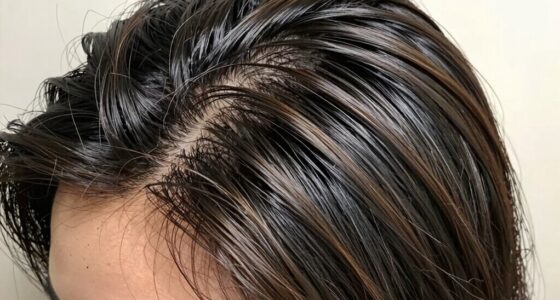
Your scalp health plays an essential role in how your hair changes. A healthy scalp provides a strong foundation for hair growth, while scalp issues like dryness, oiliness, or inflammation can cause noticeable shifts in hair texture. For example, if you develop scalp dryness, your hair might become more brittle and prone to breakage, making it appear thinner or more textured. On the other hand, excess oil can weigh hair down, leading to a greasy, limp appearance. Environmental factors such as sun exposure, pollution, and harsh weather can also impair scalp health, further impacting hair texture. Proper scalp care—regular cleansing, moisturizing, and avoiding harsh chemicals—helps maintain ideal scalp health, which in turn supports healthier hair. Additionally, addressing underlying scalp issues early on can prevent more significant changes in hair texture over time. Environmental factors like pollution and sun damage can also accelerate scalp issues, emphasizing the importance of protective measures. Understanding how external elements impact scalp health can help you better protect hair from damage.
Hormonal changes, whether due to aging, pregnancy, or hormonal imbalances, also influence hair texture by affecting the hair follicle cycle and sebum production. Increased sebum can make hair feel greasy and heavy, while decreased sebum production can leave hair dry and fragile. These hormonal shifts can alter not just the appearance but also the feel of your hair, making it more difficult to style or maintain. Additionally, aging often leads to a natural decrease in hair density and a change in the diameter of individual strands, contributing to a different overall texture. Recognizing the role of hormones in hair health can help you adjust your routine to better support your changing hair needs.
Environmental exposure plays a significant role too. Sun damage can weaken the hair cuticle, increasing porosity and making hair more susceptible to damage. Chlorinated water and salt from swimming can strip moisture and cause roughness, while pollution particles may settle on your scalp and hair, impairing scalp health. Over time, these external factors, combined with internal changes, cause your hair to adapt, resulting in the diverse range of textures you experience as you age. Understanding these influences empowers you to tailor your hair care routine, protecting your hair’s health and maintaining its natural beauty through the years. Recognizing the impact of environmental factors on hair health can help you make better choices to preserve your hair’s natural texture.
As an affiliate, we earn on qualifying purchases.
Frequently Asked Questions
Can Hair Texture Change Suddenly Overnight?
Yes, hair texture can change suddenly overnight, often due to factors like stress, hormonal shifts, or recent chemical treatments. A sudden change in hair texture might feel alarming, but it’s usually temporary. You might notice your hair becoming more curly, straight, or coarse unexpectedly. To understand the cause, consider recent lifestyle changes, products used, or health issues. If the change persists, consulting a dermatologist or hair specialist is a good idea.
Do Hair Products Affect Long-Term Hair Texture?
Yes, hair products can affect your long-term hair texture. Over time, product buildup can weigh hair down or alter its natural pattern, while environmental effects like sun exposure or pollution can damage hair cuticles. Using heavy or harsh products regularly may lead to changes in elasticity or curl pattern. To maintain your hair’s natural texture, choose lightweight, nourishing products and protect your hair from environmental damage.
Is Hair Texture Change Hereditary?
Your hair texture change is definitely hereditary! Genetic factors and inherited traits play a huge role, shaping whether your hair remains curly, straight, or wavy over time. While environmental factors influence hair, your DNA is the master architect behind its natural texture. So, if your family has a history of specific hair types, chances are you’ll experience similar changes as you age. Your hair’s DNA blueprint is truly a force to be reckoned with!
Can Diet Influence Hair Texture Over Time?
Yes, your diet can influence hair texture over time. Nutritional impact plays a big role, as dietary deficiencies in vitamins, minerals, and proteins can weaken hair strands and alter their appearance. When you lack essential nutrients like biotin, iron, or omega-3 fatty acids, your hair might become more brittle, dry, or coarse. Eating a balanced diet helps maintain healthier, more consistent hair texture, supporting your hair’s natural qualities.
Do Hair Treatments Permanently Alter Hair Texture?
Chemical treatments can temporarily change your hair texture, but they don’t usually cause permanent alteration. Over time, natural aging processes might influence your hair’s feel and look, but these aren’t directly caused by treatments. Some intense chemical treatments, like relaxers or perms, can weaken hair structure if overused, potentially leading to lasting changes. However, with proper care and moderation, you can maintain your hair’s natural texture despite these treatments.
Conclusion
So, next time you notice your hair feeling different, remember it’s all part of life’s natural process. Changes in texture are a sign your hair is evolving with your age and lifestyle. Isn’t it fascinating how something as simple as your hair can tell a story of growth and transformation? Embrace these shifts—they’re a beautiful reminder that change is constant, and your hair’s journey is uniquely yours.
Evergreen bestsellers Picks
bestsellers
As an affiliate, we earn on qualifying purchases.