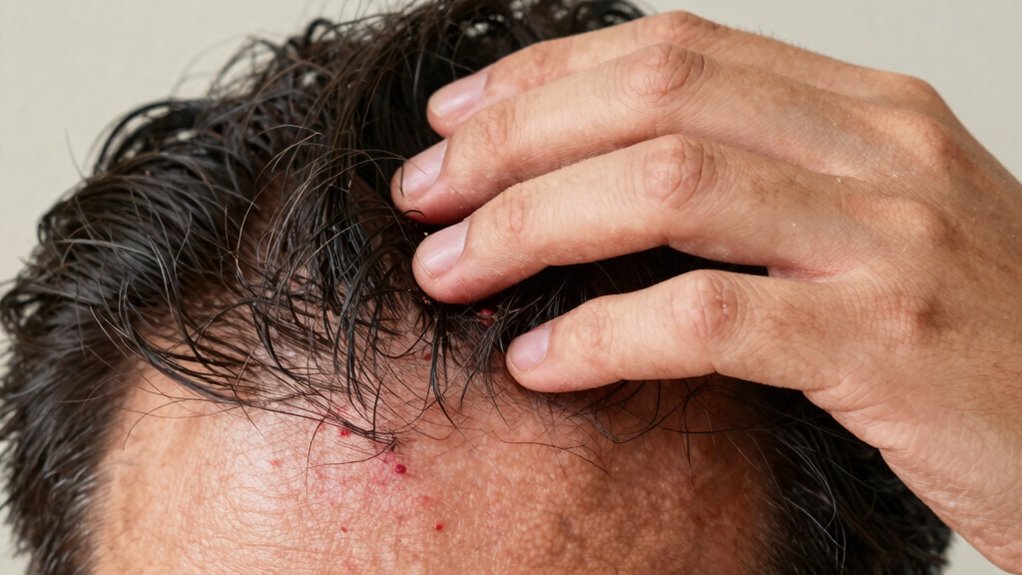
Scratching your scalp can make things worse because it damages the delicate skin, creating tiny openings that let bacteria, fungi, and microorganisms enter, increasing infection risk. It also pulls on hair follicles, causing breakage, thinning, or even hair loss over time. Plus, scratching worsens underlying conditions like dandruff or psoriasis, disrupting your scalp’s natural barrier. This cycle of irritation and damage makes healing harder. Keep going to discover helpful tips on protecting your scalp and stopping the cycle.

Get beauty and skincare favorites delivered free — and shop member deals
- Fast, free delivery on millions of items
- Access to Prime Big Deal Days deals on October 6–7
- Prime Video, Amazon Music and more included
Key Takeaways
- Scratching damages the scalp skin, creating openings that allow bacteria and fungi to enter, increasing infection risk.
- Excessive scratching weakens hair follicles, causing breakage, thinning, or permanent hair loss over time.
- It worsens underlying scalp conditions like dandruff or psoriasis, disrupting the skin barrier and prolonging healing.
- Damaged skin barrier from scratching leads to more irritation and inflammation, making symptoms worse.
- Scratching perpetuates a cycle of irritation and infection, making scalp problems more difficult to resolve.
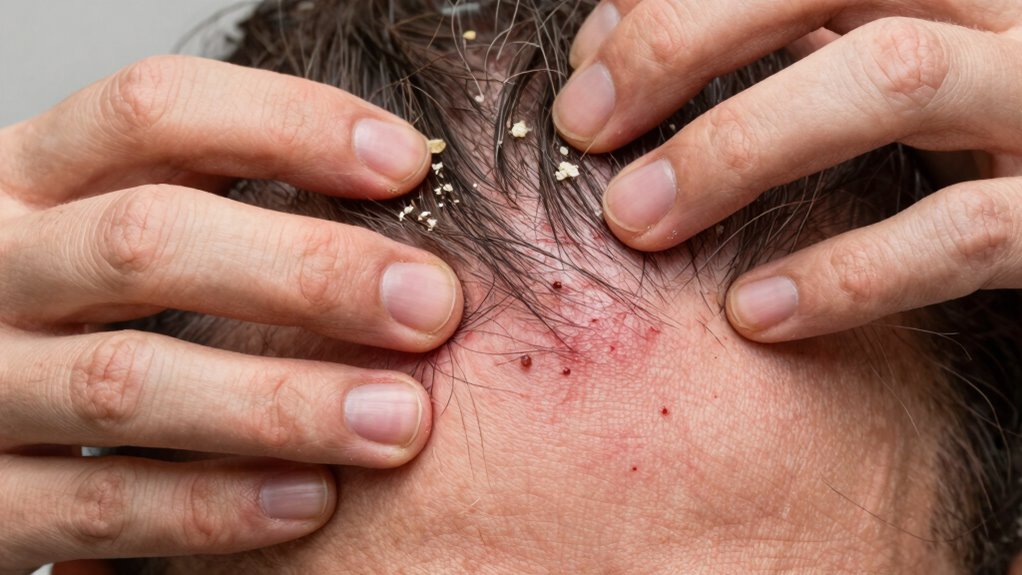
If you often scratch your scalp to relieve itchiness, you might be unknowingly making the problem worse. Every time you scratch, you risk damaging your scalp’s delicate skin, which can lead to infections or inflammation. This damage creates tiny openings that allow bacteria, fungi, or other microorganisms to enter, increasing the likelihood of scalp infections. These infections can cause redness, swelling, and persistent discomfort, which only add to the itchiness you’re trying to eliminate. Instead of helping, scratching can set off a cycle where your scalp becomes more irritated and prone to infection, making the problem harder to resolve.
Beyond the risk of infections, frequent scratching can also lead to hair damage. When you scratch aggressively or excessively, you pull on hair strands, weakening the hair follicles. Over time, this can cause hair breakage, thinning, or even permanent hair loss in severe cases. The constant trauma to hair shafts and follicles can make your hair look dull, brittle, and unhealthy. The more you scratch, the more you compromise the hair health, turning an already uncomfortable situation into a longer-term hair health issue.
Moreover, scratching can intensify the underlying causes of scalp itchiness rather than alleviating them. Conditions such as dandruff, seborrheic dermatitis, or psoriasis often cause flaking and irritation, and scratching only worsens these conditions. It disrupts the scalp’s natural barrier, leaving it vulnerable to further irritation and inflammation. This disruption hampers your scalp’s ability to heal, prolonging the discomfort and increasing the chances of developing scalp infections. Recognizing that scalp health is essential to preventing these issues can motivate better care.
Additionally, understanding the skin’s natural barrier and how scratching damages it can help you realize the importance of gentle care. When the barrier is compromised, your scalp becomes more susceptible to irritation and infection, which can prolong healing and worsen symptoms. To break this cycle, it’s vital to address the root cause of your scalp itchiness rather than simply scratching it away. Using medicated shampoos designed to treat scalp conditions and reduce inflammation can be particularly effective in soothing irritation. Keeping your scalp clean, balanced, and free of excess oils is also key to supporting its healing process. Keep your scalp clean and moisturized, and avoid harsh hair products that can strip away natural oils. If your symptoms persist or worsen, consult a dermatologist who can recommend appropriate treatments to combat scalp infections and prevent hair damage. Remember, resisting the urge to scratch and treating your scalp with care can help you restore healthy skin and hair, preventing small issues from turning into bigger, more complex problems.
medicated anti-dandruff shampoo for scalp health
As an affiliate, we earn on qualifying purchases.
As an affiliate, we earn on qualifying purchases.
Frequently Asked Questions
Can Scratching My Scalp Cause Permanent Hair Loss?
Scratching your scalp can lead to hair follicle damage, which might cause permanent hair loss if it becomes severe or repeated. Constant scratching irritates the scalp, worsening inflammation and making hair loss more likely. To prevent this, use gentle scalp irritation treatments and avoid scratching as much as possible. If you notice persistent issues, consult a dermatologist to protect your hair health and prevent long-term damage.
What Are Natural Remedies for Scalp Itchiness?
To soothe scalp itchiness naturally, try herbal remedies like tea tree oil or aloe vera, which have anti-inflammatory properties. Moisturizing treatments such as coconut oil or jojoba oil can also provide relief and hydration. You might also consider using gentle shampoos free from harsh chemicals. These natural options can calm your scalp and reduce the urge to scratch, helping to prevent further irritation or damage.
How Do I Prevent Scalp Infections From Scratching?
To prevent scalp infections from scratching, focus on good hair hygiene and keeping your scalp moisturized. Wash your hair regularly with gentle shampoo to remove dirt and bacteria, and avoid scratching your scalp vigorously. Instead, use a soothing scalp moisturizer to reduce itchiness and irritation. If you notice persistent issues, consult a dermatologist. Proper scalp care helps prevent infections while easing your discomfort.
Is Dandruff the Main Cause of Scalp Itching?
No, dandruff isn’t the only cause of scalp itching, but it’s a common one. Poor scalp hygiene and certain hair products can also trigger irritation, leading to itching. When you don’t wash your hair regularly or use harsh products, buildup and dryness develop, making your scalp itchy. To keep it healthy, use gentle shampoos suited for your scalp, maintain good hygiene, and avoid irritating hair products.
When Should I See a Doctor for Scalp Issues?
You should see a doctor when scalp issues persist despite over-the-counter treatments, especially if you notice scalp sensitivity, redness, swelling, or pain. If hair dye causes irritation or worsens your symptoms, consult a professional. Persistent itching, scalp sores, or hair loss also warrant medical attention. A dermatologist can diagnose underlying conditions like dermatitis or psoriasis and recommend effective treatments, helping you avoid worsening the problem.
Conclusion
So, the next time you’re tempted to scratch your scalp, remember it’s like stirring up a storm in a teacup. That quick scratch may feel good in the moment, but it only worsens the problem, turning a small itch into a bigger headache. Instead, try gentle solutions or see a dermatologist. Keep your scalp happy, and it’ll thank you by staying healthy and itch-free—because a calm scalp is the true crown of beauty.
Halloween Picks
halloween
As an affiliate, we earn on qualifying purchases.