
By choosing to buy less and wear more, you’re reducing waste and lowering your environmental footprint. Focus on building a wardrobe with high-quality, versatile pieces made from sustainable fabrics like organic cotton or linen. Support brands that prioritize ethical standards, and embrace mindful shopping habits. When you develop a conscious closet, you’ll enjoy a stylish wardrobe that lasts longer and benefits the planet. If you want to learn how to create this sustainable closet, keep exploring these ideas.
Key Takeaways
- Prioritize investing in high-quality, versatile pieces that can be styled multiple ways to maximize usage.
- Practice mindful shopping by asking if new clothing is truly needed before purchasing.
- Focus on building a sustainable wardrobe with eco-friendly fabrics and ethically made garments.
- Wear your existing clothes more often and experiment with different outfits to reduce unnecessary buying.
- Support brands committed to ethical standards and environmental responsibility to promote sustainable fashion.
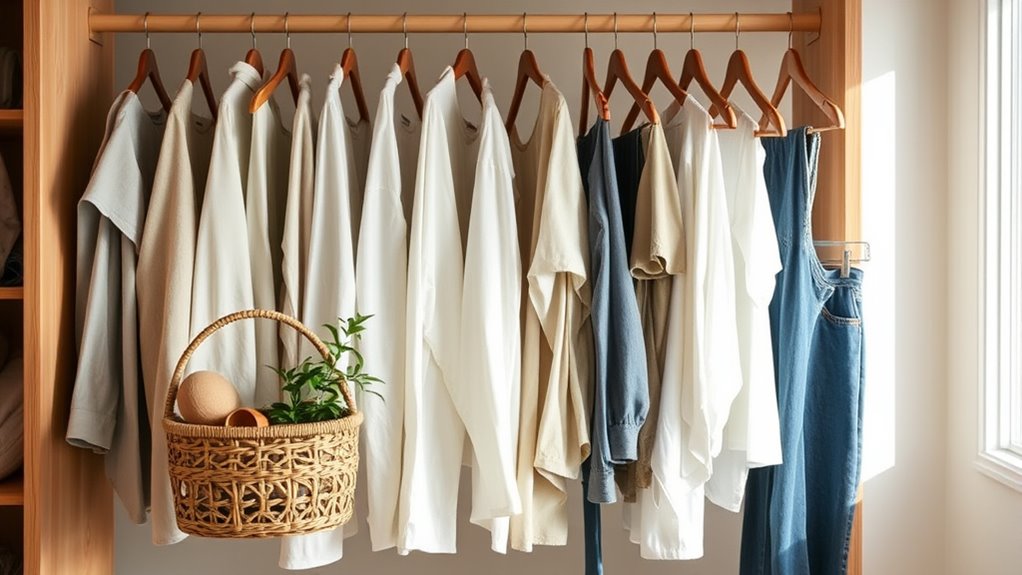
Have you ever wondered how your wardrobe choices impact the planet? Every item you buy, wear, and discard contributes to a larger environmental story. Fast fashion, with its constant cycle of cheap, trendy clothes, fuels waste and pollution. But by choosing to buy less and wear more, you can make a significant difference. One way to do this is by focusing on sustainable fabrics, which are crafted from eco-friendly and renewable resources. Materials like organic cotton, hemp, linen, and Tencel are designed to reduce water usage, chemical runoff, and pollution during production. These fabrics aren’t just better for the environment—they often feel more comfortable and durable, encouraging you to cherish each piece longer. When you prioritize sustainable fabrics, you’re making a conscious choice to support brands that prioritize eco-friendly practices and ethical standards. Incorporating biodegradable materials into your wardrobe can further minimize long-term waste and environmental impact.
Speaking of ethical standards, aligning with ethical brands is a vital step in building a conscious closet. These brands prioritize fair labor practices, transparency, and environmental responsibility. By supporting them, you’re ensuring that the people who make your clothes work in safe conditions and receive fair wages. Ethical brands often use sustainable fabrics, too, creating a positive ripple effect that benefits the planet and the communities involved. When you shop from these brands, you’re actively choosing to reduce the demand for fast fashion, which is often associated with exploitative labor and environmental harm. It’s about making smarter, more intentional purchases—investing in pieces that last, rather than fleeting trends that quickly fall apart or go out of style.
The idea is to build a wardrobe that emphasizes quality over quantity. Instead of buying new clothing every season, focus on selecting versatile pieces from ethical brands that you truly love and that can be styled in multiple ways. This approach encourages you to think twice before making a purchase, asking yourself if you really need that new item or if you already have something that can do the job. By choosing well-made garments from brands committed to sustainability, you’ll find yourself wearing your clothes more often and for much longer. This not only reduces waste but also helps you develop a more personal style that’s authentic and enduring. Over time, these habits can transform your relationship with fashion, turning it into a more mindful, sustainable practice. You’ll feel good knowing your choices are making a positive impact on the planet, one wardrobe decision at a time.
Frequently Asked Questions
How Can I Identify Truly Sustainable Clothing Brands?
To identify truly sustainable clothing brands, look for those that prioritize sustainable materials like organic cotton or recycled fabrics. Check if they practice ethical manufacturing, ensuring fair wages and safe working conditions. Research their transparency—brands that openly share their supply chain and environmental impact are more trustworthy. You can also seek certifications like GOTS or Fair Trade, which verify sustainable and ethical standards in their production processes.
What Are the Best Ways to Upcycle Old Clothes?
You can upcycle old clothes by exploring various upcycling techniques and creative fabric reuse ideas. Start by cutting and repurposing worn-out shirts into tote bags or pillowcases. Turn jeans into shorts or patches, and use fabric paint or embroidery for added flair. Get creative with sewing, dyeing, or adding embellishments to give your clothes a fresh look, reducing waste and making unique, stylish pieces.
How Do I Build a Versatile Wardrobe With Fewer Pieces?
Did you know that most people only wear 20% of their wardrobe 80% of the time? To build a versatile wardrobe with fewer pieces, focus on creating a capsule wardrobe. Mix and match items like neutral tops and classic pants to maximize options. Invest in quality basics that pair well together, so you can effortlessly style multiple looks with fewer clothes, making your wardrobe both practical and sustainable.
Are Secondhand Shops Reliable for Quality Clothing?
Yes, secondhand shops can be reliable for quality clothing if you look for vintage authenticity and thrift store authenticity. You can find well-made pieces from trusted brands or unique vintage items that stand out. Be sure to inspect garments carefully for wear and tear, and ask staff about the item’s history. With patience, you’ll discover high-quality, sustainable fashion that fits your style and supports conscious shopping.
How Can I Reduce Fashion Waste Without Buying Less?
You can reduce fashion waste without buying less by focusing on fashion recycling and extending clothing longevity. Instead of constantly purchasing new items, repair and repurpose your existing wardrobe to give clothes a second life. Washing clothes properly and storing them carefully also helps keep them in good condition longer. This way, you minimize waste while still enjoying your style, making sustainable choices that benefit both the environment and your closet.
Conclusion
By choosing to buy less and wear more, you’re making a positive impact on the planet and your style. Remember, less is more, and quality beats quantity every time. When you embrace mindful shopping, you create a wardrobe that truly reflects you and reduces waste. So, take small steps today—each one counts. After all, every journey begins with a single, conscious choice. Wear what you love, and let your habits speak for themselves.