
The key habit that keeps your salon content professional is consistently obtaining explicit client consent before sharing photos or videos. This means clearly explaining how the images will be used, and securing written approval through forms or digital methods. By making consent an routine part of your process, you respect client boundaries, build trust, and prevent legal issues. If you want to guarantee ethical marketing, mastering this practice will set you apart—continue to explore how to implement it smoothly.
Key Takeaways
- Always obtain explicit, written consent from clients before sharing their images or videos.
- Incorporate consent requests into the standard service process to ensure consistency.
- Use digital forms or emails to document client approval clearly and professionally.
- Clearly explain how their content will be used to build trust and transparency.
- Revisit consent policies regularly to maintain ethical standards and adapt to new marketing practices.
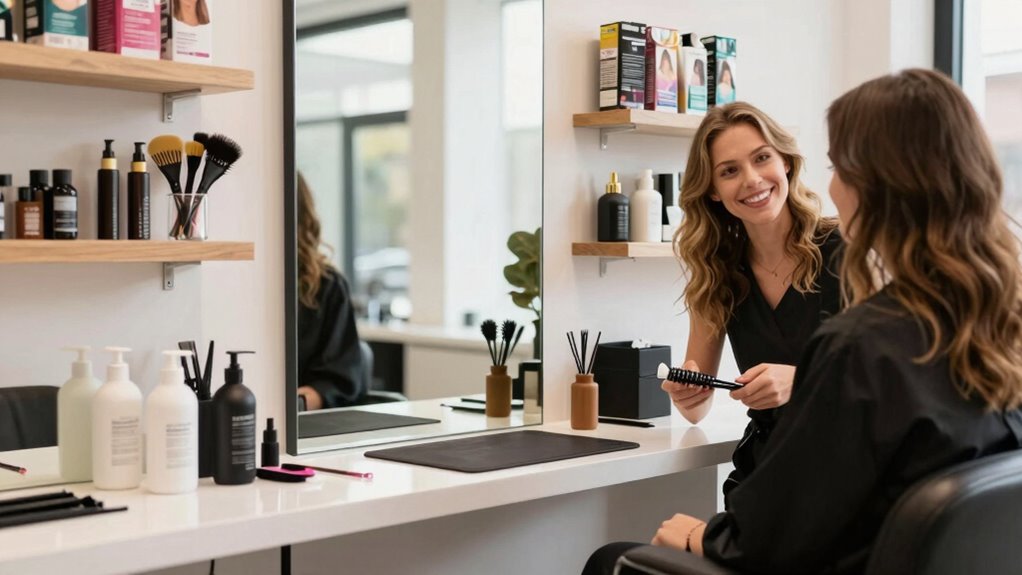
Have you ever considered how important it is to get clear consent before sharing salon content? When you’re showcasing your work, whether through social media, your website, or promotional materials, it’s essential to prioritize your clients’ comfort and trust. One key habit that keeps your salon content professional is establishing a routine for content approval through effective client communication. This means you don’t just assume your clients are okay with their photos or videos being shared; instead, you actively seek their permission before posting anything. Doing so not only respects their privacy but also reinforces that you value transparency and professionalism.
Prioritize client consent to share salon content, building trust and professionalism with clear communication and respectful permission.
The process begins with clear communication. When you finish a service, you should inform your clients about how you might use images or videos of their look to promote your work. Explain that sharing their content can help grow your salon’s presence and attract new clients. Then, ask for their explicit consent—preferably in writing, whether through a quick email, a digital form, or a written note. This way, there’s no ambiguity or misunderstanding about their approval. It also provides you with documented proof that you followed proper client communication practices, which can be helpful if questions or concerns ever arise later.
Implementing a consistent content approval process makes your operations more professional and trustworthy. It shows clients that you respect their boundaries and are committed to ethical marketing practices. When clients give their approval upfront, they’re more likely to feel comfortable and confident about your work being shared. This can lead to more genuine endorsements and positive reviews, which benefit your reputation. Plus, it minimizes the risk of potential complaints or legal issues that could result from sharing images without consent.
To make this habit part of your routine, consider creating a standard procedure. For example, during the appointment, mention that you might want to share their results and ask if that’s okay. After the service, send a quick message or email with the photos and ask for explicit approval before posting. This approach keeps the communication clear and professional, ensuring everyone is on the same page. Over time, this practice becomes second nature, and your clients will appreciate your transparency.
Additionally, using digital consent forms can streamline the approval process and ensure you have clear documentation. In the end, prioritizing client communication and content approval isn’t just about legality; it’s about building trust and maintaining a high standard of professionalism. When your clients see that you respect their preferences and seek their consent, they’re more likely to become loyal patrons and enthusiastic advocates for your salon. The habit of securing clear consent makes your content sharing ethical, transparent, and ultimately more successful.
Frequently Asked Questions
How Do I Ensure Clients Truly Understand the Consent?
You guarantee clients truly understand consent by prioritizing clear communication and client education. Speak slowly, use simple language, and check for understanding by asking questions like, “Does that make sense?” or “Do you have any questions?” Reinforce information with visual aids or written instructions if needed. Always listen actively to their concerns, and confirm consent before proceeding, making sure they feel confident and informed every step of the way.
What Are the Legal Implications of Consent in Salons?
You need to guarantee you have proper consent to stay legally compliant and uphold ethical standards. This means clearly explaining treatments, risks, and obtaining written or verbal approval from clients. Failing to do so could lead to legal issues like lawsuits or fines. By consistently practicing thorough consent procedures, you protect your business and demonstrate professionalism, which builds trust and reduces liability. Always stay informed about local legal requirements to maintain compliance.
How Often Should I Revisit Consent With Returning Clients?
You should revisit consent with returning clients at every appointment, especially if there are any changes in treatments or preferences. Use initial documentation as a reference but prioritize ongoing communication to guarantee their comfort and understanding. Regular check-ins help confirm consent remains valid and current, fostering trust. Keep conversations open, clear, and respectful to maintain professionalism and ensure you’re always aligned with your clients’ desires.
What if a Client Withdraws Consent After Approval?
If a client withdraws consent after approval, you should respect their decision immediately. Reassure them that their comfort and trust are your priorities, which helps maintain client trust. Clarify that they’re making an informed decision, and ask if they have any concerns. This approach demonstrates professionalism and guarantees they feel valued, reinforcing the importance of informed decisions and fostering ongoing trust in your salon.
How Can Consent Improve Overall Salon-Client Relationships?
Consent improves your salon-client relationships by fostering clear client communication and establishing professional boundaries. When you seek and respect consent, clients feel valued and trusted, encouraging open dialogue. This proactive approach minimizes misunderstandings and builds mutual respect. By consistently prioritizing consent, you demonstrate professionalism, strengthen trust, and create a positive atmosphere where clients feel comfortable sharing their needs, ultimately enhancing their overall experience and loyalty.
Conclusion
Remember, asking for consent isn’t just polite—it’s essential for maintaining professionalism. When you respect clients’ boundaries and get clear approval before sharing their images or stories, you build trust and credibility. This simple habit creates a rhythm of respect that resonates through every piece of content you create. By making consent your default, you foster a positive, transparent environment that keeps your salon’s reputation shining and your content authentic.