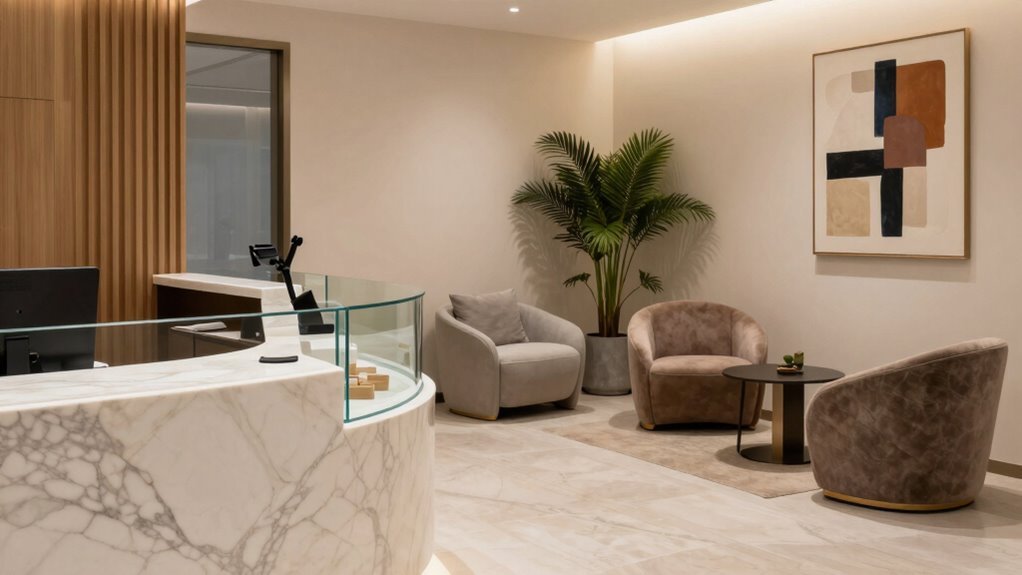

Seating placement in your reception area influences how visitors perceive your professionalism and approachability. When chairs face each other or form a semi-circle, it encourages open dialogue and makes guests feel welcomed, increasing the chance they’ll book. Conversely, rigid or distant arrangements can create barriers and convey disinterest. By designing your space thoughtfully, you can foster positive body language cues and subconscious feelings that lead to more bookings—exploring these details further can help you optimize your environment effectively.
Key Takeaways
- Seating arrangement influences visitors’ perceptions of professionalism, openness, and approachability, affecting their willingness to book.
- Body language cues from seating posture and gestures reveal emotional states, impacting trust and decision-making.
- Arrangements that promote relaxed, face-to-face interaction foster engagement and increase booking likelihood.
- Distant or hierarchical seating subconsciously signals judgment, reducing visitor comfort and willingness to commit.
- Thoughtful space utilization and layout design enhance comfort, positive perception, and ultimately, booking conversions.
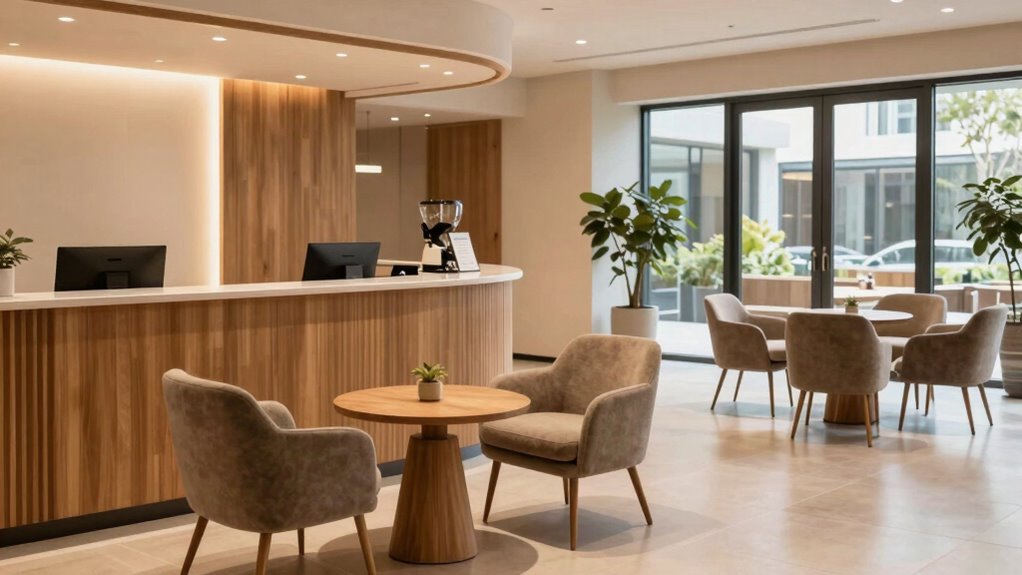
Have you ever wondered how a reception area influences your first impression? It’s often the first thing people notice when they walk through the door, and it sets the tone for their entire experience. How you arrange the seating and what body language cues are evident can subtly communicate professionalism, openness, or even rigidity. These elements work together to shape visitors’ perceptions before they even speak a word. When you pay attention to seating arrangement dynamics, you create an environment that encourages positive interactions or, conversely, deters them. For example, seats placed too far apart might make visitors feel unwelcome or uncomfortable, while a well-thought-out layout invites conversation and comfort.
Understanding body language cues within the reception area is vital. When you observe how people sit, cross their arms, or lean forward, you gain insight into their emotional state. If visitors sit stiffly or avoid eye contact, it could indicate hesitation or dissatisfaction. Conversely, relaxed postures, smiles, and open gestures suggest they feel at ease. As someone managing the space, you can influence these cues by arranging seating in a way that promotes relaxed body language. For instance, placing chairs in a semi-circle or small clusters fosters a more inviting atmosphere, encouraging visitors to feel they’re in a safe, welcoming environment. Recognizing space utilization and its impact on perceptions can help you optimize the flow and comfort of your reception area.
Arranging seating in semi-circles or clusters fosters relaxed, welcoming body language.
Seating arrangement dynamics also impact the flow of interactions. When chairs are positioned to face each other, it promotes engagement and open dialogue. This setup signals that you’re approachable and ready to listen, which can ultimately sway a visitor’s decision-making process. On the other hand, rigid or overly formal arrangements might create a barrier, making visitors hesitate to express themselves freely. The positioning of furniture affects not only comfort but also the perceived accessibility of your space. Adjusting the layout to be more inclusive and less intimidating can lead to better engagement, more positive interactions, and, ultimately, more bookings.
You should also consider how body language cues and seating arrangements influence subconscious perceptions. For example, if seats are arranged in a way that feels hierarchical or distant, visitors may subconsciously feel they’re being judged or that their concerns aren’t valued. Conversely, an open, accessible setup paired with welcoming body language cues from staff sends a message that visitors are respected and valued, increasing their willingness to commit or book your services. By consciously designing your reception area with these elements in mind, you not only improve the immediate visitor experience but also increase the likelihood of converting inquiries into bookings.
Frequently Asked Questions
How Does Lighting Affect Visitor Perceptions in the Reception Area?
Lighting substantially influences how visitors perceive your reception area. Bright ambient illumination creates a welcoming and energetic atmosphere, making visitors feel comfortable and confident. Poor or harsh lighting can cause discomfort and negatively impact their visual perception, potentially making the space seem less professional. By carefully adjusting ambient illumination, you can enhance the overall ambiance, making visitors feel at ease and positively influencing their initial impression of your space.
What Role Do Colors Play in Influencing Guest Comfort and Mood?
Colors considerably influence guest comfort and mood through color psychology and symbolism. When you choose calming hues like blues or greens, you create a relaxing environment that reduces stress and fosters trust. Bright colors like yellow evoke happiness and energy, while warm tones such as red symbolize passion and warmth. By thoughtfully selecting colors based on their symbolism, you can enhance visitor experience, making your reception area welcoming and emotionally resonant.
How Can Scent Marketing Impact Visitor Experience at Reception?
Scent marketing can considerably enhance visitor experience at reception by triggering scent memory and leveraging fragrance psychology. When you use appealing fragrances, you create a welcoming atmosphere that positively influences guests’ mood and perception. This sensory cue makes visitors feel more comfortable and valued, encouraging longer stays and positive interactions. By carefully selecting scents, you reinforce your brand identity and leave a memorable impression, ultimately improving overall guest satisfaction.
Are There Cultural Considerations in Reception Area Seating Arrangements?
Yes, cultural considerations matter when arranging seating. You should respect cultural norms and seating etiquette, as these influence comfort and perceptions. For example, in some cultures, sitting close might be seen as friendly, while others prefer more personal space. By understanding these differences, you make visitors feel respected and at ease, which can positively impact their overall experience and even influence booking decisions.
How Does Background Music Influence Guest Behavior and Satisfaction?
Surprisingly, background music can subtly shape guest behavior and satisfaction more than you’d expect. It creates an acoustic environment that influences mood—calm tunes soothe, while lively beats energize. Guests might linger longer or feel more welcomed, all driven by carefully chosen background music. You’ll find that an inviting ambiance enhances overall satisfaction, turning a simple visit into a memorable experience, even when you least realize how much music impacts their perception.
Conclusion
Understanding how seating placement influences your reception area is like tuning an instrument; when you get it just right, everything harmonizes. By strategically arranging seats, you’re not just guiding guests but inviting positive energy to flow effortlessly. Small changes can turn your space into a magnet for bookings, making visitors feel welcome before they even step through the door. Remember, a well-placed seat isn’t just furniture—it’s the opening note of a memorable experience.