
You might not notice the hair department on screen, but they play a vital role in shaping each character’s look. They create authentic styles that match the story’s era, personality, and setting, working behind the scenes to guarantee consistency and realism. From designing period-specific hairstyles to quick adjustments during takes, they help transport you to different worlds without distraction. If you keep exploring, you’ll discover how their craftsmanship truly enhances storytelling.

Get beauty and skincare favorites delivered free with Prime
- Fast, free delivery on millions of items
- Prime Video, Amazon Music and more included
- Member-only deals all year
Key Takeaways
- They craft authentic hairstyles that match the character’s personality and the story’s era, enhancing believability.
- Their work involves detailed styling, wig creation, and quick adjustments to maintain continuity during filming.
- They collaborate closely with costume and makeup teams to ensure cohesive character appearances.
- They preserve hairstyles over long shoots, ensuring consistency across scenes and episodes.
- Their behind-the-scenes craftsmanship subtly influences the audience’s immersion and storytelling.

When you watch a movie or TV show, you might not realize the essential role that the hair department plays in bringing characters to life. While costume design and makeup artistry often grab your attention, the hair department works behind the scenes to create authentic, memorable looks that perfectly match a character’s personality and the story’s era. Their work isn’t just about styling hair; it’s about guaranteeing every strand contributes to the narrative, helping actors embody their roles convincingly.
As a member of the hair department, your job involves more than just cutting and styling hair. You collaborate closely with costume designers to develop hairstyles that complement costumes and set the tone for each scene. Whether it’s a sleek 1920s bob or wild, rebellious spikes, your choices help transport viewers to different times and worlds. You also coordinate with makeup artists, ensuring that hairstyles align seamlessly with makeup styles, creating cohesive character appearances. For example, a period drama might require intricate updos and specific hair accessories that mirror historical accuracy, while a sci-fi series might call for futuristic, unconventional looks.
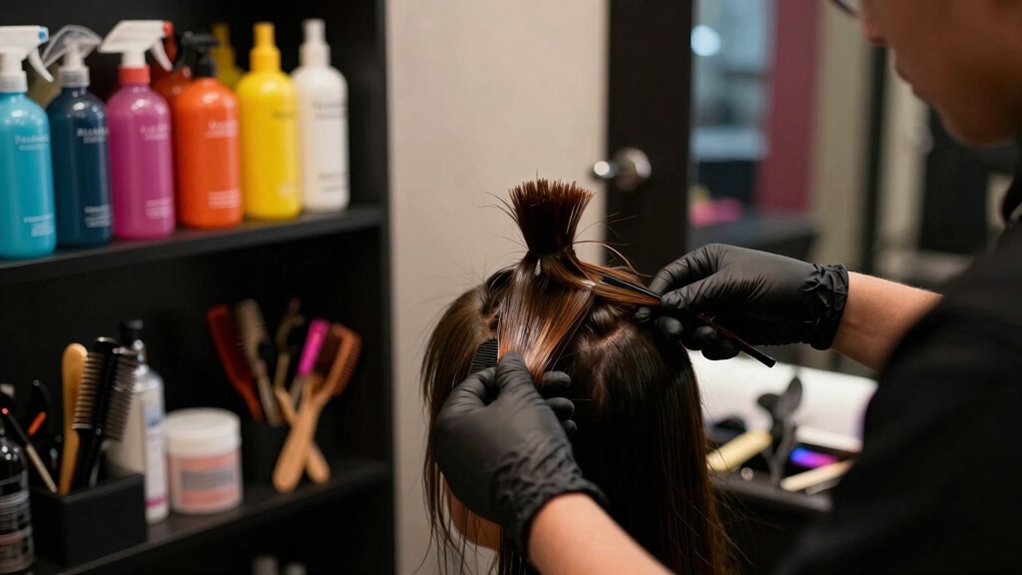
Your work often involves meticulous preparation and quick adjustments. You might spend hours creating detailed wigs or styling hair extensions to match a character’s distinctive look. During filming, you stay alert to keep hairstyles intact through multiple takes, making quick fixes when needed. You also work with actors to achieve their desired look, offering gentle guidance on hair care and styling to ensure comfort and authenticity. This requires a keen eye for detail, patience, and adaptability, especially when dealing with complex hair designs or unexpected on-set challenges. Additionally, understanding hair care techniques is crucial for maintaining healthy hair amidst frequent styling and styling products. Proper hair health maintenance ensures that styles stay fresh and vibrant throughout filming.
In addition to styling, you’re responsible for maintaining the continuity of hairstyles across scenes and episodes. This means keeping detailed records of each style, so the character’s look remains consistent, even when filming is spread out over days or weeks. Your expertise helps create a believable world where every hair strand contributes to the story without drawing attention to itself. The subtlety of your craft is what makes characters seem real, relatable, and timeless. Being knowledgeable about hair preservation methods can also be essential in prolonging the integrity of intricate styles over long shooting days.
Ultimately, your work in the hair department is about more than aesthetics; it’s about storytelling. The next time you notice a character’s flawless hairstyle or period-specific hairdo, remember that it’s the result of your careful planning and skilled craftsmanship. Your contribution, along with costume design and makeup artistry, weaves together the visual fabric that makes cinematic worlds believable.
Products Worth Considering

Oral-B iO Series 3 Rechargeable Electric Toothbrush for Adults, Black

Therabody Theragun Prime 6th Generation Deep Tissue Massage Gun, Black

Garmin Forerunner 55 GPS Running Smartwatch, Black
As an affiliate, we earn on qualifying purchases.
Frequently Asked Questions
How Do Hairdressers Coordinate With Different Characters’ Styles?
You coordinate with different characters’ styles by paying close attention to character continuity, ensuring each hairstyle remains consistent throughout filming. You also consider hair evolution, adapting styles as characters develop or age. You communicate with costume designers and directors to match the look to the story’s tone, making sure every hairstyle reflects personality changes or plot developments, so the audience stays immersed without noticing your behind-the-scenes work.
What Tools Are Essential for On-Set Hair Touch-Ups?
For on-set hair touch-ups, you need essential tools like a wide-tooth comb, small brushes, and clips. Focus on hair product selection to match each character’s style, using sprays, gels, or serums as needed. Master styling techniques for quick fixes, ensuring hair looks flawless on camera. Keep a mirror handy, and stay organized with a kit that allows swift adjustments, so you maintain continuity and character integrity throughout filming.
How Long Does It Typically Take to Style Hair for a Scene?
Styling hair for a scene usually takes anywhere from 15 minutes to over an hour, depending on the complexity. You need to take into account historical accuracy and cultural influences, which can greatly impact styling time. For period pieces, replicating authentic styles requires careful attention, often extending the process. On the other hand, contemporary styles may be quicker but still demand precision to match the character’s look and the director’s vision.
How Do Hair Departments Handle Special Effects or Wigs?
You handle special effects or wigs by expertly managing wig transformations and prosthetic hair applications. You carefully select and fit wigs to match character needs, guaranteeing seamless integration with the actor’s natural hair. For prosthetic hair, you attach and style it to create realistic looks, often using adhesives and specialized tools. Your skill ensures these elements appear natural on screen, enhancing storytelling without drawing attention to the hair work.
What Challenges Do Hair Stylists Face During Long Shooting Days?
Like a tightrope walker balancing a delicate line, you face challenges during long shooting days. You meticulously select hair products to maintain the perfect look and stay true to the character, all while managing continuity. Fatigue and changing lighting add weight to your shoulders. Staying alert becomes your safety net, ensuring each hairstyle remains flawless from scene to scene, despite the marathon hours.
Conclusion
Next time you watch a film or show, take a moment to appreciate the silent artistry of the hair department. They work behind the scenes to craft every strand and style, ensuring your favorite characters look just right. Their touch is like a gentle whisper, shaping the story without stealing the spotlight. So, next time you notice a perfect hairstyle, remember, it’s the magic of those unseen hands working quietly behind the curtain.