When using a travel steamer, it’s important you understand fabric heat tolerance to avoid damage. Different materials react differently to high temperatures; for example, delicate fabrics like silk and nylon need lower settings, while cotton and wool can handle more heat. Always check care labels and test on hidden areas first. Maintaining safe distances and adjusting steam appropriately help prevent burns and marks. Keep exploring to learn how to optimize your steamer use safely for various fabrics.
Key Takeaways
- Always check fabric labels for recommended steaming temperatures to prevent damage.
- Test steam on a hidden area before full application to assess fabric response.
- Adjust your steamer’s heat setting according to the fabric’s heat tolerance.
- Hold the steamer a few inches away from the fabric to avoid direct heat contact.
- Use steady, sweeping motions and unplug after use to ensure safe operation.
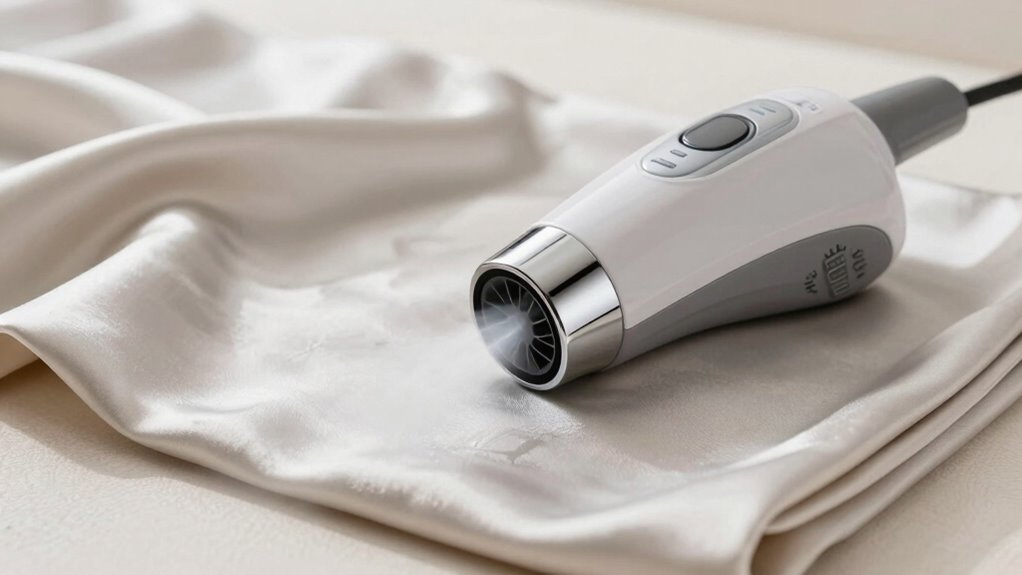
Have you ever wondered how to stay safe while using a travel steamer? It’s a valid concern, especially since steamers rely on high-temperature steam to remove wrinkles and refresh your clothes. One of the most important factors to consider is the steam temperature. If it’s too hot, you risk damaging delicate fabrics; if it’s too cool, the steamer might not effectively smooth out your garments. Understanding the right steam temperature for different fabrics is essential for safe and effective steaming.
Most travel steamers have adjustable settings or specific instructions for various fabric types. For example, delicate fabrics like silk or nylon require a lower steam temperature to prevent scorching or melting. On the other hand, sturdier fabrics like cotton or linen can withstand higher heat levels. Always check the manufacturer’s guidelines or labels on your clothing to determine the appropriate settings. Ignoring these instructions can lead to unintended damage, such as shiny spots, burns, or permanent wrinkles.
Fabric compatibility is another critical aspect of safety when using a travel steamer. Not all materials react the same way to steam. Synthetic fabrics, like polyester or acrylic, can melt or deform if exposed to excessive heat. Natural fibers like wool or cotton are generally more tolerant but still need proper handling. Before steaming entire garments, test a small, hidden area to see how the fabric responds. This initial test helps you gauge whether the steam temperature is suitable, avoiding costly mistakes.
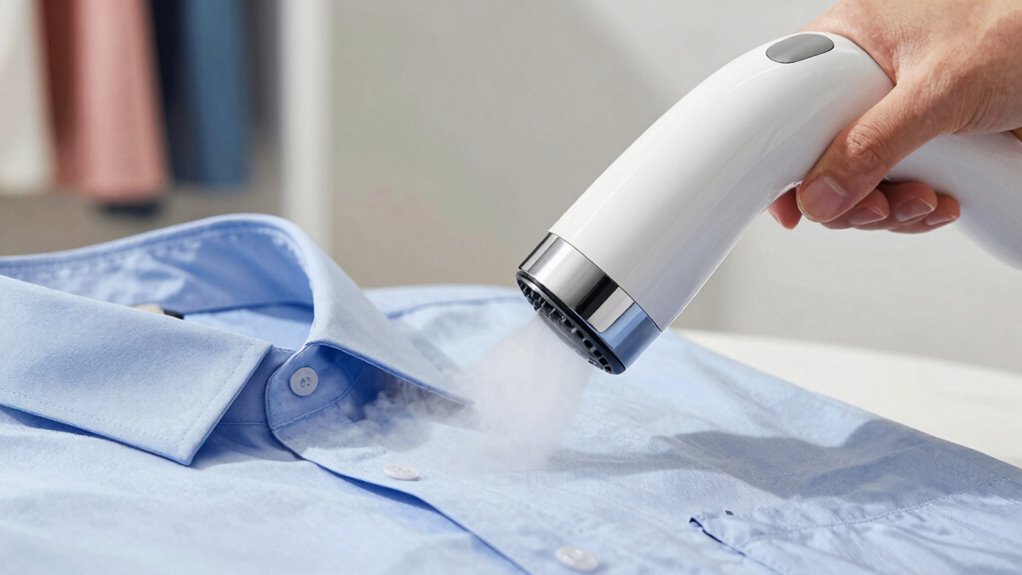
To guarantee safety, always hold the steamer a few inches away from the fabric, maintaining a steady motion rather than pressing it directly against the material. This prevents concentrated heat spots that could cause burns or damage. Additionally, never leave the steamer unattended while it’s on, and always unplug it after use to avoid accidental burns or electrical hazards. If your steamer has a water reservoir, make sure it’s filled correctly and that the device is functioning properly before starting. Understanding fabric heat tolerance is crucial to prevent accidental damage and ensure safe steaming.
Frequently Asked Questions
Can Fabric Heat Tolerance Vary Between Different Clothing Types?
Yes, fabric heat tolerance varies between clothing types because of differences in fabric composition and garment construction. For example, cotton and linen can generally handle higher heat, while delicate fabrics like silk or polyester require gentler steaming. You should always check the care label and consider how the fabric is constructed, as tighter weaves or layered garments may need lower heat settings to prevent damage.
How Do I Test Fabric Heat Tolerance Before Steaming?
Think of fabric testing as a cautious handshake with your clothes. Lightly dampen a hidden area, then gently press a heated iron or steamer nearby—never directly on the fabric—watching for any signs of damage or discoloration. This helps you find the fabric’s heat threshold without risking your outfit. Always test different fabric types separately, as each has its own heat tolerance, ensuring safe steaming every time.
Are There Safety Concerns With Steaming Delicate or Synthetic Fabrics?
You should be cautious when steaming delicate or synthetic fabrics, as high steamer pressure can cause damage or color bleeding. To guarantee safety, adjust the steamer pressure appropriately and test fabric dye stability on a small, hidden area first. This way, you prevent potential heat damage or dye loss, maintaining your fabric’s integrity and appearance while enjoying the convenience of steaming.
What Should I Do if My Fabric Gets Scorched?
If your fabric gets scorched, act quickly to minimize damage. First, stop steaming immediately to prevent further scorching. For stain removal methods, gently blot the area with a damp cloth—avoid rubbing, which can worsen marks. To prevent future fabric scorch, always check heat settings and fabric heat tolerance basics. Using these fabric scorch prevention tips can help you avoid costly damage and keep your clothes looking fresh.
Is There a Recommended Duration for Steaming to Prevent Fabric Damage?
To prevent fabric damage, follow recommended fabric temperature guidelines and keep steaming duration tips in mind. Typically, you should steam each section for about 10-15 seconds, avoiding prolonged exposure. Always start with the lowest heat setting and gradually increase if needed. Keep the steamer moving and don’t hold it in one spot. This way, you protect your fabric from scorching while achieving a smooth, wrinkle-free look.
Conclusion
Remember, safety is the best travel companion. Always check your fabric’s heat tolerance before steaming, and don’t rush the process. Using your steamer properly not only keeps your clothes looking sharp but also prevents accidents. As the saying goes, “Better safe than sorry.” By following these simple tips, you can enjoy crisp, wrinkle-free clothes on the go without worry. Stay cautious, and your travels will be smooth and stylish!