How often you should handle detangling depends on your hair type and its tendency to tangle or shed. For most people, detangling every 3 to 7 days works well—more frequently if your hair tends to knot easily. Use gentle tools and work on damp hair, section by section, to prevent damage. Consistently following a suitable schedule helps keep your hair healthy and manageable—stay with us to discover detailed tips for your perfect routine.
Key Takeaways
- Tangle-prone or shedding hair may require detangling every 2 to 3 days to prevent damage.
- Less prone to tangling hair can be detangled weekly, focusing on gentle techniques.
- Detangle when hair is damp, not soaking wet, to minimize breakage and promote healthy hair.
- Adjust frequency based on hair’s response, increasing or decreasing as needed for comfort and health.
- Incorporate conditioning and proper tools into routine to make detangling easier and more effective.
Assessing Your Hair Type and Texture
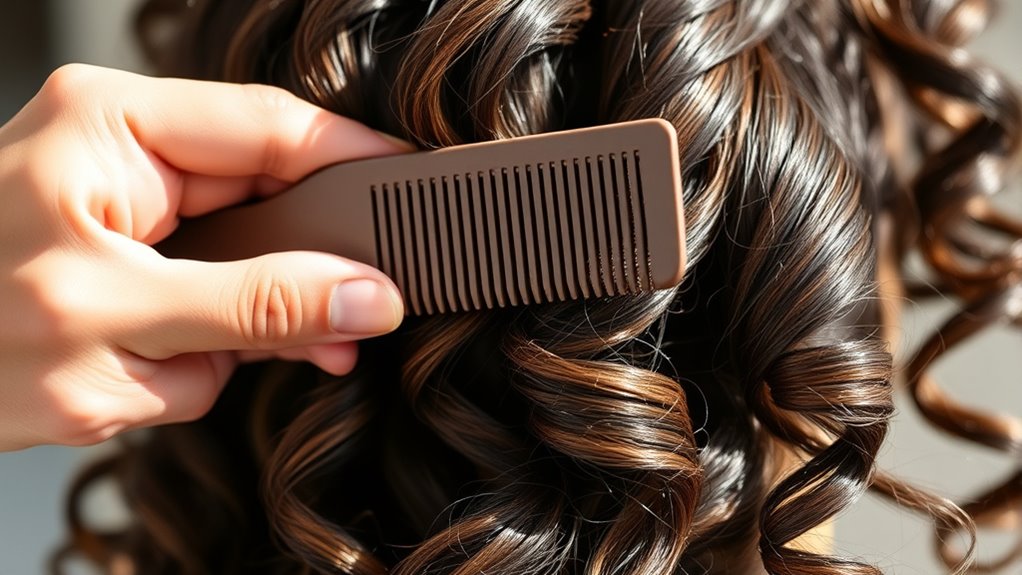
Understanding your hair type and texture is the first step in developing an effective detangling routine. Recognizing your hair’s porosity helps determine how moisture moves through your strands, affecting how gentle or firm your detangling process should be. High-porosity hair absorbs moisture quickly but also loses it easily, so you might need to detangle more carefully to prevent breakage. Low-porosity hair resists moisture, making it essential to use lightweight products and detangle when hair is damp. Additionally, paying attention to your scalp health is vital; a healthy scalp promotes stronger, more manageable hair. Being aware of your specific hair care needs can help you choose appropriate products and techniques. By evaluating these factors, you can tailor your detangling method, minimize damage, and keep your hair and scalp in excellent condition.
Establishing a Detangling Frequency Based on Hair Needs
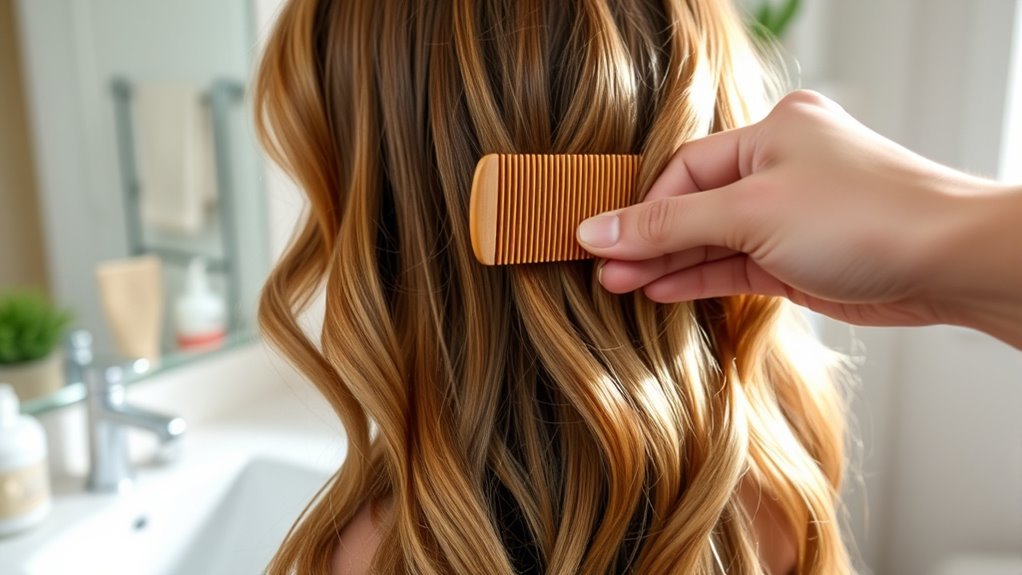
Determining how often to detangle your hair depends on its specific needs and how quickly it tends to tangle or shed. If your hair is prone to tangling or shedding, you might need to detangle more frequently, perhaps every few days. Use gentle detangling tools like wide-tooth combs or detangling brushes to minimize breakage. Incorporating hair conditioning into your routine helps soften strands, making detangling easier and reducing damage. For hair that’s less prone to tangling, weekly detangling may suffice. Pay attention to how your hair responds—if you notice increased shedding or breakage, adjust your schedule accordingly. Matching your detangling frequency with your hair’s needs helps maintain healthy, manageable hair while preventing unnecessary damage. Additionally, understanding your hair’s specific type and texture can guide you in establishing an effective detangling routine.
Tips for Safe and Effective Detangling Practices
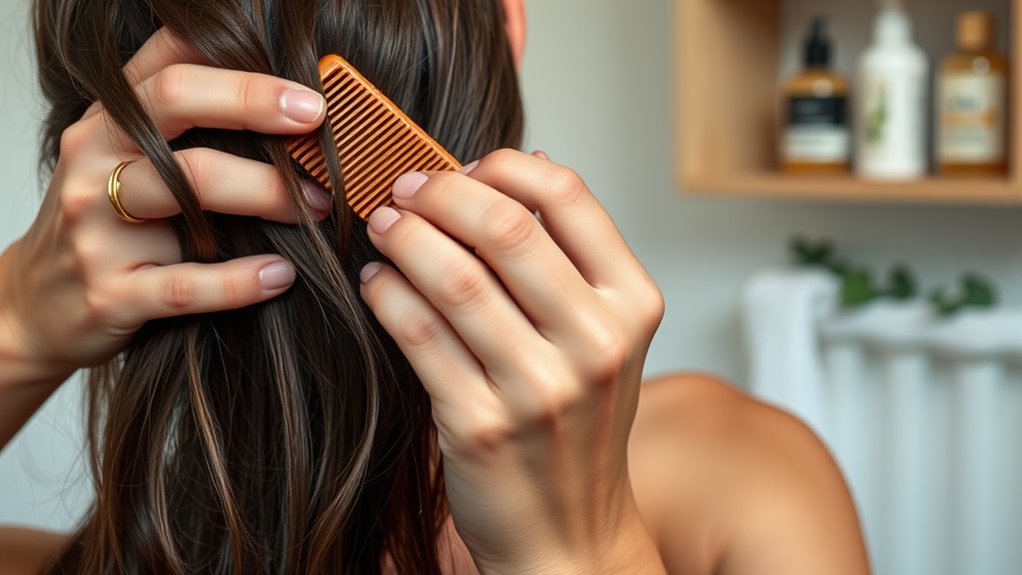
To guarantee your detangling sessions are safe and effective, start by choosing the right tools. Use wide-tooth combs or detangling brushes to minimize breakage. Applying hair oil before detangling helps loosen knots and reduces friction. Always detangle when your hair is damp, not soaking wet, to prevent damage. Use gentle, downward strokes and work from ends to roots. Here’s a quick guide:
| Detangling Tools | Hair Oil Application | Technique Tips |
|---|---|---|
| Wide-tooth comb | Apply evenly from roots to ends | Detangle in sections |
| Detangling brush | Use a light, nourishing oil | Be patient, avoid pulling |
| Paddle brush | Reapply oil as needed | Start from ends and work up |
Consistent, gentle practices protect your hair’s health. Incorporating techniques that minimize hair damage can further improve your detangling routine and keep your hair healthy and strong.
Frequently Asked Questions
Can Detangling Cause Hair Breakage if Done Too Often?
Yes, frequent detangling can cause hair damage if you’re not careful. Excessive detangling weakens hair strands, leading to breakage and split ends. To avoid this, adjust your detangling frequency based on your hair type and condition, and use gentle techniques and tools. Proper care minimizes hair damage, ensuring your hair stays healthy and strong even with regular detangling.
What Tools Are Best for Gentle Detangling?
In the age of knightly armor, gentle tools still reign supreme. For gentle detangling, use wide-tooth combs or detangling brushes with flexible bristles. These tools help minimize breakage, debunk detangling myths, and support effective detangling techniques. Always start from the ends and work upward, being patient. Your hair will thank you for choosing tools designed for tenderness, ensuring a snag-free, damage-free experience every time.
How Does Weather Affect My Detangling Schedule?
Weather considerably impacts your detangling routine. High humidity levels during summer can cause hair to become frizzier and more prone to tangles, so you may need to detangle more frequently or use extra moisture. Seasonal variations, like colder months, can make hair drier and more brittle, requiring gentler handling. Adjust your schedule accordingly, paying attention to how humidity and season change affect your hair’s texture and manageability.
Should I Detangle Wet or Dry Hair for Better Results?
Think of your hair like delicate fabric—timing matters. Wet detangling is easier and gentler, reducing breakage, but it can cause more damage if done roughly. Dry detangling offers more control and less stretch, ideal for precision. For best results, start with wet detangling to loosen knots gently, then switch to dry detangling for refinement. Always use a wide-tooth comb and be gentle to protect your hair.
Can Detangling Help With Scalp Health?
Detangling can definitely help with scalp health by boosting scalp circulation, which encourages nutrient flow and promotes healthier hair growth. Regular gentle detangling also aids in dandruff prevention by removing buildup and reducing scalp irritation. When you detangle carefully, you stimulate blood flow, keeping your scalp active and balanced. Just make sure to use the right tools and techniques to avoid causing damage or discomfort during the process.
Conclusion
By understanding your hair type, establishing a routine, and practicing safe techniques, you’ll keep your hair healthy, manageable, and beautiful. Consistency creates confidence, confidence builds comfort, and comfort encourages care. When you assess, decide, and adapt your detangling schedule, you’re not just maintaining your hair—you’re nurturing your confidence. So, stay attentive, stay gentle, and stay committed. Because the better you care for your hair, the more your hair will reward you with shine, strength, and softness.