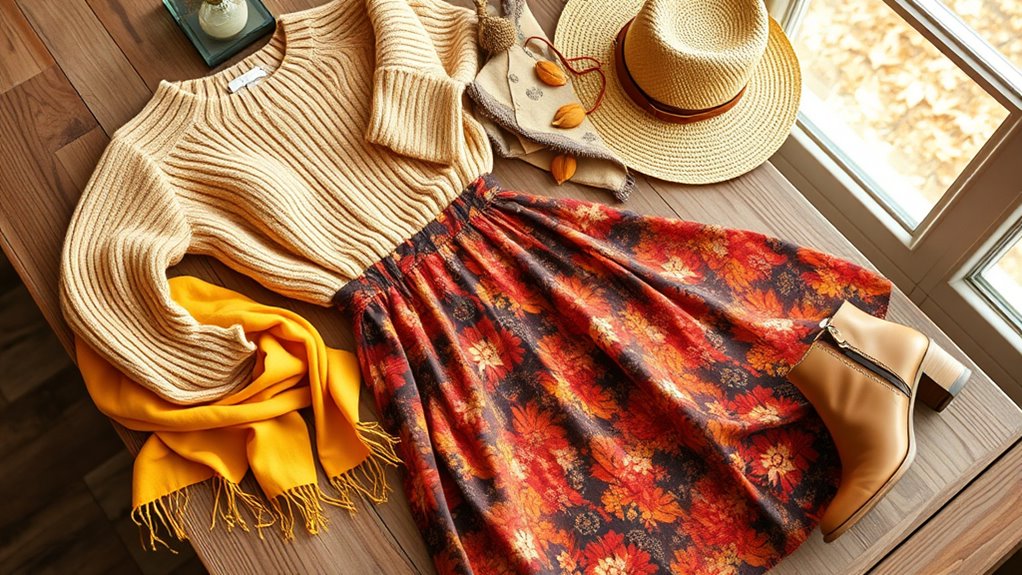

To build a seasonal outfit formula you love, start by choosing a core set of colors that suit each season, like pastels for spring or rich jewel tones for winter. Layer lightweight pieces with heavier ones, mixing textures and shades to add dimension while staying comfortable. Create a system using your favorite pieces, adding seasonal accessories for variety. Keep experimenting with combinations to discover what makes you feel confident—if you keep exploring, you’ll develop a wardrobe that’s effortlessly stylish year-round.
Key Takeaways
- Identify your core seasonal color palette to ensure cohesive and versatile outfit mixing.
- Develop a basic outfit recipe: start with a favorite piece, add layers, and accessorize seasonally.
- Use layering techniques to adapt outfits to temperature changes without bulkiness.
- Incorporate textures and complementary tones to add dimension and personal style.
- Regularly experiment with new pieces and trends to keep your wardrobe fresh and reflective of your style.
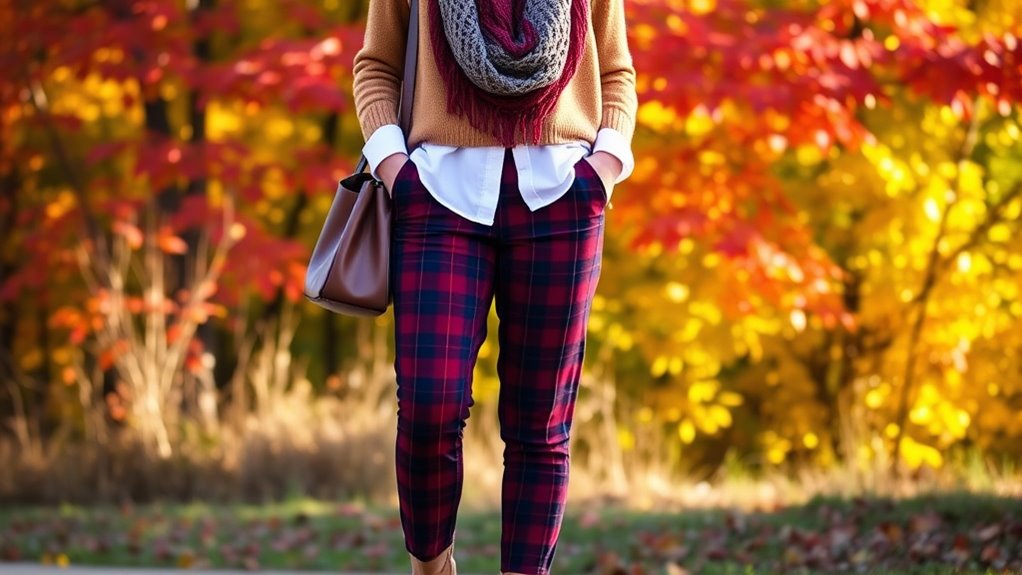
Ever wonder how to effortlessly put together stylish outfits that suit each season? The secret lies in mastering a few key principles, starting with layering techniques and choosing the right color palettes. When you understand how to layer effectively, you create versatile looks that adapt to changing temperatures and occasions, all while maintaining a cohesive style. Layering isn’t just about piling on clothing; it’s about combining pieces that complement each other in texture, weight, and color. For example, a thin long-sleeve shirt under a cozy sweater, topped with a tailored jacket, can be adjusted easily if the day warms up or cools down. This technique allows you to stay comfortable without sacrificing style. It’s also about strategic placement—think lightweight fabrics closest to your skin, then gradually heavier pieces on top. This way, you prevent bulkiness while still adding dimension to your outfit. Additionally, cultivating a curiosity for fashion trends can inspire you to experiment with new layering styles and color combinations, keeping your wardrobe fresh and exciting. Equally important is selecting a well-thought-out color palette that suits your personal style and the season. When you pick a core set of colors, mixing and matching becomes much simpler, giving you a cohesive look every time. For spring, soft pastels and fresh neutrals work beautifully, while fall calls for warm earth tones like rust, olive, and deep browns. Winter outfits often lean toward richer, darker shades, complemented by pops of jewel tones, whereas summer tends to favor bright, vibrant hues. The key is to build your wardrobe around a few main colors and then incorporate complementary shades or patterns for variety. This approach helps streamline your outfit choices and ensures you look put-together with minimal effort. Once you have your layering techniques down and a solid color palette, creating a seasonal outfit formula becomes second nature. Think of it as a recipe: choose a base piece in your favorite color, add a versatile layer that can be adjusted, and finish with accessories that reflect the season’s vibe. For example, during fall, you might start with a neutral-colored sweater, layer on a plaid scarf, and add a pair of ankle boots in a coordinating hue. As you refine your formula over time, you’ll find it easier to assemble outfits quickly, confidently, and with style that feels authentic to you. Remember, the goal isn’t perfection but creating a system that works for your lifestyle and makes dressing up enjoyable all year round.
Frequently Asked Questions
How Do I Adapt My Outfit Formula for Unexpected Weather Changes?
When unexpected weather changes occur, adapt your outfit formula by using layering techniques. Start with weatherproof fabrics like waterproof jackets or quick-drying materials to stay comfortable. Add or remove layers as needed, such as a sweater or scarf, to adjust to temperature shifts. This flexible approach keeps you prepared for anything, ensuring you’re stylish and comfortable regardless of sudden weather changes.
What Are Some Budget-Friendly Ways to Update My Seasonal Wardrobe?
You can update your seasonal wardrobe on a budget by exploring thrift shopping for unique, affordable pieces that refresh your look. Focus on building a capsule wardrobe with versatile essentials you can mix and match across seasons. This way, you maximize your wardrobe’s potential without overspending. Thrift stores often have hidden gems, helping you stay stylish and budget-conscious while effortlessly adapting your outfits to seasonal changes.
How Can I Incorporate Sustainable Fashion Into My Seasonal Outfits?
You can incorporate sustainable fashion into your seasonal outfits by choosing pieces made from sustainable fabrics like organic cotton, hemp, or recycled materials. Look for eco-friendly brands that prioritize ethical production and use natural dyes. Mix and match these pieces with your existing wardrobe to create stylish, eco-conscious looks. This approach not only supports sustainability but also keeps your outfits fresh and unique each season.
What Accessories Best Complement My Seasonal Outfit Formula?
Adding statement jewelry and statement shoes spices up your seasonal outfit formula. Opt for bold, beautiful pieces that catch the eye, like chunky necklaces or dazzling earrings, to add a pop of personality. Pair vibrant statement shoes with simpler outfits to make a memorable impact. These accessories amplify your style, attract attention, and add an extra layer of allure, making your seasonal ensembles both stunning and stylish.
How Do I Personalize My Outfit Formula for Different Occasions?
To personalize your outfit formula for different occasions, focus on occasion-specific styling and incorporate personalization tips. Adjust your accessories, fabrics, and colors to suit the event—think sleek jewelry for formal events or casual sneakers for weekend outings. Layer thoughtfully and choose versatile pieces that can be mixed and matched. This way, your seasonal outfit formula remains adaptable, helping you feel confident and appropriately dressed for every occasion.
Conclusion
As you perfect your seasonal outfit formula, remember that sometimes the best looks come unexpectedly—like finding that perfect scarf tucked away or a forgotten jacket that suddenly feels just right. These little coincidences remind you that style isn’t just about planning but embracing the surprises life throws your way. Trust your instincts, stay open to new combinations, and let your wardrobe reflect both your intention and the charming accidents that make your look uniquely yours.