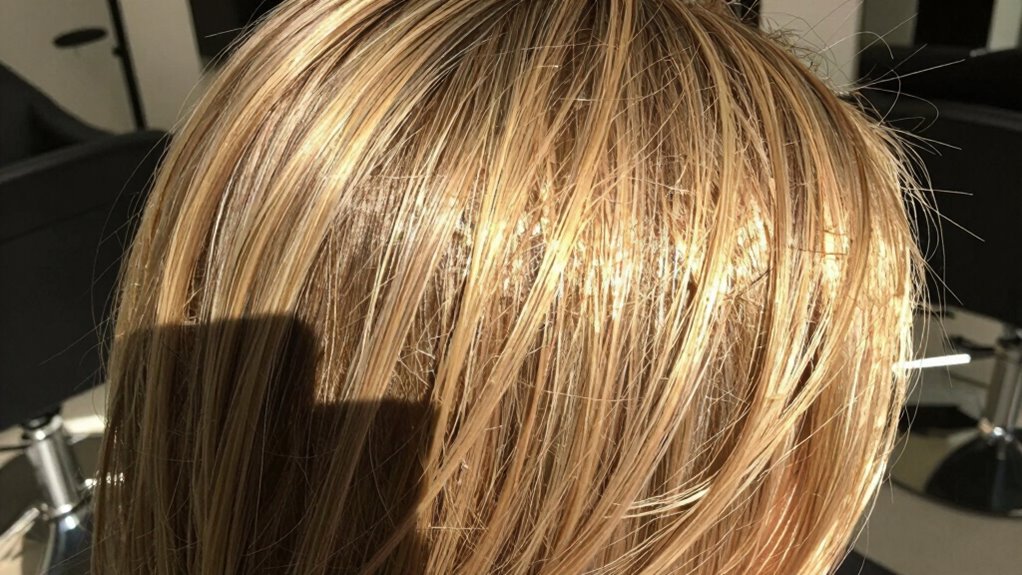

One common salon lighting mistake is using artificial lights that don’t mimic natural daylight, which can distort hair color and lead to dissatisfaction. Overly warm bulbs (below 3000K) give hair a yellow or orange tinge, while cool lights (above 5000K) add a bluish cast, making hair look dull or off-tone. To avoid this, opt for neutral or daylight-balanced lighting around 4000K-5000K. Keep these tips in mind, and you’ll discover how to improve color accuracy and client satisfaction.
Key Takeaways
- Using artificial lights with incorrect color temperature (too warm or cool) distorts true hair color appearance.
- Relying solely on artificial lighting instead of natural light can lead to misjudging hair shades.
- Poorly controlled lighting ambiance, such as uneven or overly bright lights, affects color perception accuracy.
- Avoiding large windows or skylights reduces natural light, increasing the risk of color misjudgment.
- Selecting lighting with a color temperature outside 4000K-5000K can cause hair colors to appear dull, overly warm, or overly cool.
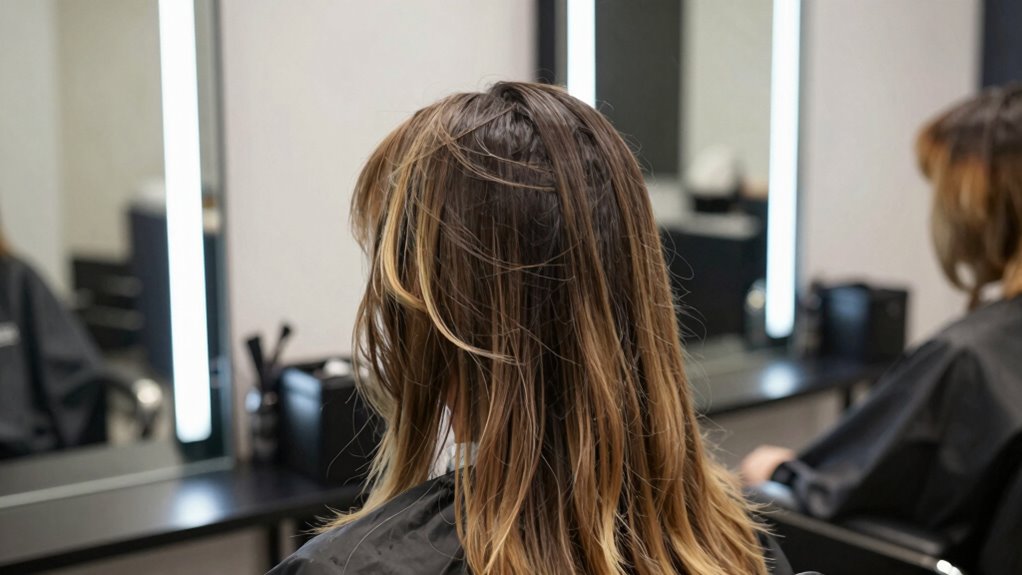
Lighting plays a essential role in creating the perfect salon atmosphere and guaranteeing clients leave satisfied with their look. One of the most common mistakes is neglecting the significance of natural light and its influence on how hair color appears. Relying solely on artificial lighting can lead to color misjudgments, especially if the lighting doesn’t mimic natural daylight. Natural light provides the most accurate reflection of true hair color, so if you can, incorporate large windows or skylights into your salon space. If that’s not feasible, make sure to use lighting that closely resembles natural daylight, which has a balanced color temperature. Avoid overly warm or cool artificial lights that distort color perception, leading to clients leaving disappointed with their results. Additionally, understanding the concept of Free Floating lighting allows you to better control the ambiance and color accuracy in your salon environment.
Color temperature plays a essential role in how hair color looks under your salon lighting. Warm lighting, with a color temperature around 2700K to 3000K, tends to give hair a yellowish or orange tint, which can make blondes look brassy or warm tones appear overly intense. Conversely, cool lighting, with a temperature above 5000K, can give hair a bluish cast, dulling vibrant shades or making brunettes look flat. Striking the right balance is necessary. Ideally, you want a neutral or daylight-balanced light around 4000K to 5000K, which accurately displays color without skewing warm or cool tones. Using this type of lighting ensures clients see their hair color as it truly is, reducing the chances of dissatisfaction and the need for corrective coloring.
Frequently Asked Questions
How Does Natural Light Affect Hair Color Perception?
Natural light markedly affects how you perceive hair color because of its changing color temperature and light reflection. As sunlight shifts throughout the day, it can make your hair look warmer or cooler, which might not match indoor lighting. You’ll notice that hair appears brighter or duller depending on the angle and intensity of natural light, so always check your hair color in different lighting conditions to see its true hue.
Can Different Bulb Types Change Hair Color Appearance?
Yes, different bulb types can alter how hair color looks. Bulb color and lighting temperature play key roles; for example, warm bulbs with lower Kelvin ratings can make hair appear richer and more golden, while cool bulbs with higher Kelvin ratings may give a more muted or ashy tone. By choosing the right lighting temperature and bulb type, you guarantee your clients see their true hair color, avoiding surprises.
What Lighting Settings Are Best for Accurate Hair Color?
Think of your salon as a painter’s studio, where the right lighting brings out true colors. Opt for a color temperature around 5000K, mimicking natural daylight, to see hair shades accurately. Make certain high color rendering index (CRI) lights—above 90—to reveal the depth and richness of the color. This setup helps clients leave with a true-to-life look, avoiding the distortions caused by poor lighting choices.
How Often Should Salon Lighting Be Calibrated?
You should calibrate your salon lighting at least every three to six months to maintain lighting consistency. Regular calibration ensures color temperature adjustments stay accurate, preventing color distortions that can make hair look different from how it truly is. By routinely checking and adjusting your lighting setup, you help clients see their true hair color, leading to higher satisfaction and better results. Don’t forget, consistent lighting is key for professional, accurate color services.
Does Lighting Impact Hair Color Longevity?
Lighting definitely impacts hair color longevity because poor lighting can cause shade distortion and make color appear duller. When your salon lighting isn’t ideal, it accelerates color fading and skews how the shade looks, leading clients to believe their color isn’t lasting. Proper, calibrated lighting helps maintain true color, reduces fade, and ensures your clients leave satisfied with their vibrant, long-lasting results.
Conclusion
So, next time you walk into a salon, remember: it’s not just about choosing the right hair color but also about avoiding the tragic mistake of bad lighting. Otherwise, you might leave looking like a mismatched Picasso—bright spots and all. After all, who needs a masterpiece when you can have a “what was I thinking?” moment? Pay attention to the lighting, or your perfect shade might just be the greatest illusion of all.