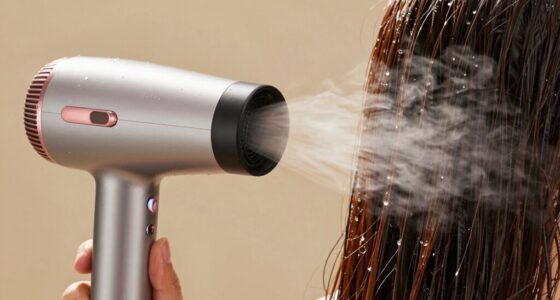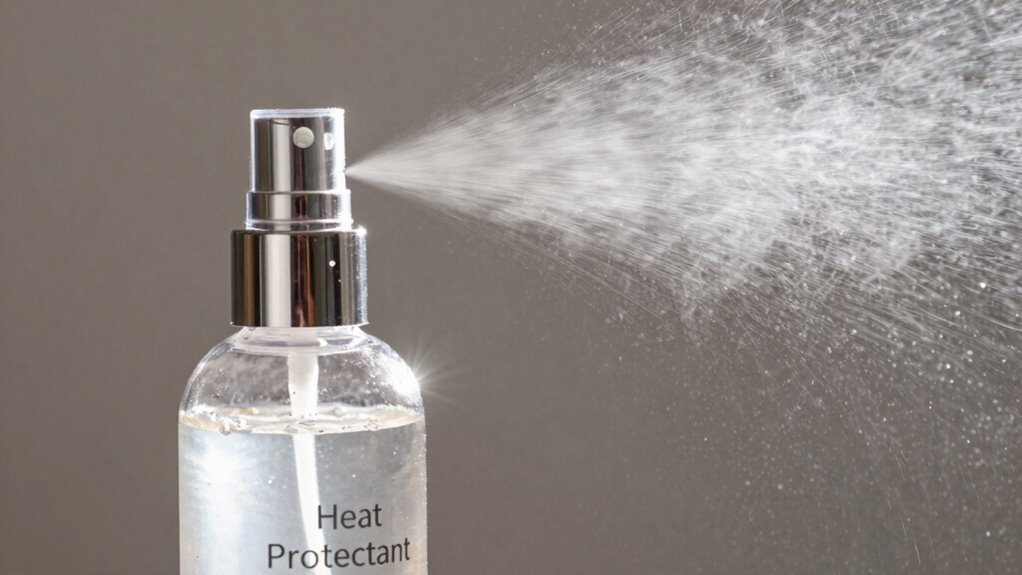
Heat protectants work by forming a thin film over your hair, acting as a barrier to help distribute heat evenly and reduce damage during styling. However, they’re not a magic shield that completely stops harm; prolonged exposure to high heat can still weaken hair over time. Using the right products properly can help, but understanding their limits is key. If you keep exploring, you’ll discover how to get the most out of your heat protectants effectively.
Key Takeaways
- Heat protectants form a thin film that distributes heat evenly, reducing direct contact with hair fibers.
- These films provide a barrier but do not prevent all heat damage, especially with excessive or high-temperature styling.
- Overuse or buildup of film-forming ingredients like silicones can clog scalp pores and cause irritation.
- Different formulations include nourishing ingredients that penetrate hair, offering protection without heavy film buildup.
- Proper application and regular washing are essential to maximize protection and prevent product accumulation.
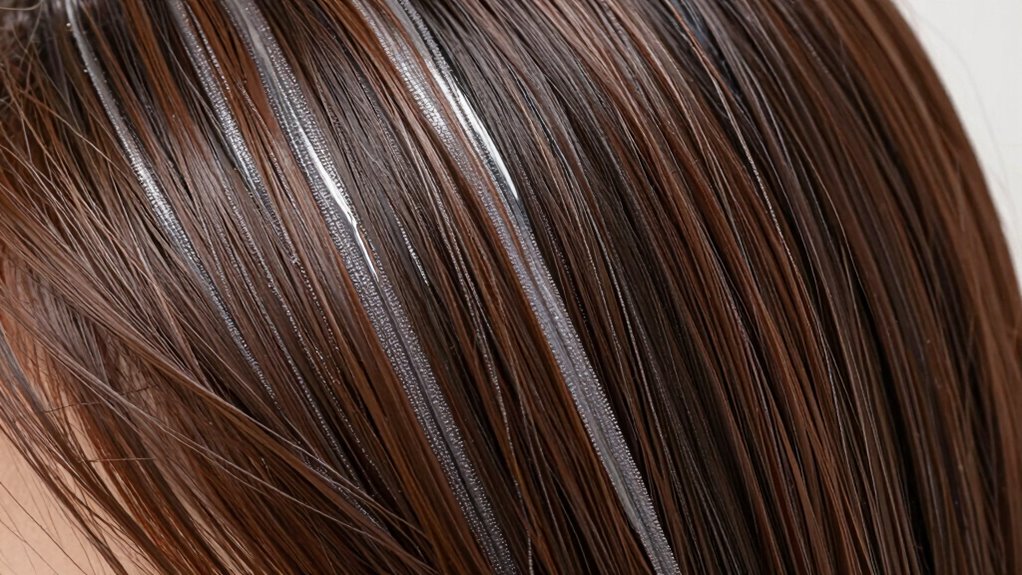
Have you ever wondered why heat protectants are vital before styling your hair with high temperatures? The truth is, these products aren’t magic shields that completely prevent heat damage. Instead, they act as a barrier, primarily forming a thin film over your hair strands. This film helps reduce the direct heat contact, minimizing the potential for damage. But understanding what these films are doing—and what they aren’t—can help you choose better products and avoid common issues like scalp irritation or unwanted product buildup.
When you apply a heat protectant, you’re essentially laying down a protective layer that disperses heat more evenly and prevents the high temperatures from reaching the hair’s inner cortex. This is fundamental because excessive heat can weaken the hair structure, leading to breakage, dryness, and frizz. However, it’s important to remember that these film formers are not foolproof. They don’t make your hair invulnerable to heat, so using high temperatures too often still causes damage over time. Instead, they buy you some extra time and reduce immediate harm, especially if you’re styling frequently.
Another key aspect to consider is how these films interact with your scalp. Some heat protectants contain ingredients that can cause scalp irritation if left on the skin for too long or if you have sensitive skin. When you overuse or don’t wash out your styling products properly, you risk product buildup. This buildup can clog hair follicles, leading to scalp irritation, itchiness, or even dandruff. To avoid this, it’s important to choose lightweight, non-comedogenic formulas and wash your hair regularly to remove excess product.
It’s also worth noting that not all heat protectants are created equal. Some rely heavily on film-forming agents like silicones or polymers, which create a smoother surface for styling. These are effective at reducing immediate heat damage but can also contribute to product buildup if used excessively. On the other hand, some formulas include nourishing ingredients like oils or proteins that penetrate the hair shaft, offering additional protection without creating a heavy film.
In the end, understanding that heat protectants are about forming a protective film—not providing invincibility—helps you manage expectations. Use them wisely, avoid over-application, and ensure you’re selecting products suited to your scalp and hair type. Being aware of how film formers work can help you make more informed choices and maintain healthier hair over time. This way, you can enjoy styled hair that looks good while maintaining its health and avoiding irritation or buildup.
Frequently Asked Questions
How Do Film Formers Differ From Traditional Heat Protectants?
Film formers differ from traditional heat protectants because they create a thin, protective layer through film formation, which helps shield your hair from heat damage. They rely on ingredients that maintain stability during styling, ensuring consistent protection. Unlike traditional protectants, film formers offer longer-lasting defense by forming a physical barrier, reducing moisture loss and heat penetration, ultimately keeping your hair healthier and more resilient against high temperatures.
Can Heat Protectants Prevent All Hair Damage?
You might think heat protectants prevent all hair damage, but that’s not entirely true. While they considerably reduce risks by creating a barrier, they can’t guarantee complete prevention. Using the right product can enhance hair damage prevention and extend your styling’s longevity, but no protectant is foolproof. To truly safeguard your hair, combine heat protectants with proper styling techniques and minimal heat exposure, ensuring your hair stays healthier longer.
Are There Specific Ingredients to Avoid in Heat Protectants?
You should avoid heat protectants containing harmful chemicals like formaldehyde, parabens, and certain alcohols, as they can damage your hair over time. If you have ingredient sensitivities, check labels carefully and opt for products with natural, nourishing ingredients. Staying away from these harmful chemicals helps prevent additional damage and keeps your hair healthier, especially if you frequently use heat styling tools.
How Often Should Heat Protectant Products Be Applied?
You should apply heat protectant products frequently enough to shield your strands during styling routines, typically before each heat styling session. For consistent hair product frequency, apply a lightweight layer each time you engage in heat styling—whether curling, straightening, or blow-drying. Don’t overdo it; reapplying too often can weigh your hair down. Incorporate this simple step into your styling routine to safeguard your strands from heat damage and keep hair healthy.
Do Heat Protectants Work Equally on All Hair Types?
Heat protectants don’t work equally on all hair types because factors like hair porosity and curl pattern matter. If you have high porosity hair, a product with strong film formers can help seal moisture, while lower porosity hair might need lighter formulas. Curly hair benefits from protectants designed to maintain moisture and reduce frizz. Choose a heat protectant tailored to your hair’s unique porosity and curl pattern for best results.
Conclusion
So, next time you reach for your heat protectant, remember it’s not some magic shield but a film former working behind the scenes. It creates a barrier that helps reduce damage, but it’s not invincible. Don’t rely solely on it—combine with proper heat settings and good hair care. Understanding the real science makes you smarter about protecting your hair. After all, knowledge is your best tool for keeping your locks healthy and beautiful.