
To prevent greasy hair, clean your brush weekly by removing loose hair and soaking it in warm water mixed with gentle shampoo or brush cleaner. Use a toothbrush to scrub between the bristles, especially near the base, then rinse thoroughly. Shake off excess water and lay it bristle-side down on a towel to air dry. Maintaining this routine helps reduce oil transfer to your scalp, keeping your hair fresher and healthier—discover more tips to keep grease at bay.
Key Takeaways
- Clean brushes weekly to remove oil, dirt, and product buildup that can transfer to hair and scalp.
- Use warm water and gentle shampoo or brush cleaner to thoroughly wash and loosen residues.
- Scrub between bristles and beneath the cushion with an old toothbrush for effective cleaning.
- Rinse thoroughly until water runs clear, then air dry bristles downward to prevent damage.
- Regularly maintaining clean brushes reduces grease, promotes scalp health, and keeps hair fresh and shiny.
A regular brush cleaning routine is essential for preventing greasy hair, as built-up oil, dirt, and product residue can transfer back to your scalp and strands. When you neglect to clean your brushes, they become breeding grounds for hair product buildup, which can clog pores and compromise your scalp health. This buildup not only makes your hair look greasy sooner but can also lead to irritation, dandruff, and other scalp issues. By maintaining a consistent cleaning schedule, you help guarantee that your brushes are free of residue, so they don’t spread oils and debris back onto your hair and scalp.
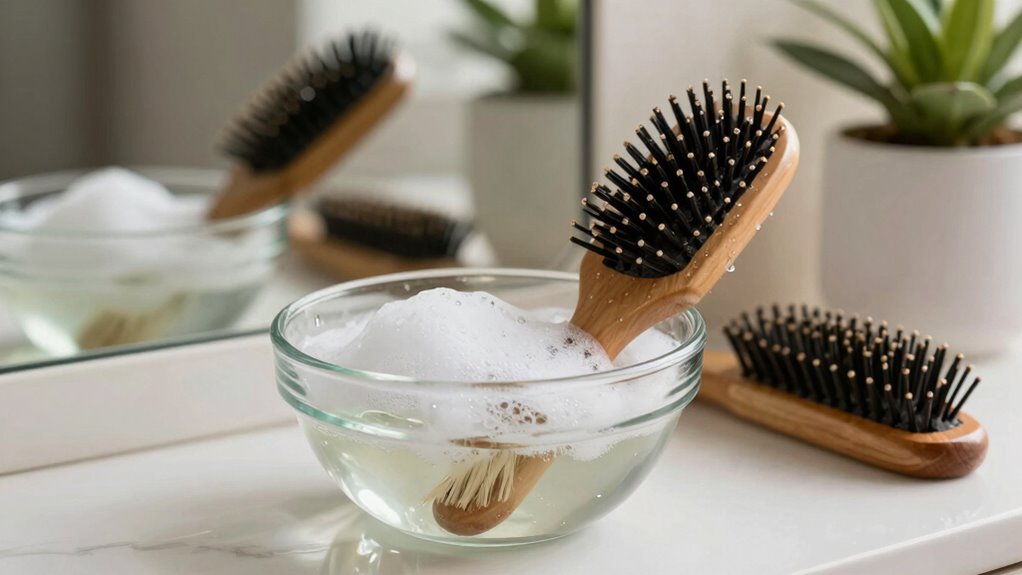
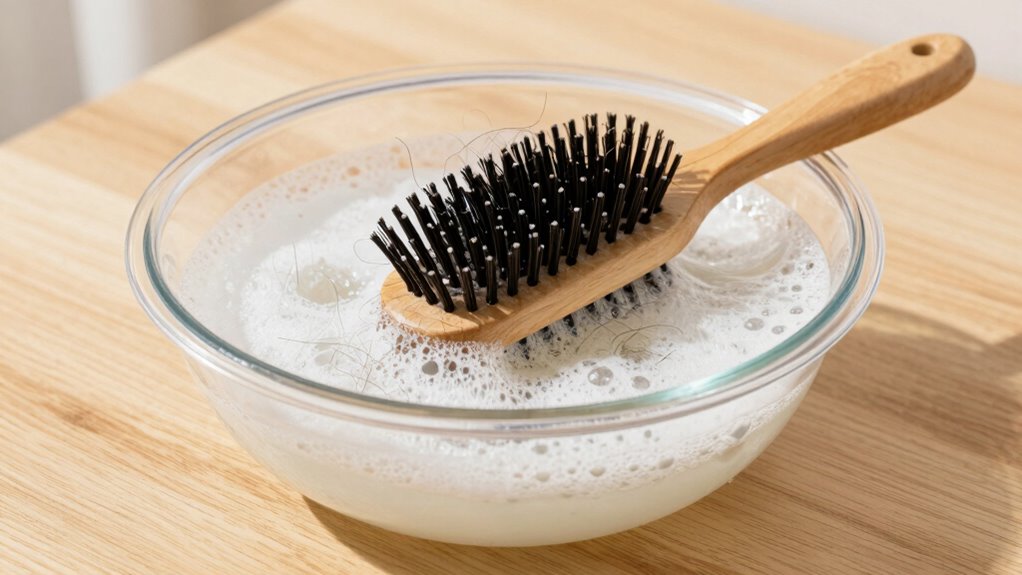
You should aim to clean your brushes at least once a week, especially if you use styling products frequently. Start by removing loose hair strands from the brush. Use your fingers or a comb to gently lift and pull out trapped hair, making the cleaning process easier and more effective. Once you’ve cleared the brush of hair, fill a bowl with warm water and add a small amount of gentle shampoo or a dedicated brush cleaner. Submerge your brush in the solution and let it soak for a few minutes. The warm water helps break down hair product buildup, oil, and dirt stuck in the bristles and base.
Remove loose hair, soak in warm water with gentle shampoo, and let sit to loosen buildup.
After soaking, use an old toothbrush or a cleaning brush to scrub between the bristles thoroughly. Focus on areas where residue tends to accumulate, like the base of the bristles and the underlying cushion if your brush has one. This scrubbing helps dislodge stubborn product buildup that can clog your scalp pores. Rinse the brush thoroughly with warm water to wash away loosened debris and soap residue. Be sure to rinse until the water runs clear, indicating all residue has been removed.
Once cleaned, shake off excess water and lay the brush bristle-side down on a clean towel to air dry. Avoid drying with heat sources such as blow dryers, as high heat can damage the bristles or handle. Properly cleaned brushes will not only help maintain scalp health by reducing the risk of clogged pores but also improve the overall health of your hair. Clean brushes distribute your natural oils evenly, promoting shine and reducing greasiness caused by excess product buildup.
Incorporating this routine into your weekly hair care regimen can make a significant difference. Clean brushes prevent the transfer of oils, dirt, and styling product residue onto your scalp and hair, helping you combat greasy hair and maintain a clearer, healthier scalp. This simple step keeps your hair looking fresh, reduces scalp irritation, and ensures your hair products work more effectively, giving you that clean, vibrant look you want every day.
Frequently Asked Questions
How Often Should I Replace My Hairbrush?
You should replace your hairbrush every 6 to 12 months, depending on its hairbrush lifespan and your usage. Over time, hairbrushes accumulate oils, dirt, and product buildup, which can lead to greasy hair issues. Stick to a regular replacement schedule to keep your scalp healthy and prevent buildup. If you notice frayed bristles or a persistent odor, it’s time for a new brush to maintain ideal hair and scalp health.
Can Using a Dirty Brush Cause Scalp Acne?
Yes, using a dirty brush can cause scalp acne. When you don’t clean your brush regularly, bacterial buildup and dirt accumulate, which can lead to scalp irritation and clogged pores. This irritation often results in breakouts or scalp acne. To prevent this, make sure you wash your brush at least once a week, removing buildup and keeping your scalp healthy. A clean brush promotes a clearer, healthier scalp and hair.
Are Natural Bristle Brushes Better for Greasy Hair?
Yes, natural bristle brushes are better for greasy hair because they distribute your scalp’s natural oils more evenly, reducing excess buildup. Natural bristle benefits include gentle stimulation and improved shine, while they’re often more breathable than synthetic brushes. When comparing synthetic vs natural, natural brushes help prevent greasy hair by minimizing oil accumulation, making them a smart choice if you’re dealing with excess oil or scalp issues.
Does Washing My Hair Less Frequently Reduce Grease?
Did you know that washing your hair less often can actually help regulate oil production? By increasing your hair washing frequency, your scalp may produce more oil to compensate, making your hair greasy faster. Reducing washes allows your scalp’s natural oil balance to stabilize, preventing excess grease. So, if you’re aiming for less greasy hair, try washing less frequently—your scalp’s oil production will thank you, and your hair will stay fresher longer.
What Products Can I Use to Clean My Hairbrush Effectively?
To clean your hairbrush effectively, you can use a mixture of gentle shampoo or soap and warm water, especially suited for different hairbrush materials like plastic, wood, or metal. For thorough cleaning, utilize old toothbrushes or cleaning tools to dislodge trapped hair and product buildup. Soak brushes regularly, ensuring you remove all residue. This routine keeps your hairbrush clean, reducing grease and preventing buildup that leads to greasy hair complaints.
Conclusion
By sticking to this brush cleaning routine, you’ll keep your hair looking fresh and vibrant every day. Neglecting your brushes is like inviting a greasy hair apocalypse—trust me, nobody wants that chaos. Regular cleaning prevents buildup, keeps your scalp happy, and guarantees your hair stays shiny and lively. Make this routine a non-negotiable part of your beauty habits, and you’ll be amazed at how effortlessly gorgeous your hair becomes. Your future self will thank you for this simple, game-changing step!