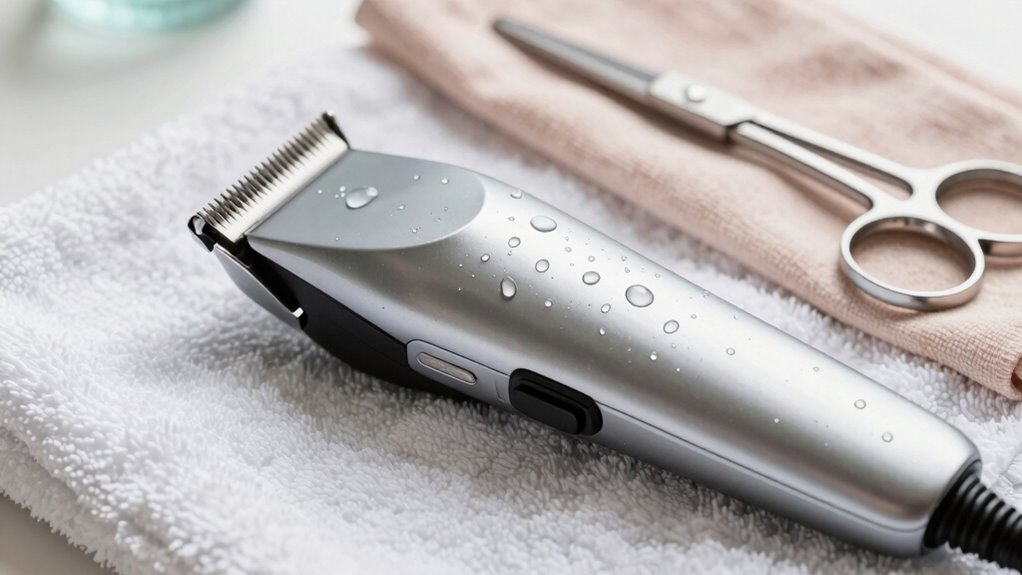

To safely sanitize your clippers and shears at home, start by rinsing them with warm water and soap to remove hair, dirt, and debris. Then, soak the tools in a disinfectant approved for personal use, like rubbing alcohol or a hospital-grade disinfectant, following the manufacturer’s instructions. make certain the tools are thoroughly dry before use. If you want to learn more about effective sterilization methods, keep exploring safe practices for your tools.
Key Takeaways
- Clean clippers and shears with warm water and soap to remove hair, dirt, and debris before disinfecting.
- Use proven disinfectants like isopropyl alcohol or hospital-grade solutions, following manufacturer instructions.
- Soak tools in disinfectant for the recommended contact time to ensure effective germ elimination.
- Rinse thoroughly with water after disinfection and dry completely before storage or use.
- For sterilization, boil tools in water for 10-15 minutes as a safe, accessible method at home.
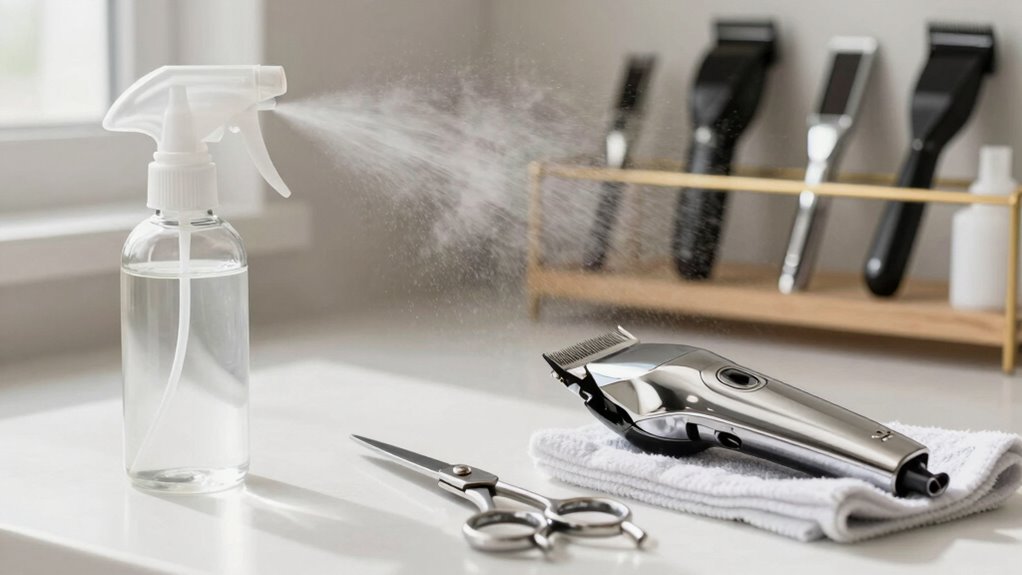
Keeping your tools clean is vital to prevent the spread of germs and guarantee they work effectively. When it comes to maintaining clippers and shears at home, understanding proper disinfection protocols and sterilization methods is essential. Not only does this protect your health, but it also guarantees your tools perform at their best, whether you’re grooming yourself or caring for family members. To start, you should familiarize yourself with the different levels of disinfection and sterilization, which vary depending on the tool’s use and the level of contamination. For personal grooming tools, thorough cleaning followed by disinfecting is usually sufficient, but if you’re sharing tools or using them on multiple people, sterilization becomes necessary.
Disinfection protocols involve cleaning the tools to remove hair, dirt, and debris, followed by applying an appropriate disinfectant. You can do this by first rinsing the tools with warm water and soap to remove surface grime. Afterward, you soak them in a disinfectant solution, such as a hospital-grade disinfectant or rubbing alcohol, for the recommended contact time. It’s crucial to follow the manufacturer’s instructions to guarantee effectiveness. Many disinfectants are designed specifically for tools like clippers and shears, making this step straightforward. Keep in mind that disinfecting kills most bacteria and viruses but doesn’t eliminate all spores or certain hardy pathogens, which is why sterilization is recommended for certain situations. Additionally, choosing a disinfectant with proven antimicrobial efficacy ensures the highest level of safety for your tools.
Sterilization methods take disinfection a step further by destroying all forms of microbial life, including spores. You can sterilize your tools at home using an autoclave, but this equipment isn’t typically accessible for home use. Instead, you can use chemical sterilants or heat-based methods. Boiling your tools in water for at least 10-15 minutes is a common, cost-effective sterilization method suitable for most metal tools. Alternatively, some professionals use UV sterilizers or chemical sterilant solutions designed specifically for salon tools. Always guarantee your tools are completely dry before sterilizing and follow all safety guidelines when handling sterilants.
Frequently Asked Questions
How Often Should I Sanitize My Clippers and Shears?
You should sanitize your clippers and shears after every use to guarantee proper clipper maintenance and shear sterilization. Regular cleaning prevents the buildup of hair, debris, and bacteria, reducing the risk of infections. For maximum safety, disinfect your tools with an appropriate disinfectant or alcohol-based solution, especially if you’re working with multiple clients or at home. Consistent sanitizing keeps your tools in top condition and helps maintain a hygienic environment.
Can I Use Alcohol to Disinfect All Types of Shears?
You can’t use alcohol to disinfect all types of shears safely. Alcohol has limitations, especially with certain materials like carbon steel or plastic handles, which it may damage. Instead, opt for alternative disinfectants such as Barbicide or isopropyl alcohol at appropriate concentrations. Always check your shears’ manufacturer instructions to guarantee the disinfectant is safe, and avoid harsh chemicals that could cause corrosion or deterioration.
Are There Natural or Homemade Disinfectants Effective for Tools?
You can use natural disinfectants and homemade solutions to sanitize your tools effectively. For instance, a mixture of vinegar and water or hydrogen peroxide can act as a natural disinfectant. Just make certain you dilute them properly and let your tools soak for the recommended time. Avoid using harsh chemicals that could damage your shears or clippers. Always rinse and dry thoroughly afterward to keep your tools in top condition.
What Are Signs That My Tools Need Replacement Instead of Cleaning?
Your tools are telling you they need replacing when they become painfully obvious—like blades that no longer cut, even after cleaning, or handles that feel loose or wobbly. Look out for dullness, rust, or cracks, which indicate poor tool durability and major maintenance signs. If sharpening or repairs don’t restore performance, it’s time for substitutes to ensure safety and efficiency. Don’t ignore these signs; your tools are begging for an upgrade!
Is It Safe to Share Sanitized Tools Between Family Members?
Sharing sanitized tools between family members can be safe if you thoroughly clean and disinfect them each time. Proper sharing hygiene is vital to prevent cross-contamination and protect everyone’s health. Use appropriate disinfectants and guarantee tools are completely dry before use. Avoid sharing damaged tools, as they may harbor bacteria or cause injury. Always prioritize hygiene and safety to keep your family protected when sharing grooming tools.
Conclusion
By keeping your clippers and shears clean, you’re not just maintaining tools—you’re safeguarding your health and your work. Think of proper sanitizing as the shield that guards against unseen threats, turning ordinary grooming into a safe, confident routine. Remember, a little effort now prevents bigger problems later. So, embrace these simple steps and let your tools shine as brightly as your skills—because in the end, cleanliness isn’t just next to godliness; it’s next to greatness.