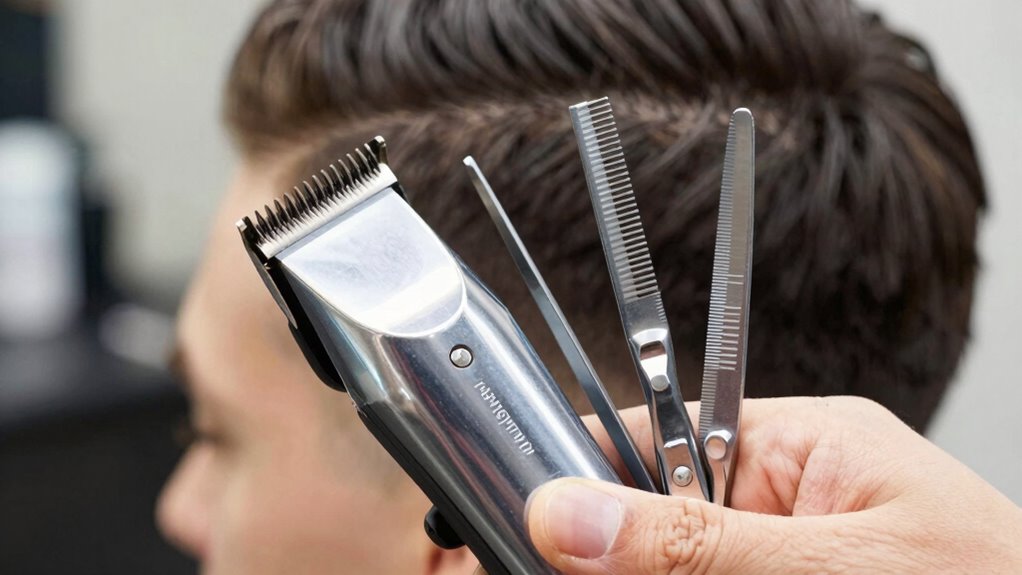

To achieve professional fades, choosing the right blade type and maintaining your clippers is key. Fixed blades give consistent lengths, perfect for sharp fades, while adjustable blades offer versatility for varying gradual change levels. High-quality steel blades hold their edge longer, ensuring smooth cuts, and regular sharpening keeps them sharp. Proper cleaning and oiling prevent rust and damage, leading to better results. Want to discover how different blades impact fade quality? Keep going to learn more.
Key Takeaways
- High-quality steel blades ensure sharpness and precision for clean, professional fades, while ceramic blades heat less but need careful maintenance.
- Fixed blades provide consistency for specific fade lengths, whereas adjustable blades offer versatility for seamless transitions.
- Regular sharpening and proper cleaning maintain blade sharpness, reducing tugging and uneven cuts during fades.
- Proper clipper maintenance, including oiling and replacing worn blades, enhances performance and fade quality.
- Blade selection, maintenance, and size adjustment are crucial for achieving smooth, precise, and professional fade results.
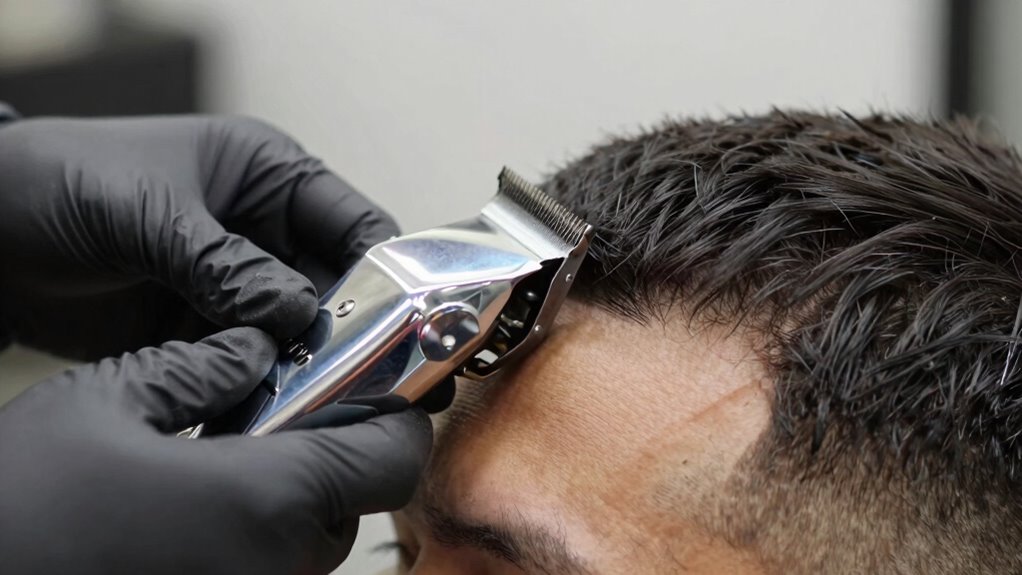
Choosing the right clipper blade type is essential for achieving the fade haircut you want. The blade’s design, size, and material directly influence the precision and smoothness of your cut. When selecting blades, consider the difference between fixed and adjustable types, as well as the various blade sizes that determine fade gradation. Proper blade sharpening is critical; dull blades can tug at hair, causing discomfort and uneven results. Regularly sharpening your blades guarantees they stay sharp and efficient, making your fades look cleaner and more professional. Proper clipper maintenance goes hand-in-hand with blade sharpening. Keeping your clippers clean, oil-lubricated, and free of hair debris prevents rust and extends the lifespan of your blades. Well-maintained clippers cut more smoothly, reducing the risk of uneven fades and the need for frequent blade changes.
When you’re working on a fade, understanding how different blade types affect your results is key. For example, high-quality steel blades tend to hold their edge longer, which means less frequent sharpening and consistent performance. Conversely, ceramic blades are lighter and heat up less, but they might require more careful maintenance to keep sharp. Adjusting your blades to the appropriate size for each fade step allows you to create seamless transitions, so investing in a range of blades or adjustable clippers can be worthwhile. Always remember to sharpen your blades before every significant cut, especially if you’re doing multiple fades or detailed work, because dull blades compromise precision and can damage hair.
Your clipper maintenance routine should include regularly cleaning blades after each use, applying oil to keep parts moving smoothly, and checking for signs of wear. This routine not only ensures a smoother cut but also prolongs blade life, saving you money and time in the long run. If you notice the blades aren’t cutting as cleanly, don’t wait—sharpen them promptly or replace them if needed. This proactive approach helps maintain consistent fade quality and avoids frustrating setbacks during your work. Whether you’re a professional barber or just someone passionate about grooming, understanding the importance of blade types, sharpening, and maintenance will elevate your fades and guarantee you achieve the sharp, clean look every time. Proper attention to these details makes all the difference in delivering a polished, professional result.
Frequently Asked Questions
How Do I Maintain and Clean My Professional Clippers Regularly?
To keep your professional clippers in top shape, regularly oil the blades to guarantee smooth cutting and prevent rust. After each use, sanitize the blades with a proper blade sanitizer to eliminate bacteria and debris. Clean the clips thoroughly with a brush to remove hair and buildup. Consistently maintaining and cleaning your clippers with proper clipper oiling and blade sanitization extends their lifespan and assures ideal performance during every cut.
Can I Use My Clippers for Both Hair and Beard Trimming?
Yes, you can use your clippers for both hair and beard trimming if they’re designed as multi-purpose tools. Just make certain the blades are compatible for different attachments or adjustments, so you don’t damage your equipment. Switching blades for specific tasks helps achieve cleaner results and prolongs your clippers’ lifespan. Always check the manufacturer’s guidance on blade compatibility to avoid any issues and get the best trimming experience.
What Safety Precautions Should I Follow When Using Professional Clippers?
Ever wonder how to stay safe while using professional clippers? You should always wear safety goggles to protect your eyes from hair or debris, and use blade guards to prevent accidental cuts. Make sure your clippers are unplugged when changing blades or cleaning. Keep the cord away from water, and always work in a well-lit area. Following these precautions helps guarantee a safe, smooth grooming experience every time.
Are There Specific Blades Recommended for Sensitive Scalp Areas?
For sensitive scalp areas, you should opt for blades with special coatings, like ceramic or titanium, which reduce irritation and friction. Look for blades labeled as suitable for sensitive skin, as they typically have smoother edges and less aggressive cutting action. These coatings help minimize discomfort and prevent cuts, ensuring a gentler experience. Always clean and lubricate the blades regularly to maintain their effectiveness and protect your sensitive scalp.
How Often Should I Replace or Upgrade Clipper Blades?
You should replace or upgrade your clipper blades every 1 to 2 years, depending on usage, to maintain ideal performance. Regular blade sharpening can extend your clipper lifespan and keep cuts smooth. If you notice dullness, pulling, or uneven cutting, it’s time for a replacement. Proper maintenance, including cleaning and lubrication, also helps prolong blade sharpness and ensures your clippers stay in top shape for precise fades.
Conclusion
Now that you understand the different blade types and how they influence fade results, you’re better equipped to choose the right tools for your style. Remember, the right clipper can make all the difference in achieving a flawless fade. So, next time you pick up your clippers, ask yourself: are you ready to master your craft and transform your look? With the right knowledge and practice, you’ll be turning heads in no time.