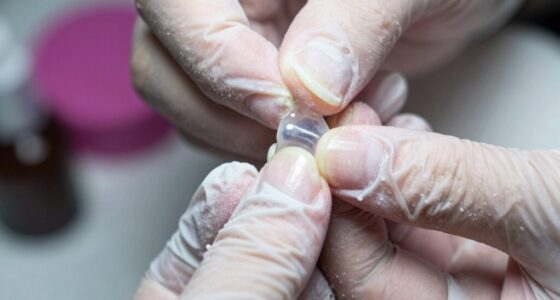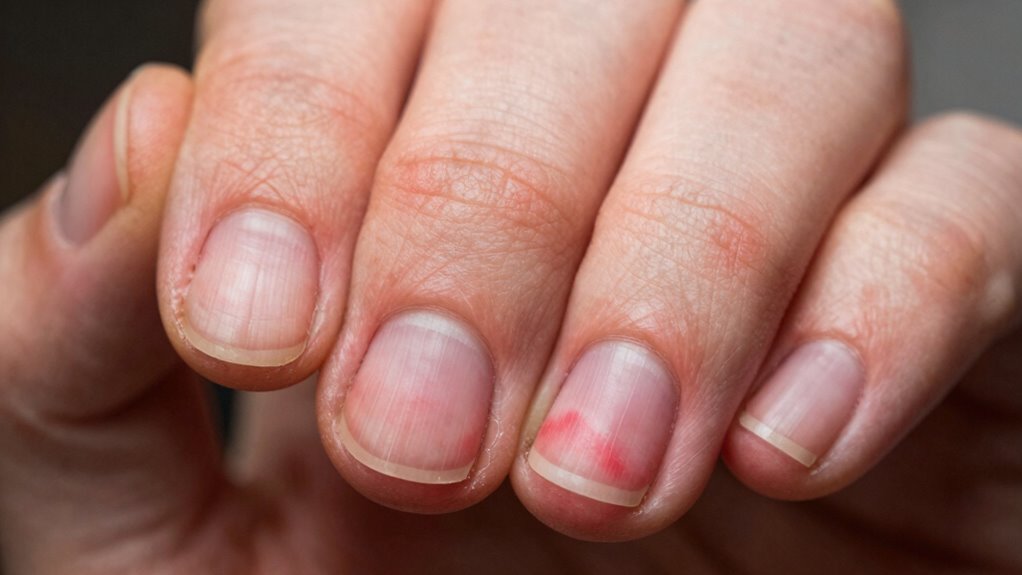

If you notice persistent redness, swelling, itching, or blisters around your nails, it could be a sign of contact dermatitis that needs attention. Symptoms that worsen or don’t improve after stopping nail products should raise a red flag. Discoloration or peeling skin, especially with soreness, also require medical evaluation. Ignoring these signs might lead to more serious skin irritation or infection. Keep going to learn how to protect yourself and manage these issues effectively.
Key Takeaways
- Persistent redness, swelling, or soreness around the nails indicate a potential serious contact dermatitis reaction.
- Blisters, peeling skin, or crusting near the nails are signs to seek medical evaluation promptly.
- Discoloration, thickening, or crumbling of the nail may suggest infection or severe dermatitis requiring attention.
- Symptoms worsening despite avoiding irritants suggest a need for professional diagnosis and treatment.
- Development of pain, pus, or signs of secondary infection warrants immediate medical care.
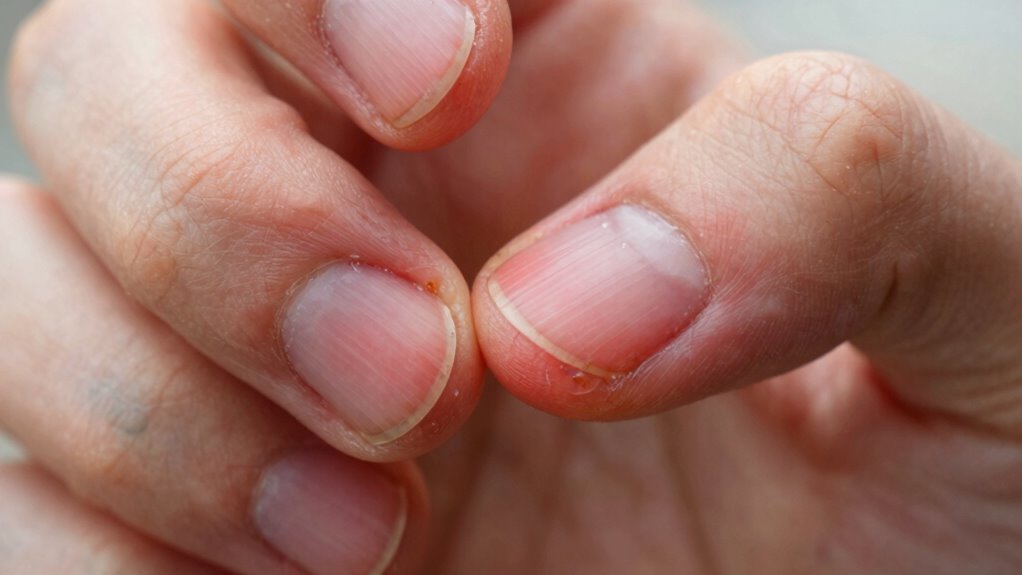
Have you ever noticed redness, itching, or soreness around your nails? These symptoms can be more than just minor annoyances; they might be signs of contact dermatitis in your nails. This condition occurs when your skin reacts to an irritant or allergen, leading to inflammation and discomfort. One common cause is exposure to chemicals found in nail products like polish, remover, or artificial nails. If your skin becomes irritated after using a new product, it could be an allergy symptom, signaling that your body is reacting to a specific ingredient. Recognizing these signs early is essential because they often resemble other nail issues, including nail infections, which can be more serious if left untreated.
Redness and soreness around nails may signal contact dermatitis from nail product allergens or irritants.
A nail infection typically causes changes in the nail’s appearance, such as discoloration, thickening, or crumbling, and may be accompanied by pain or pus. Contact dermatitis, on the other hand, tends to present as red, swollen skin around the nail bed, sometimes with blisters or peeling. While a nail infection usually affects the nail itself, contact dermatitis impacts the surrounding skin, making it a crucial distinction. If you notice persistent redness, swelling, or soreness that doesn’t improve with basic care, it’s time to consider whether an allergen or irritant might be behind it. Avoiding harsh chemicals and switching to hypoallergenic products can help prevent further reactions.
It’s important to pay attention to allergy symptoms, especially if they recur after applying certain products or coming into contact with specific substances. Your skin’s reaction might be mild at first but can worsen over time, leading to more extensive irritation. Sometimes, symptoms can resemble a nail infection, with inflammation and soreness, but the key difference is that contact dermatitis often involves the skin around your nails rather than the nail itself. If you experience persistent symptoms, consulting a healthcare professional is essential. They can perform patch testing to identify specific allergens and recommend appropriate treatments, such as topical corticosteroids or antihistamines, to reduce inflammation and relieve discomfort.
Additionally, understanding whole-home backup power options can ensure you’re prepared in emergencies, just as recognizing skin issues early can prevent more serious health problems. Ignoring these red flags can lead to more serious issues, like secondary infections or chronic dermatitis. Protecting your skin from irritants and allergens is crucial, especially if you notice recurring symptoms. Be cautious with nail care products, and opt for gentle, fragrance-free options whenever possible. If your skin shows signs of allergy symptoms, take action promptly to prevent further irritation. Remember, early intervention can make a significant difference in recovery and help keep your nails and surrounding skin healthy.
Frequently Asked Questions
Can Contact Dermatitis Cause Permanent Nail Damage?
Yes, contact dermatitis can cause permanent nail damage if left untreated. You might notice nail discoloration, thickening, or ridges, which can become permanent if the inflammation persists. In severe cases, it could lead to permanent scarring of the nail matrix, impacting nail growth long-term. To prevent lasting damage, you should seek prompt treatment and avoid allergens or irritants causing the dermatitis.
Are There Specific Triggers More Common in Nail Contact Dermatitis?
Like a true Sherlock Holmes, you notice triggers faster than a knight spots a dragon’s fire. Common triggers for nail contact dermatitis include allergic reactions to nail products or chemical irritants from harsh soaps or cleaning agents. You’re more likely to react to substances like formaldehyde, fragrances, or acrylics. Recognizing these triggers helps you avoid future flare-ups and protect your nails from ongoing damage.
How Long Does It Typically Take to See Improvement?
You might start seeing improvement within a few days to a couple of weeks after beginning treatment, but the full recovery timeline varies. During this period, watch for signs of healing like reduced redness, less swelling, and clearer skin around your nails. Consistently avoiding triggers and following your treatment plan speeds up recovery. If you don’t notice improvement in two weeks or symptoms worsen, consult a healthcare professional promptly.
Can Contact Dermatitis Spread to Other Skin Areas?
You might notice contact dermatitis spreading to other skin areas, especially if the initial trigger isn’t identified and avoided. The symptoms, like redness, swelling, and rash, can migrate beyond the nails, mimicking other skin reactions. It’s a coincidence how easily it can spread if you touch or scratch affected areas, so monitoring for new symptoms is essential. Prompt treatment and avoiding irritants help prevent further spread and discomfort.
Is Contact Dermatitis Contagious or Infectious?
No, contact dermatitis isn’t contagious or infectious. It’s caused by allergic reactions or skin irritation from substances like nail products, irritants, or allergens. You won’t spread it through contact with others. Instead, it results from your skin’s response to triggers. To prevent worsening, avoid exposure to known irritants and allergens, and seek medical advice if symptoms persist or worsen. Proper care helps reduce irritation and manage symptoms effectively.
Conclusion
So, next time you notice redness or irritation around your nails, don’t brush it off as just a minor issue. Sometimes, these signs can be a coincidence, but they might also be red flags that need attention. Keep an eye on your nails, stay aware, and trust your instincts. If something feels off, it’s better to act early rather than wait. Your health could depend on catching these signs before they escalate.