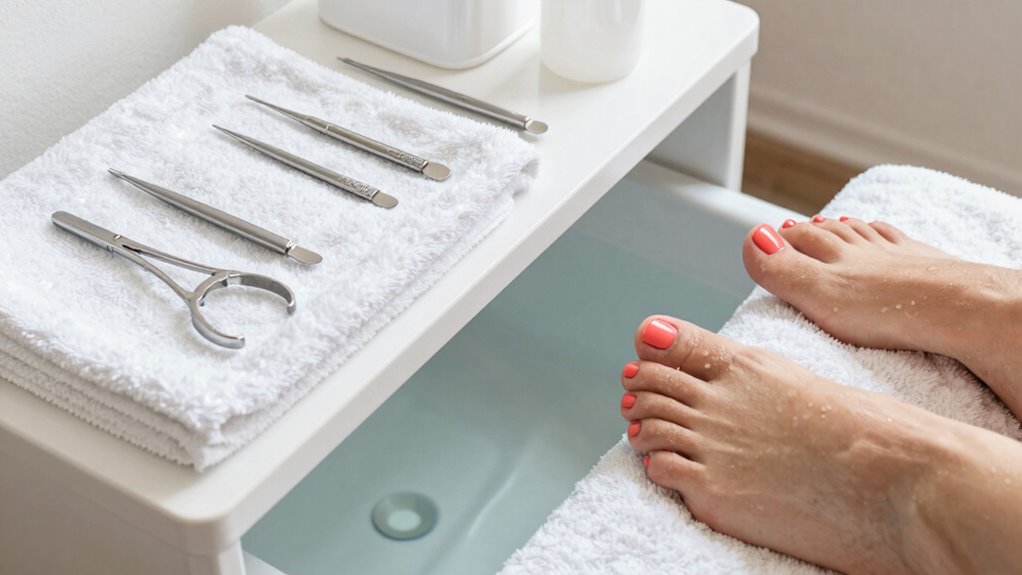

A clean pedicure means strict hygiene practices like using sterilized tools, sanitized surfaces, and fresh water for each client. You should see disposable or single-use items, gloves, and towels that are cleaned or replaced after each treatment. Proper foot soak procedures, with sanitized solutions and clean basins, are essential. If these standards aren’t met, infection risks increase. Keep going for a closer look at what truly defines a hygienic pedicure.
Key Takeaways
- Fresh, sanitized foot soak solutions and thoroughly disinfected basins are essential for safe pedicures.
- Callus removal tools must be sterilized after each use or replaced with disposable, sealed instruments.
- Surfaces and workstations should be regularly disinfected with appropriate cleaning agents.
- Technicians must practice proper hand hygiene and use disposable gloves and liners to prevent cross-contamination.
- Overall cleanliness, proper sterilization, and adherence to safety protocols indicate high hygiene standards.
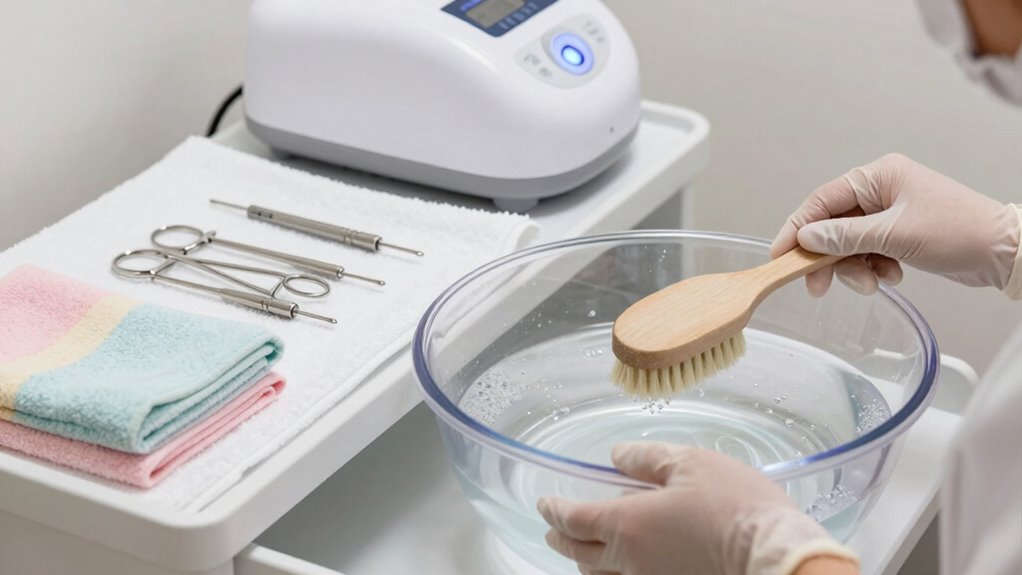
Have you ever wondered if your pedicure salon follows proper hygiene standards? When you sit down for a pedicure, you want to feel confident that your health and safety are a top priority. This reassurance begins before the tools even touch your skin. A clean salon will always prioritize proper foot soak procedures. These procedures aren’t just about making your feet comfortable—they also help prevent infections. When you dip your feet into a basin, the water should be fresh, clean, and regularly changed between clients. The foot soak solution should be sanitized, and the basin itself should be thoroughly disinfected after each use. If the salon skips these steps or seems to reuse water, it’s a red flag that hygiene might be compromised.
Moving on to callus removal, a common part of many pedicures, hygiene standards become even more critical. When performed correctly, callus removal tools should be sterilized after each client. Whether they’re metal files, rasps, or pumice stones, these tools should never be used on multiple people without proper sterilization. You should see technicians opening new, sealed packages for tools or using single-use disposable instruments for callus removal. This minimizes the risk of transmitting fungi, bacteria, or viruses. If tools look worn or unclean, or if the technician doesn’t seem to follow strict sterilization protocols, it’s best to reconsider.
A clean salon also means that all surfaces—benches, foot baths, and workstations—are sanitized regularly. Cleanliness isn’t just about appearance; it’s about safety. When technicians wash their hands thoroughly before beginning work and wear disposable gloves, it shows they’re taking precautions seriously. The use of fresh towels and disposable liners in foot baths is another indicator of good hygiene. If you notice the same towels or liners reused or the technician handling tools without gloves, that’s a sign they might not be adhering to proper practices.
Frequently Asked Questions
How Often Should I Get a Professional Pedicure for Optimal Hygiene?
You should get a professional pedicure every 4 to 6 weeks for ideal hygiene maintenance. This frequency helps prevent bacterial buildup, fungal infections, and keeps your nails healthy. Regular pedicures also allow technicians to spot any issues early. Keep in mind, if you’re prone to fungal or bacterial problems, more frequent treatments might be necessary. Consistency ensures your feet stay clean, healthy, and well-maintained.
Are There Specific Certifications to Look for in a Hygienic Salon?
Think of certification as the badge of honor in the world of hygiene. You should look for salons with valid licensing and hygiene certifications, which prove they meet industry standards. These credentials ensure the salon follows proper sanitation protocols, reducing infection risks. Always ask to see these documents before your appointment—trusting a licensed, certified salon guarantees you’re in safe hands for your pedicure.
What Should I Do if I Notice Unclean Tools During My Pedicure?
If you notice unclean tools during your pedicure, stop the service immediately. Tell your technician you’re concerned about tool contamination and ask to see the salon’s safety protocols. A reputable salon follows strict hygiene practices, including proper sterilization of tools. Don’t hesitate to leave if they dismiss your concerns. Your health is more important, and maintaining high standards helps prevent infections and ensures a safe, enjoyable experience.
Can At-Home Pedicures Meet Professional Hygiene Standards?
At-home pedicures can meet professional hygiene standards if you prioritize DIY safety and proper tool sterilization. You should thoroughly clean and disinfect tools with alcohol or boiling water after each use. Use disposable tools whenever possible, and wash your hands and feet thoroughly beforehand. By following these steps, you guarantee a safe, hygienic pedicure experience that aligns with professional standards.
How Do Salons Disinfect Foot Baths Between Clients?
Imagine you’re in a sci-fi movie—salons take foot bath sanitation seriously. They disinfect foot baths between clients using approved disinfectants, ensuring the solution’s effectiveness. They drain the basin, scrub it thoroughly, and refill with fresh disinfectant, letting it sit for the recommended time. This process guarantees disinfectant effectiveness and keeps bacteria at bay. You can trust that this routine helps maintain a safe, hygienic environment for every pedicure session.
Conclusion
Think of a pedicure like tending a delicate garden—every tool and surface is a seed that needs care. When you choose a salon that follows strict hygiene standards, you’re planting your feet in fertile ground where germs can’t grow. Skip the weeds of dirt and bacteria, and your feet will flourish. Remember, a truly clean pedicure isn’t just about appearance; it’s about nurturing your health and letting your feet bloom in safety.