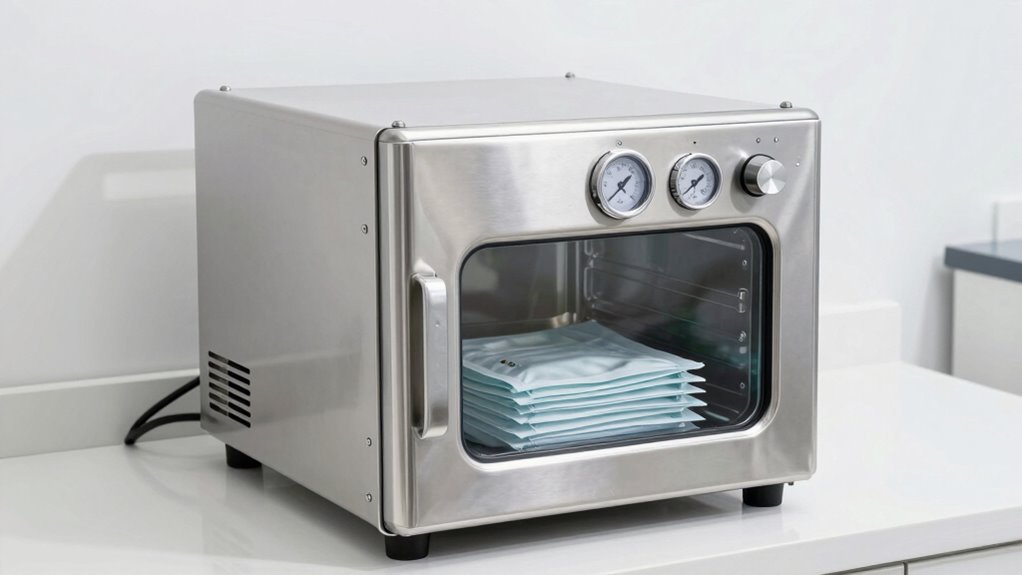
Sterilization with an autoclave means using high-pressure steam to eliminate all bacteria, viruses, fungi, and spores from your nail tools, guaranteeing they are completely hygienic after each use. This process is crucial for preventing infections and cross-contamination in your salon, helping keep your clients safe. Proper operation and maintenance of the autoclave ensure effective sterilization every time. To discover more about how autoclaves work and best practices, keep exploring this essential aspect of nail hygiene.
Key Takeaways
- Autoclaving uses high-pressure steam to eliminate bacteria, viruses, fungi, and spores from nail tools.
- Proper sterilization involves specific temperature and time settings to ensure complete microbial destruction.
- Regular maintenance and validation, like biological testing, confirm autoclave effectiveness.
- Autoclaves must be operated following manufacturer instructions and safety protocols to prevent contamination.
- Sterilized tools should be stored in a clean, dry environment to prevent recontamination.
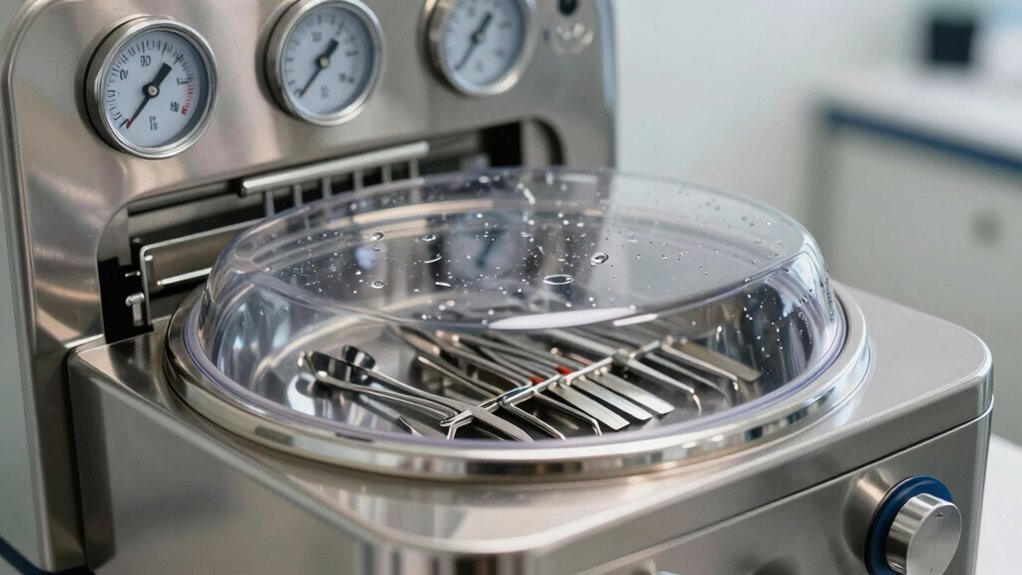
An autoclave is an vital tool for guaranteeing the sterilization of nail tools, helping you maintain a hygienic and safe salon environment. When you understand the sterilization process, you can confidently use an autoclave to eliminate harmful microorganisms and prevent cross-contamination. The sterilization process involves exposing tools to high-pressure saturated steam at a specific temperature for a set amount of time. This method effectively destroys bacteria, viruses, fungi, and spores that may linger on your implements after use. Properly sterilized tools reduce the risk of infections, guaranteeing your clients leave your salon feeling safe and well cared for.
An autoclave ensures hygienic, sterilized nail tools, preventing infections and maintaining a safe salon environment.
Using an autoclave correctly is vital for maintaining autoclave safety. You should always follow the manufacturer’s instructions for operation, including how to load the machine and set the appropriate cycle. Overloading the autoclave can prevent steam from reaching all surfaces of your tools, compromising the sterilization process. Additionally, never open the autoclave door before the cycle completes or before pressure and temperature have returned to safe levels. Proper autoclave safety protocols protect you from burns or injuries caused by hot steam or pressurized chambers.
You also need to regularly maintain and inspect your autoclave to guarantee it functions properly. This includes cleaning the chamber, checking seals, and replacing any worn-out parts as recommended by the manufacturer. Regular testing with biological indicators can verify that your autoclave achieves the necessary sterilization conditions. When you routinely perform these checks and maintenance, you minimize the risk of sterilization failures and extend the lifespan of your equipment.
Understanding the sterilization process is essential for establishing effective protocols in your salon. Always use sterilized tools for each client, and store them in a clean, dry environment until needed. This minimizes the chance of recontamination after sterilization. Remember, sterilization is not just about using the autoclave; it’s about integrating it into a thorough sanitation routine that prioritizes hygiene at every step.
Frequently Asked Questions
How Often Should Autoclaves Be Serviced for Nail Sterilization?
You should service your autoclave at least once a year, but more frequent routine maintenance is recommended, especially if you use it daily. Regular calibration schedules ensure it operates correctly, maintaining sterilization standards. Keep track of usage and perform inspections regularly to prevent malfunctions. Proper maintenance not only extends your autoclave’s lifespan but also guarantees nail tools are effectively sterilized, protecting your clients’ health and your reputation.
Can Autoclaves Sterilize All Nail Tools Effectively?
Imagine your nail tools entering a steaming autoclave, transforming into sterilized essentials. Autoclaves can effectively sterilize many nail tools, but tool compatibility matters. Some tools with intricate designs or porous surfaces may face sterilization limitations, making complete sterilization tricky. Always check your autoclave’s capabilities and verify your tools are compatible to guarantee thorough sterilization, keeping your clients safe and your salon spotless.
What Are Common Mistakes in Autoclave Operation?
You might make mistakes like overloading the autoclave, which prevents proper sterilization, or neglecting regular autoclave maintenance. Avoid sterilization misconceptions by ensuring correct cycle settings, timing, and proper loading. Always check that tools are cleaned before autoclaving and that the device is functioning correctly. Regular maintenance helps prevent malfunctions, ensuring your autoclave sterilizes effectively. Stay vigilant to maintain a safe, hygienic environment for your clients and prevent contamination.
How Long Does Sterilization Typically Take in an Autoclave?
Sterilization in an autoclave typically takes about 15 to 30 minutes, depending on the autoclave cycle time and the load size. You should guarantee that the sterilization duration is sufficient to reach the necessary temperature and pressure for effective sterilization. Always follow the manufacturer’s instructions for cycle time, and avoid rushing the process to ensure all instruments are properly sterilized and safe for use.
Are There Alternatives to Autoclaving for Nail Tool Sterilization?
Think of sterilization options as different paths through a garden of cleanliness. You can opt for UV sterilization, which acts like a gentle sunbeam, zapping surface germs quickly. Or, use chemical disinfectants, like a potent rainstorm, soaking into tools to eliminate bacteria. While autoclaves provide thorough sterilization, these alternatives can be effective when used correctly, offering flexibility for your nail tools’ safety and sanitation.
Conclusion
Now that you understand what sterilization truly means, imagine every tool you use coming alive with a silent promise of safety. The autoclave isn’t just a machine—it’s your secret weapon against unseen threats. But what if a tiny flaw goes unnoticed? As you close that door, a world of microscopic dangers waits to be released. Stay vigilant, stay informed—because in this game, sterilization isn’t just a step; it’s your first line of defense.