
To prevent regret, ask your stylist, “Can you explain how my hair’s natural qualities will respond to this treatment and what results I can realistically expect?” This question prompts a thorough discussion of your hair’s texture, porosity, and previous color, helping you understand potential risks and outcomes. By addressing these aspects upfront, you guarantee your goals align with your hair’s health, setting the stage for satisfying results—keep exploring to learn more about making your consultation truly effective.

Get beauty and skincare favorites delivered free with Prime
- Fast, free delivery on millions of items
- Prime Video, Amazon Music and more included
- Member-only deals all year
Key Takeaways
- Ask about the stylist’s understanding of your hair’s natural texture and response to treatments.
- Inquire specifically how the desired outcome aligns with your hair’s current condition and history.
- Clarify the full process, including potential risks, damage, and maintenance needs.
- Discuss your hair’s porosity, health, and unique qualities to ensure realistic expectations.
- Confirm that the stylist has thoroughly reviewed your goals and explained each step to prevent surprises.
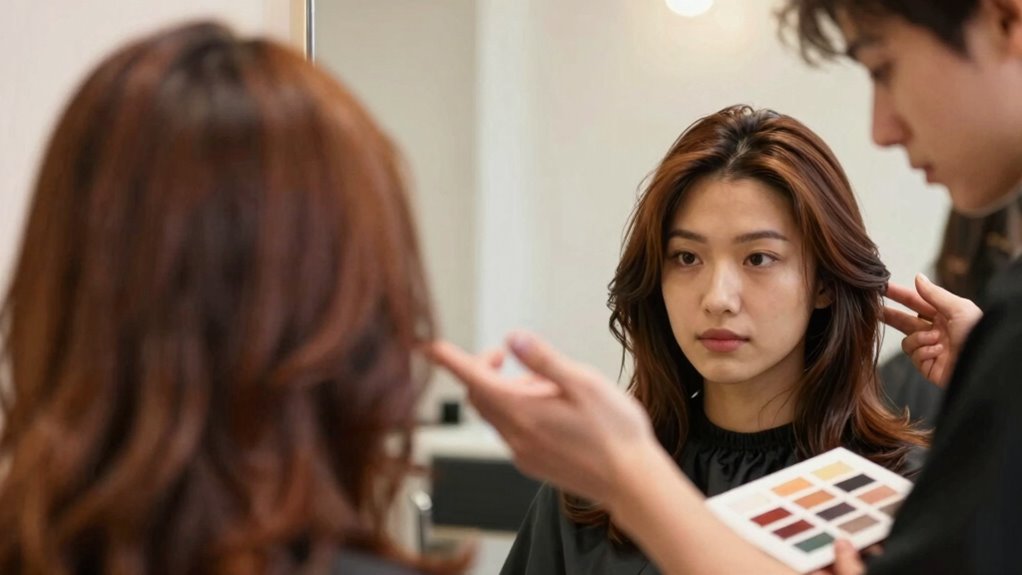
Have you ever wondered what questions to ask during a salon consultation to guarantee you get the look you want? It’s a smart question because good communication is the key to avoiding regret after your appointment. When you’re discussing your desired style, don’t just focus on the end result—consider how your hair’s unique qualities, like your hair texture, will influence the outcome. Understanding how your hair responds to different treatments helps your stylist create a look that fits both your vision and your hair’s natural behavior. If you’re thinking about a dramatic color change or a complex color correction, ask specifically about how your hair’s current color and condition will affect the process. For example, if you have previously colored hair or uneven tones, your stylist should explain what’s involved in achieving your ideal shade and whether any damage or adjustments are necessary. This prevents surprises and sets realistic expectations about what’s achievable in one session. Recognizing how your hair’s natural behavior interacts with various treatments can also help you and your stylist choose options that protect your hair’s health and integrity. Additionally, asking about hair health and how it might influence your treatment plan can ensure you’re making choices that support long-term hair vitality. Knowing about your hair’s responsiveness to treatments can help you avoid damaging procedures and select suitable products for ongoing care. Being aware of your hair’s porosity and how it affects color uptake can further guide your stylist in customizing treatments for optimal results.
When discussing color correction, be clear about what you want to avoid or improve. Do you prefer a subtle change or a bold transformation? Your stylist should ask about your current color and explain how they plan to address any issues, like brassiness or uneven patches. They should also tell you if multiple visits are necessary to reach your goal, especially if your hair needs significant correction. Don’t hesitate to ask about the longevity of the color and how to maintain it, as well as any potential damage or special treatments your hair might need afterward. This type of questioning helps you understand the full scope of the process and makes you more confident in your decision. Additionally, understanding your hair’s natural behavior and how it reacts to various treatments can help you and your stylist choose options that protect your hair’s health and integrity.
As an affiliate, we earn on qualifying purchases.
Frequently Asked Questions
How Do I Choose the Right Hairstyle for My Face Shape?
To choose the right hairstyle for your face shape, start by identifying your face’s contours—oval, round, square, or heart-shaped. Then, focus on hairstyle compatibility that enhances your features. For example, if you have a round face, opt for styles that add height or elongate your look. Consulting a professional stylist can help you find a flattering cut that balances your face shape and boosts your confidence.
What Hair Products Are Best for My Hair Type?
Imagine your hair as a garden, needing the right nutrients to thrive. For your hair type, choose products with ingredients suited to your needs—moisturizing for dry hair, lightweight for fine hair, or volumizing for limp locks. Use styling product tips like applying in damp hair or avoiding excessive heat. Your hair’s health depends on selecting the right ingredients and techniques, ensuring it stays vibrant, manageable, and beautifully styled every day.
How Often Should I Get a Haircut to Maintain My Style?
You should get a haircut every 6 to 8 weeks to maintain your style, especially if you want to keep your shape and prevent split ends. Regular trims are essential for good hair care, helping your hair stay healthy and looking fresh. If your hair grows quickly or you prefer a sharper look, consider trimming more often. Consistent haircuts make sure your style stays polished and your hair stays strong.
Can I Bring a Photo to Show My Desired Look?
Yes, you can definitely bring a photo to show your stylist your desired look. Visual references and style inspiration help guarantee you’re both on the same page. It’s a great way to communicate exactly what you want, especially if you’re unsure how to describe it. Just make sure the photo is clear and recent, so your stylist can accurately understand and achieve your desired result.
What Should I Do if I Dislike My New Haircut?
If you dislike your new haircut, don’t panic—just pretend it’s a bold new look. You can ask your stylist for color correction or explore styling alternatives to make it work. Remember, hair grows back faster than you think, so patience is key. Instead of dwelling, embrace the change, experiment with accessories, or ask your stylist for quick fixes. Sometimes, a little creativity turns regret into a fresh start.
Conclusion
Imagine walking out of the salon, your reflection glowing with confidence, every detail shining just as you envisioned. That’s the power of asking the right questions during your consultation—like a map guiding your style journey. When you voice your concerns and dreams clearly, you set the stage for a flawless transformation. So, speak up, listen closely, and let your new look be a masterpiece you’ll love every time you catch your reflection.
Columbus Day / Indigenous Peoples' Day Picks
long weekend sales
As an affiliate, we earn on qualifying purchases.