
To avoid tripping breakers in your salon, start by evaluating the total power needs of all your devices and verify your circuits can handle the load. organize cords neatly, avoid daisy-chaining multiple power strips, and keep high-wattage tools on dedicated circuits. Use surge protectors and regularly inspect cords for damage. Properly managing your power setup prevents overloads, electrical hazards, and equipment damage—learn more about safe power practices to keep your salon running smoothly.
Key Takeaways
- Calculate the total wattage of all salon devices to ensure circuits are not overloaded.
- Use dedicated circuits for high-power equipment like hair dryers and styling tools.
- Incorporate voltage converters if devices require different voltage levels from your outlets.
- Regularly inspect cords for damage and organize them to prevent tangling and pinching.
- Install surge protectors and avoid daisy-chaining multiple power strips to safeguard against power surges.
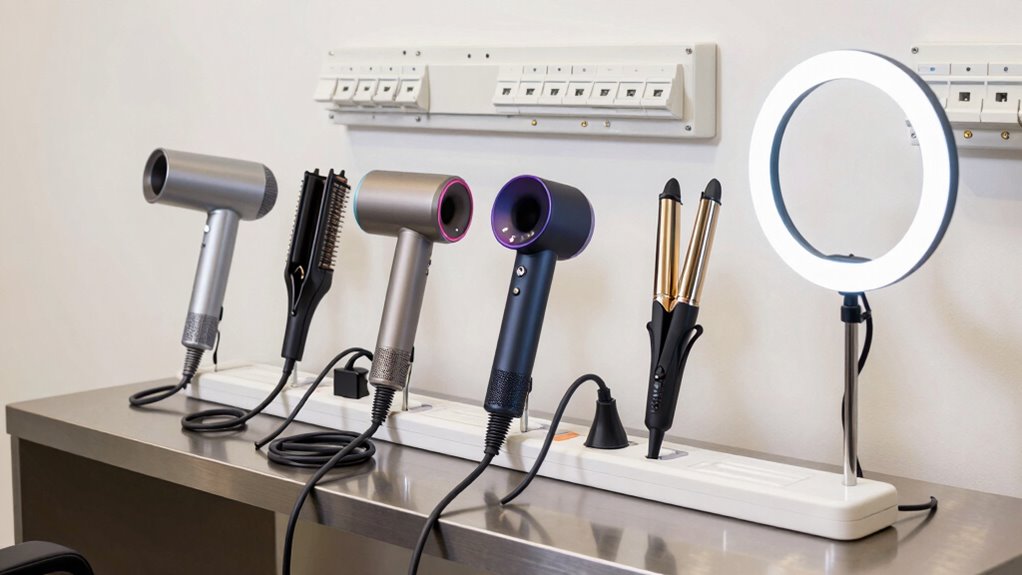
Understanding power requirements is essential when selecting or designing electrical systems. In a salon setup, where multiple tools and devices run simultaneously, managing power effectively prevents tripped breakers and ensures smooth operations. One crucial aspect to consider is proper cord management. Tangled or cluttered cords can cause overloads or short circuits, which may trip breakers unexpectedly. Keep cords organized with cable ties or cord organizers, and avoid daisy-chaining multiple power strips. This not only minimizes electrical hazards but also helps in distributing power evenly across outlets, reducing the risk of overloads. Additionally, using surge protectors can help safeguard your equipment from power fluctuations that might trip breakers or damage devices.
Proper cord management prevents overloads and ensures safe, efficient salon operations.
Another key factor is understanding the voltage needs of your equipment. Many salon devices, such as hair dryers, curling irons, and specialized styling tools, may require different voltage levels. Some tools are designed for standard voltage, while others might need higher or lower voltages. Using the wrong voltage can lead to equipment damage or cause breakers to trip. To address this, you can incorporate voltage converters into your setup. Voltage converters allow you to safely operate devices that require different voltage levels from your main power supply, ensuring each appliance receives the proper voltage without overloading your system.
When planning your salon’s electrical system, it’s vital to evaluate the total wattage of all devices in use simultaneously. Add up the wattage of each tool and ensure your circuits can handle the combined load. If you’re unsure, consult an electrician or use a power meter to measure actual consumption. Overloading a circuit is a common cause of breaker trips, and avoiding this requires careful load management. If your salon frequently runs multiple high-wattage devices at once, consider installing dedicated circuits for these appliances. This approach isolates heavy loads, preventing them from affecting other equipment.
Proper cord management combined with the strategic use of voltage converters and dedicated circuits substantially reduces the risk of tripping breakers. Make sure cords are free from damage, and avoid running them under carpets or through doorways where they can be pinched or frayed. Regularly inspect connections and replace worn cords immediately. Additionally, educate your staff about electrical safety practices, such as not overloading outlets or unplugging devices carefully. Being aware of electrical safety protocols is vital for maintaining a safe environment. By paying attention to these details, you’ll create a safer, more efficient environment that keeps your salon running smoothly without unnecessary interruptions caused by electrical issues.
Frequently Asked Questions
How Do I Calculate Total Power Needs for My Salon?
To calculate your salon’s total power needs, add up the power consumption of all your equipment, like dryers, clippers, and lights. Check each item’s wattage, then sum these values. Make sure this total doesn’t exceed your circuit capacity, usually 15 or 20 amps. If it does, you’ll need to upgrade your circuits or spread out your equipment to prevent tripping breakers.
Can I Upgrade My Existing Breaker Panel Easily?
They say “a stitch in time saves nine,” so upgrading your breaker panel can be straightforward if your panel capacity permits. You can usually do a breaker upgrade, but it’s best to consult a licensed electrician to assess your current panel and guarantee it can handle additional loads. Upgrading your panel helps prevent tripping breakers and keeps your salon running smoothly without overloading your system.
What Are Signs of an Overloaded Circuit?
If you notice frequent breaker tripping or flickering lights, it’s a sign of a circuit overload. You might feel warmth or a burning smell near outlets, or outlets may stop working. Overloaded circuits struggle to handle demand, causing breakers to trip as a safety measure. Pay attention to these signs and avoid overloading your circuits to prevent damage or electrical hazards. Consider upgrading your system if problems persist.
Is It Safe to Use Extension Cords for Salon Equipment?
Using extension cords for salon equipment isn’t safe because of extension cord hazards. They can overload circuits, cause overheating, and increase the risk of electrical fires. For salon equipment safety, it’s best to plug devices directly into wall outlets with adequate capacity. If you need extra outlets, hire a professional to install proper wiring. Always prioritize safety to protect your clients and staff from electrical accidents.
How Often Should I Have My Electrical System Inspected?
Think of your salon’s electrical system as the heartbeat of your business—keeping it healthy is essential. You should have your electrical system inspected at least once every year to guarantee electrical safety and proper circuit maintenance. Regular inspections catch potential issues before they become dangerous, preventing tripped breakers and electrical fires. Staying proactive helps protect your staff, clients, and equipment—keeping your salon running smoothly and safely.
Conclusion
By understanding your salon’s power needs, you prevent costly outages and keep your tools running smoothly. Avoiding breaker trips means more focus on your clients, less frustration, and a safer workspace. When you balance your electrical load wisely, you create a seamless flow—like a perfectly styled haircut. Power requirements may seem simple, but they’re the backbone of your salon’s efficiency. Stay informed, stay prepared, and let your salon shine without interruption.