To create professional photos as a stylist, focus on good lighting, diverse angles, and securing legal consents. Use natural light or reflectors to highlight textures and colors, and experiment with angles to add depth. Make certain you have signed model releases before shooting to protect your rights. Proper lighting and clear legal documents ensure your images look polished and are legally safe to showcase. Keep exploring these techniques to elevate your photography skills further.
Key Takeaways
- Use natural or artificial lighting to highlight textures and colors effectively in styling photos.
- Experiment with angles to add depth, interest, and flattering perspectives to showcase styling details.
- Obtain signed model releases before shooting to legally secure permission for image use and protect rights.
- Adjust camera settings like aperture and shutter speed to enhance focus, control motion, and create desired effects.
- Incorporate reflectors and diffusers to manage light, soften shadows, and ensure even, professional-quality illumination.
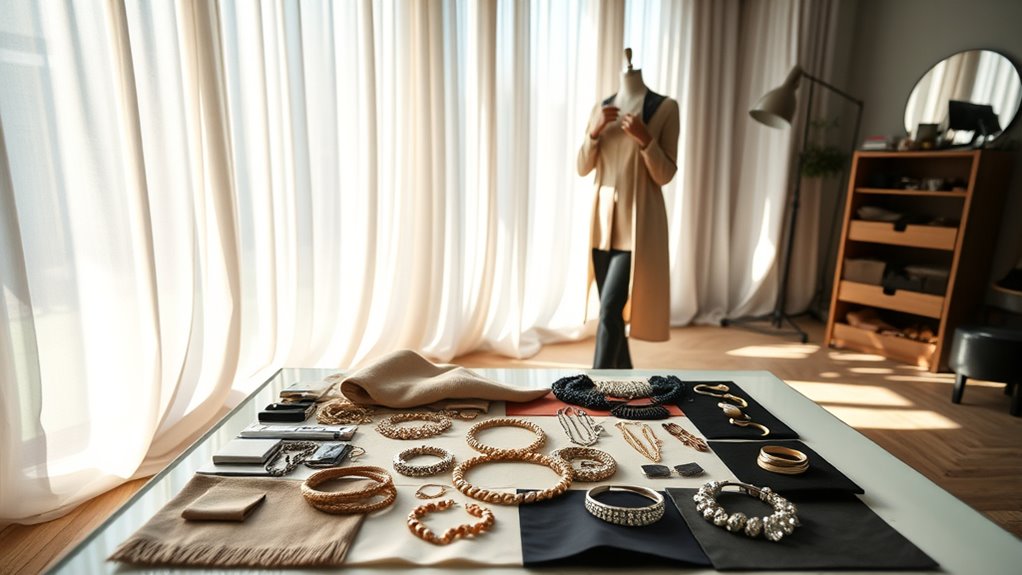
Have you ever wondered how professional photos can elevate your styling portfolio? The truth is, great images do more than showcase your work—they tell a story, highlight your attention to detail, and attract clients. To achieve this, understanding the essentials of photography, especially lighting, angles, and legal considerations, is vital. One of the first steps is securing model releases. These legal documents give you permission to photograph and use images of your models, protecting you from potential legal issues down the line. Always get these signed before shooting, and keep copies organized. Without them, even the most stunning photos can become problematic if a model later disputes their use. Model releases are your safeguard, ensuring you have the right to showcase your work publicly and professionally. Proper watering techniques for your styling environment can help maintain a comfortable and professional setting during photoshoots, especially when working with large setups or indoor plants used as props or decor.
Next, focus on camera techniques. Your choice of camera settings and methods can dramatically impact the quality of your images. Use a wide aperture to create a soft background that emphasizes the styling details or a narrower one to capture sharp, full-body shots. Pay attention to shutter speed—faster speeds freeze motion, which is perfect for dynamic poses, while slower speeds can add a sense of movement if desired. Proper focus is essential; ensure your subject’s features are crisp and well-defined. Experiment with different angles to find the most flattering and interesting perspectives. A slightly elevated or low shot can add depth and dimension, making your styling stand out. Don’t be afraid to get close for detailed shots of accessories or fabric textures, and consider incorporating natural light or studio lighting to enhance the mood.
Lighting plays a pivotal role, and understanding how to manipulate it is key. Natural light often provides a soft, flattering glow, but when shooting indoors, you might need to set up artificial lights. Use reflectors to bounce light into shadowed areas or diffusers to soften harsh spots. The goal is to evenly illuminate the styling without creating unflattering shadows or overexposure. When working with models, direct light can accentuate features, but diffused lighting usually offers a more polished look. Remember, the right lighting highlights the textures, colors, and details of your styling work, making your photos more compelling.
Frequently Asked Questions
How Do I Choose the Best Lighting for Different Fashion Styles?
To choose the best lighting for different fashion styles, consider the color palettes and mood you’re aiming for. Use versatile lighting equipment like softboxes for a soft, natural look or harsher lights for edgier styles. Adjust angles to enhance textures and details. Experiment with warm or cool tones to complement outfits, ensuring your lighting highlights the essence of each fashion style while maintaining consistency across your shoots.
What Are Common Mistakes in Styling Photography Lighting Setups?
Imagine you’re in a Renaissance painting—mistakes in styling photography lighting setups happen just like that. Common lighting mistakes include overexposing or underexposing shots, which wash out details or create unwanted shadows. Equipment errors, like using the wrong bulb or positioning lights poorly, can also ruin a shot. Always check your light intensity, angles, and equipment before shooting to avoid these pitfalls, ensuring your images are sharp, balanced, and professional.
How Can I Ensure Model Comfort During Photoshoots?
You can guarantee model comfort by maintaining open communication and establishing consent procedures before the shoot. Talk to your model about their boundaries, preferences, and any concerns. During the shoot, check in regularly, respecting their comfort levels and adjusting your approach if needed. Creating a positive, respectful environment helps your model feel safe, confident, and relaxed, ultimately resulting in better photos and a more enjoyable experience for everyone involved.
What Legal Considerations Should I Be Aware of With Model Releases?
Think of a model release as your safety net—without it, you’re flying blind. You should guarantee legal compliance by securing signed model releases before shooting, clearly outlining how images will be used. This not only protects your work but respects your models’ rights. Always keep copies, and be transparent about the purpose. Ignoring these legal considerations risks future disputes, so stay diligent and protect your creative journey.
How Do I Decide on the Best Angles to Showcase Clothing?
You should experiment with different perspective choices to find angles that highlight the clothing’s best features. Use strategic model positioning to showcase how the garment fits and moves. Try shooting from eye level for clarity, low angles for a powerful look, or high angles to emphasize details. Continuously evaluate which angles make the clothing stand out most, and adjust your perspective choices accordingly to create compelling images.
Conclusion
Think of photography for stylists as crafting a perfect portrait — every detail matters. When you master lighting, angles, and consent, you’re painting a vivid story that captures your vision and respects your clients. Remember, your camera is your brush, and each shot is an opportunity to showcase your artistry. By staying mindful and ethical, you create images that shine as brightly as your talent, turning every session into a masterpiece.