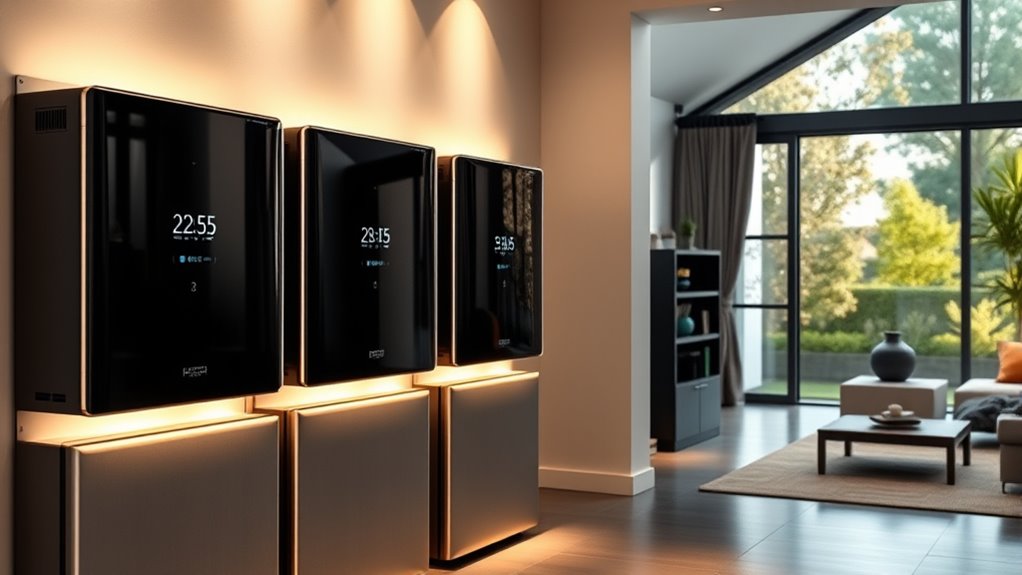

Among these high-end home battery backup systems, my best overall pick is the EF ECOFLOW DELTA Pro 3 with 50 Amp Hub, which pairs a portable power-station format with a clearer route to home-circuit backup. The HumsiENK 16.1 kWh system stands out for buyers who want substantial stored energy and an integrated hybrid inverter, while the WattCycle 48V kit favors a more configurable rack-battery setup. The main tradeoff is between ready-to-use portability and a more involved system built around separate batteries and an inverter. Capacity, output, expansion, installation requirements, and solar compatibility matter as much as the headline watt-hour figure. Read on for the full breakdown and a guide to matching a system to your home and backup plan.

Get beauty and skincare favorites delivered free with Prime
- Fast, free delivery on millions of items
- Prime Video, Amazon Music and more included
- Member-only deals all year
Complete the kit


Key Takeaways
- The EcoFlow DELTA Pro 3 leads for flexible home backup: its 50 Amp Hub gives it a more direct path to supporting selected home circuits than a standalone portable station.
- HumsiENK puts capacity and inverter power together: its stated 16.1 kWh battery and 8,000 W hybrid inverter make it a different proposition from smaller portable kits.
- WattCycle and ECO-WORTHY split-battery kits reward system planning: their 48V architecture can suit buyers building around rack batteries, but installation and component compatibility need closer attention.
- Jackery’s lineup serves different scales, not one interchangeable use case: the Explorer 2000 Plus Kit, HomePower 2000 Plus v2, and HomePower 3600 Plus vary in configuration and stated capacity.
- BLUETTI Apex 300 and the EcoFlow pick emphasize expandable portable designs: these can appeal to buyers who want modularity, while fixed-system shoppers may prefer a battery-and-inverter kit.
| Jackery Explorer 2000 Plus Kit with 2x Extra Batteries and 2x 200W Solar Panels |  | Best Expandable Portable Kit | Capacity: 6,128Wh | Output / starting wattage: 3,000W / 6,000W | Battery chemistry: LiFePO4 | VIEW ON AMAZON | See Our Full Breakdown |
| WattCycle 48V 100Ah Server Rack Batteries with 12kW Split-Phase Inverter |  | Best for High-Output Split-Phase Backup | Battery configuration: Two 48V 100Ah LiFePO4 batteries | Total capacity: 10.24kWh | Inverter output: 12kW, 120/240V split phase | VIEW ON AMAZON | See Our Full Breakdown |
| HumsiENK 16.1 kWh LiFePO₄ Home Backup Battery with 8000 W Hybrid Inverter |  | Best for High Capacity in One Enclosure | Battery capacity: 16.1kWh | Battery voltage and chemistry: 48V LiFePO₄ | Inverter output: 8,000W | VIEW ON AMAZON | See Our Full Breakdown |
| Jackery HomePower 2000 Plus v2 Portable Power Station Kit with Two Batteries and Two 200W Solar Panels |  | Best Compact Expandable Starter | Capacity: 2,048Wh | Expandable capacity: Up to 12kWh | Output wattage: 2,400W | VIEW ON AMAZON | See Our Full Breakdown |
| ECO-WORTHY 48V Home Backup Power Kit with 10,240Wh Battery Capacity and 10,000W Inverter |  | Best Modular Split-Phase Kit | Battery capacity: 10,240Wh | Included batteries: Two 51.2V 100Ah LiFePO4 batteries | Inverter output: 10,000W | VIEW ON AMAZON | See Our Full Breakdown |
| Jackery HomePower 3600 Plus Portable Power Station with Extra Battery, 7168Wh |  | Best Portable High-Capacity Pick | Total capacity with extra battery: 7,168Wh | Base capacity: 3,584Wh | AC output: 3,600W | VIEW ON AMAZON | See Our Full Breakdown |
| EF ECOFLOW DELTA Pro 3 Home Battery Backup System with 50 Amp Hub |  | Best for High-Output Whole-Home Backup | Battery capacity per unit: 4,096Wh | Expandable system capacity: Up to 48kWh | AC output: 8,000W | VIEW ON AMAZON | See Our Full Breakdown |
| BLUETTI Apex 300 Solar Generator with Two B300K Expansion Batteries |  | Best for Quiet Solar-First Backup | Combined capacity: 8,294.4Wh | Running wattage: 3,840W | Surge wattage: 7,680W | VIEW ON AMAZON | See Our Full Breakdown |
| ECO-WORTHY 48V Home Backup Power System with 10,240Wh LiFePO4 Batteries and 5,000W Inverter |  | Best for Expandable Fixed Home Systems | Total battery capacity: 10,240Wh | Battery configuration: Two 51.2V 100Ah batteries | Battery chemistry: LiFePO4 | VIEW ON AMAZON | See Our Full Breakdown |
| highend home battery backup system | Weight |
|---|---|
| Jackery Explorer 2000 Plus Kit | 145 lb |
| WattCycle 48V 100Ah Server Rac | — |
| HumsiENK 16.1 kWh LiFePO₄ Home | 294 lb |
| Jackery HomePower 2000 Plus v2 | 40.6 lb |
| ECO-WORTHY 48V Home Backup Pow | — |
| Jackery HomePower 3600 Plus Po | 77.2 lb |
| EF ECOFLOW DELTA Pro 3 Home Ba | — |
| BLUETTI Apex 300 Solar Generat | 214 lb |
| ECO-WORTHY 48V Home Backup Pow | — |
More Details on Our Top Picks
Jackery Explorer 2000 Plus Kit with 2x Extra Batteries and 2x 200W Solar Panels
I’d pick this kit when I want substantial backup capacity without starting with a permanently installed battery system. Its 6,128Wh capacity and 3,000W output can cover more than small electronics, while the 6,000W starting rating gives compatible appliances extra startup headroom. Compared with the HumsiENK 16.1 kWh system, it stores less energy and has lower output, but it is a more portable, self-contained format for backup that may also serve off-grid use. The included solar panels and rapid AC charging add flexibility when outages last beyond the battery’s initial reserve. I’d weigh that convenience against its 145-pound weight: it is movable, but not an easy unit to carry. Its expansion ceiling is useful, though reaching it means adding equipment.
Pros:- 6,128Wh starting capacity with expansion up to 24kWh
- 3,000W output and 6,000W starting wattage support demanding compatible loads
- AC charging reaches 80% in a stated 1.3 hours
- LiFePO4 battery chemistry and quiet 30dB operation
Cons:- At 145 pounds, it is difficult to move without help
- Its listed 110V output is less suited to whole-home split-phase loads than the WattCycle or ECO-WORTHY systems
- The included solar panels are 200W each, so solar replenishment may be slow relative to the battery capacity
Best for: Households seeking a high-capacity, expandable backup that can also support RV or off-grid use without beginning with a fixed split-phase installation.
Not ideal for: Buyers who need a lighter unit to carry frequently or a ready-made 120/240V split-phase home system with higher inverter output.
- Capacity:6,128Wh
- Output / starting wattage:3,000W / 6,000W
- Battery chemistry:LiFePO4
- Expansion capacity:Up to 24kWh
- AC charging:0–80% in 1.3 hours
- Weight:145 lb
- Noise level:30dB
- Included solar panels:Two 200W panels
Our verdict“Choose this Jackery if you want a quiet, expandable portable reserve with included solar panels, and skip it if you need lighter handling or a high-output split-phase installation.”
WattCycle 48V 100Ah Server Rack Batteries with 12kW Split-Phase Inverter
The WattCycle kit suits buyers planning a substantial home energy system around 120/240V split-phase power, rather than a portable station for occasional outages. Two server-rack batteries provide 10.24kWh, and the 12kW inverter offers more output headroom than the Jackery Explorer 2000 Plus or the ECO-WORTHY 10,000W kit. Its stated under-10ms UPS transfer is useful for equipment that cannot tolerate a long interruption, while dual MPPT controllers and high stated solar-input capacity leave room for a larger solar array. That flexibility comes with a planning burden: rack-style batteries, inverter sizing, and household circuits call for a considered installation. I’d choose it over the more self-contained Jackery for a larger, expandable home setup, but not for a grab-and-go backup.
Pros:- 12kW inverter supplies 120/240V split-phase output
- Two LiFePO4 batteries provide 10.24kWh of capacity
- Under-10ms UPS transfer supports sensitive loads
- Bluetooth and LCD monitoring plus extensive stated system expansion
Cons:- A 48V rack system and split-phase inverter need more installation planning than a portable station
- The stated 24,000W solar input and expansion ceiling depend on compatible additional equipment and system design
- Battery management is listed at 100A, a specification buyers should match carefully to intended loads and charging plans
Best for: Homeowners planning a split-phase backup installation with substantial inverter output, solar input, and room to add batteries or inverters later.
Not ideal for: Buyers who want a compact, ready-to-use portable power station or do not have the space and installation plan for a rack-style system.
- Battery configuration:Two 48V 100Ah LiFePO4 batteries
- Total capacity:10.24kWh
- Inverter output:12kW, 120/240V split phase
- Solar input:Up to 24,000W
- MPPT controllers:Dual
- UPS transfer time:Under 10ms
- Monitoring:Bluetooth and LCD touchscreen
- Expansion:Up to six inverters and 20 batteries
Our verdict“Choose WattCycle for a planned, expandable split-phase installation with high inverter output, not for simple portable outage coverage.”
HumsiENK 16.1 kWh LiFePO₄ Home Backup Battery with 8000 W Hybrid Inverter
Among these options, the HumsiENK is the clearest choice when stored energy matters more than portability. Its 16.1kWh battery and 8,000W hybrid inverter combine a large reserve with 120/240V split-phase output, so it can support a broader household backup plan than the 6,128Wh Jackery Explorer 2000 Plus. The ≤10ms transfer switching, active balancing, and listed 6,000-plus-cycle life at 80% depth of discharge make its battery and backup functions more installation-oriented than a basic portable station. Compared with WattCycle, it has greater stated capacity in its included configuration, but less inverter output and less clearly stated expansion detail. Wheels help with positioning, not routine carrying: at 294 pounds, delivery and placement need advance planning.
Pros:- 16.1kWh battery capacity is higher than the included capacity of the other listed systems
- 8,000W inverter provides 120/240V split-phase output
- ≤10ms transfer switching and a 200A battery management system with active balancing
- LCD touchscreen, Bluetooth monitoring, and built-in wheels
Cons:- At 294 pounds, the unit is difficult to reposition despite its wheels
- Freight delivery requires an address that can accommodate truck delivery
- Its 8,000W inverter output is lower than WattCycle’s 12kW system
Best for: Households prioritizing a large built-in energy reserve and 120/240V backup in a single wheeled enclosure, with a suitable delivery and placement plan.
Not ideal for: Renters, frequent movers, or buyers without truck-accessible delivery and a clear installation location for a 294-pound unit.
- Battery capacity:16.1kWh
- Battery voltage and chemistry:48V LiFePO₄
- Inverter output:8,000W
- Surge capacity:10,000W
- Output:120/240V split phase
- Battery cycle life:6,000+ cycles at 80% DoD
- Transfer switching time:≤10ms
- Weight:294 lb
Our verdict“Pick HumsiENK if you want a large 16.1kWh reserve in one integrated split-phase unit and can accommodate its weight and freight delivery.”
Jackery HomePower 2000 Plus v2 Portable Power Station Kit with Two Batteries and Two 200W Solar Panels
I’d place the HomePower 2000 Plus v2 at the compact end of this group: it starts with 2,048Wh and 2,400W output, then can expand to 12kWh. That makes it a more approachable entry point than the WattCycle or ECO-WORTHY systems, which are designed around higher-output split-phase setups and installation planning. Its priority routing for essential circuits gives buyers a way to focus limited stored energy on chosen loads, while the 140W USB-C port is useful for powerful laptops and other compatible devices. The tradeoff is scale: even with expansion, the starting capacity is modest beside the 6,128Wh Jackery Explorer kit, and this listing does not state solar charging performance. I’d treat the included panels as added flexibility, not assume a particular recharge time.
Pros:- Compact 2,048Wh starting capacity expands to 12kWh
- 2,400W output suits a range of essential loads
- Priority routing helps direct stored energy to selected circuits
- LFP batteries are rated for 6,000+ cycles and USB-C output reaches 140W
Cons:- Starting capacity is much lower than the Explorer 2000 Plus kit and the large integrated systems
- Solar charging performance is not specified in the product data
- The listed 120V AC output does not provide the split-phase capability specified for WattCycle and ECO-WORTHY
Best for: Households seeking a smaller expandable backup for essential loads, electronics, and gradual system growth rather than high-demand whole-home coverage.
Not ideal for: Buyers who need substantial capacity out of the box, specified solar recharge performance, or 120/240V split-phase output for household circuits.
- Capacity:2,048Wh
- Expandable capacity:Up to 12kWh
- Output wattage:2,400W
- Battery type:LFP
- USB-C output:140W
- AC voltage:120V
- Weight:40.6 lb
- Included components:Two batteries and two 200W solar panels
Our verdict“Choose this Jackery for a compact, expandable essential-load system; choose a larger split-phase kit if you need higher household coverage from the start.”
ECO-WORTHY 48V Home Backup Power Kit with 10,240Wh Battery Capacity and 10,000W Inverter
The ECO-WORTHY kit makes sense for buyers who want a 10,000W inverter and 10.24kWh of included storage in a modular 48V system. Its 120/240V split-phase output suits a broader household setup than the 120V Jackery HomePower 2000 Plus v2, and its 20,000W peak rating gives compatible loads startup headroom. Compared with WattCycle, ECO-WORTHY supplies slightly less inverter output but lists a 10,000W inverter, 200A charger, and expansion to as many as 32 batteries. The tradeoff is that expansion capacity is not included, and the batteries and inverter ship separately. I’d favor it over the HumsiENK when modular expansion and a flatter installation footprint matter more than getting a larger single-enclosure battery; delivery coordination and system planning remain part of the purchase.
Pros:- Includes two LiFePO4 batteries totaling 10.24kWh and a 10,000W inverter
- Supports 120V single-phase or 120/240V split-phase output
- 20,000W peak power and a 200A battery charger
- Parallel expansion supports up to six inverters and 32 batteries
Cons:- Batteries and inverter ship separately, which complicates delivery and setup
- Maximum expansion requires purchasing additional inverters or batteries
- Its 10.24kWh included capacity is below the HumsiENK’s stated 16.1kWh
Best for: Homeowners building a modular 48V backup system who want 120/240V output, substantial inverter capacity, and the option to add batteries over time.
Not ideal for: Buyers who need a single delivered unit, an easy plug-and-play portable system, or a larger included reserve than 10.24kWh.
- Battery capacity:10,240Wh
- Included batteries:Two 51.2V 100Ah LiFePO4 batteries
- Inverter output:10,000W
- Peak power:20,000W
- Output:120V single phase or 120/240V split phase
- Battery charger:Up to 200A
- Expansion:Up to six inverters and 32 batteries in parallel
- Dimensions:20.55 × 17.13 × 5.63 in
Our verdict“Choose ECO-WORTHY for a modular, high-output split-phase system with room to grow, provided you are prepared to coordinate separate shipments and plan the installation.”
Jackery HomePower 3600 Plus Portable Power Station with Extra Battery, 7168Wh
The Jackery HomePower 3600 Plus pairs a 3,584Wh base station with an included battery for 7,168Wh total, making it a practical middle ground between a single portable unit and a larger expandable setup. Its wheels and telescopic handle help with repositioning, though the 77.2-pound listed weight still makes lifting awkward. Compared with the BLUETTI Apex 300, Jackery offers less listed capacity but a lighter, simpler-to-move package and a stated 2-hour hybrid AC-plus-DC recharge. It can expand to 21kWh per unit, with more capacity possible across multiple units. The key limitation is that 240V output requires parallel operation, so buyers needing split-phase power should plan around that setup rather than treating it as a standalone feature.
Pros:- Includes an extra battery for 7,168Wh total capacity
- Expandable to 21kWh per unit and supports larger multi-unit capacity
- Four charging options include solar and hybrid AC-plus-DC charging
- Wheels and telescopic handle aid movement around the home
Cons:- At 77.2 pounds, lifting the unit remains difficult despite its wheels
- 240V output requires parallel operation
- Listed 3,600W AC output may be limiting for several high-draw appliances running together
Best for: Homeowners who want a wheeled, expandable backup unit they can reposition and recharge through AC, solar, or a generator.
Not ideal for: Buyers who need standalone 240V output or a system that is easy to lift over stairs and thresholds.
- Total capacity with extra battery:7,168Wh
- Base capacity:3,584Wh
- AC output:3,600W
- Parallel output:7,200W
- Voltage:120V; 240V in parallel
- Expandable capacity:Up to 21kWh per unit or 43kWh with multiple units
- Charging options:Hybrid AC+DC, AC, solar, and gas generator
- Battery chemistry and cycle life:LFP; 6,000 cycles
- Weight:77.2 lb
Our verdict“Choose the Jackery if you want substantial, expandable storage in a wheeled package and can work around its parallel-only 240V setup.”
EF ECOFLOW DELTA Pro 3 Home Battery Backup System with 50 Amp Hub
The EcoFlow DELTA Pro 3 with 50 Amp Hub is the output-focused choice here: its paired stations are rated for 8,000W AC output and 120/240V power, a stronger fit for running several substantial household loads than the Jackery HomePower 3600 Plus. The 10ms backup switch-over and app monitoring also make it more suited to home backup than a basic portable power station. Buyers who want quieter operation get a listed noise level as low as 30dB, while the system can expand to 48kWh. That capability comes with a real handling cost: the listed system weight is 230 pounds, so “portable” does not mean easy to move as a complete setup. The stated runtime is only two minutes, so I would verify what that figure represents before relying on it for outage planning.
Pros:- 8,000W AC output and 120/240V support suit larger household loads
- Expandable system capacity reaches 48kWh
- 10ms backup switch-over supports fast response to power loss
- App monitoring and operation as low as 30dB add home-use convenience
Cons:- The listed 230-pound system weight makes relocation difficult
- The product data lists only two minutes of runtime, an unusually short figure that needs clarification
- Its two-unit configuration takes more space and coordination than a single portable station
Best for: Homeowners seeking high AC output, 120/240V support, fast backup switching, and a path to substantial battery expansion.
Not ideal for: Buyers who need an easily movable system or who require clear, verified runtime information before purchase.
- Battery capacity per unit:4,096Wh
- Expandable system capacity:Up to 48kWh
- AC output:8,000W
- Voltage:120/240V
- Backup switch-over:10ms
- Charging methods:7 individual methods and 18 combined methods
- Noise level:As low as 30dB
- Battery chemistry:LFP
- Listed system weight:230 lb
Our verdict“Pick the DELTA Pro 3 system for high-output, expandable 120/240V backup, but confirm the runtime specification and plan for a heavy installation.”
BLUETTI Apex 300 Solar Generator with Two B300K Expansion Batteries
With 8,294.4Wh of listed capacity, simultaneous 120V/240V output, and a claimed noise level of 22dB, the BLUETTI Apex 300 bundle suits buyers who want a quiet, solar-capable system for home, RV, or off-grid use. Its ≤10ms UPS backup adds a quick handoff feature, while solar input can reach 2,400W built in or 6,400W expanded. That solar ceiling gives it a different emphasis from the EcoFlow DELTA Pro 3, which lists greater AC output and capacity expansion but weighs more. The tradeoff is that the Apex bundle itself is still 214 pounds, so it is not a grab-and-go backup. The expansion batteries are also noted as shipping separately, which can complicate delivery and setup timing even though they are part of the stated bundle.
Pros:- 8,294.4Wh combined capacity with two expansion batteries
- Simultaneous 120V/240V output and 3,840W running power
- Solar input supports up to 6,400W when expanded
- Listed 22dB noise level and ≤10ms UPS backup suit quiet, sensitive-use settings
Cons:- At 214 pounds, the full system is difficult to reposition
- Expansion batteries ship separately, which can delay a complete setup
- 3,840W running output is lower than the EcoFlow DELTA Pro 3 system’s listed 8,000W
Best for: Solar-focused households, RV owners, and off-grid users who want quiet operation, simultaneous 120V/240V output, and included expansion batteries.
Not ideal for: Buyers who need a light, quickly movable unit or want all bundle components to arrive together.
- Combined capacity:8,294.4Wh
- Running wattage:3,840W
- Surge wattage:7,680W
- Output voltage:Simultaneous 120V/240V
- Solar input:2,400W built in; 6,400W expanded
- Charging sources:Solar, AC, car, lead-acid, and generator
- Battery chemistry and cycle life:LFP; 6,000+ cycles
- UPS backup:≤10ms
- Weight:214 lb
Our verdict“Choose the Apex 300 bundle if quiet, high-input solar charging and simultaneous 120/240V output matter more than easy movement or maximum AC output.”
ECO-WORTHY 48V Home Backup Power System with 10,240Wh LiFePO4 Batteries and 5,000W Inverter
The ECO-WORTHY 48V kit is the most build-out-oriented choice in this group: it pairs 10,240Wh of LiFePO4 storage with a 5,000W pure sine wave inverter and a built-in 100A MPPT controller. That integrated setup gives solar-minded buyers a clear foundation for an off-grid or fixed backup system, rather than the wheeled, all-in-one approach of the Jackery HomePower 3600 Plus. Expansion is a major distinction: the inverter can scale to six units and 30kW AC output, while battery capacity can grow to 163.84kWh with 32 batteries. This flexibility demands planning, wiring, and space, and the 223.8-pound kit is no casual portable option. The supplied inverter’s output is 120V; 208V or 240V requires parallel inverters, so buyers should map their electrical needs before choosing it.
Pros:- 10,240Wh total LiFePO4 battery capacity
- 5,000W pure sine wave inverter includes a 100A MPPT charge controller
- Battery and inverter capacity can expand substantially
- Bluetooth and Wi-Fi monitoring plus CAN/RS485 battery communication
Cons:- The 223.8-pound kit is heavy and suited to a planned installation rather than frequent moving
- 120V is the stated inverter output; 208V or 240V requires parallel inverters
- Components ship separately, which may complicate delivery and assembly
Best for: Off-grid homeowners and technically prepared buyers who want a 48V solar system they can expand with additional batteries and inverters.
Not ideal for: Buyers seeking a ready-to-move portable station, simple plug-and-play backup, or standalone 240V output from the supplied inverter.
- Total battery capacity:10,240Wh
- Battery configuration:Two 51.2V 100Ah batteries
- Battery chemistry:LiFePO4
- Inverter output:5,000W
- Peak output power:10,000W
- MPPT charge controller:100A
- PV input voltage range:120–500V DC
- Expandable battery capacity:Up to 32 batteries; 163.84kWh
- Expandable inverter output:Up to 6 inverters; 30kW AC
Our verdict“Choose the ECO-WORTHY kit for a scalable 48V solar-backup foundation, not for portable or simple standalone 240V use.”

How We Picked
I ranked these systems by how well their usable capacity, inverter output, and included components match realistic home-backup needs. I also weighed expandability, solar-input options, portability, and the practical work involved in connecting a system to household loads. A large capacity figure alone did not guarantee a high placement: output limits, system format, and the gap between a portable power station and a home-integrated setup affect what a buyer can actually run.
The order favors systems with a strong balance of backup capability and a clear use case, then distinguishes specialized picks from more broadly useful ones. Portable kits rank well when their included batteries and accessories offer a coherent package; rack-battery kits earn their place for buyers prepared to plan around separate components. I treated installation complexity and compatibility as meaningful tradeoffs, not minor details. Specifications and package configurations can vary, so buyers should confirm the exact contents and electrical requirements before choosing.
Factors to Consider When Choosing Highend Home Battery Backup Systems
Choosing a home battery is less about finding the biggest number and more about matching power, runtime, and connection method to the outages you want to cover. Use these factors to compare packages on equal terms before committing to a system.
Separate Capacity From Output
Capacity, usually stated in kilowatt-hours, indicates how much energy a battery stores; inverter output, stated in watts, limits how much power it can deliver at once. A system can have plenty of stored energy yet struggle to run several high-draw appliances together. List the devices you want backed up, their running wattage, and any startup surges from motors or compressors. Then decide whether your priority is a long runtime for modest loads or enough instantaneous power for multiple larger loads. A common mistake is comparing battery capacity alone and assuming the larger figure will run every household appliance. Check usable capacity and surge specifications in the exact configuration you plan to buy.
Choose Between Portable and Home-Integrated Formats
Portable power stations put batteries, controls, and an inverter into a movable package, while rack-style systems commonly pair separate batteries with an inverter and other electrical components. Portability can make setup more flexible for essential devices or temporary use, but it does not automatically mean the unit can feed household circuits. A home connection may require a compatible transfer switch, hub, or electrician-installed equipment. Split-component systems can offer a more tailored installation, but buyers take on more responsibility for compatibility and layout. Decide whether you want to move power where needed or supply selected circuits through a planned home connection. Confirm local electrical rules and installation requirements before ordering.
Size for the Outage You Actually Face
Start with a backup list rather than trying to power the entire house by default. Refrigeration, communications, lighting, and medical equipment create a different capacity target from heating, cooling, cooking, or well pumps. Estimate daily energy use for those loads and account for how many hours or days you want to cover without recharging. Solar can extend runtime, but actual harvest varies with weather, season, panel placement, and system input limits. Avoid sizing around ideal sunny conditions if outages in your area commonly coincide with storms or winter weather. A smaller system with a realistic load plan may serve you better than a larger unit that still cannot cover your highest-demand appliances.
Check Expansion and Component Compatibility
Expansion claims matter only when the added batteries, inverter, and control equipment work together in the configuration you need. Before buying, check supported battery models, maximum expansion capacity, connection rules, and whether expansion changes output or charging behavior. Separate 48V batteries and inverters deserve extra scrutiny: matching voltage alone does not prove that communication protocols, charge limits, or protections are compatible. Portable systems can simplify pairing when the manufacturer specifies supported expansion batteries, though add-ons still affect space and portability. Plan for the system you may build later, but do not pay for theoretical expansion you are unlikely to use. Ask for the exact compatible component list rather than relying on a broad claim of expandability.
Treat Solar as a Recharging Plan, Not a Promise
Solar panels can help replenish a battery during an outage, but the panel count in a package does not tell the whole story. Compare the system’s solar input limits, supported voltage range, connector type, and maximum charging power with the panels you intend to use. A mismatch can limit charging or require extra equipment. Portable panels are convenient for temporary placement, while roof-mounted arrays involve different wiring, permitting, and installation decisions. Consider where panels can sit safely and receive sunlight during the seasons when outages are most likely. Keep a grid-charging or generator plan in mind if low solar production would leave essential loads without power.
Account for Installation, Safety, and Long-Term Upkeep
A battery backup is an electrical system, not just an appliance, especially when it connects to home circuits or uses separate batteries and an inverter. Check whether the intended installation needs a licensed electrician, a transfer device, permits, or dedicated space with suitable ventilation and temperature conditions. Review battery chemistry, built-in protections, warranty terms, and the process for service or replacement. Also ask how the system behaves during charging, whether its controls remain usable without internet access, and what maintenance the manufacturer recommends. Do not assume a portable unit can safely energize household wiring through an improvised connection. Planning these details early can prevent a capable battery from becoming a poor fit for the home.
Frequently Asked Questions
Can a portable power station run my home during an outage?
It can power selected appliances or circuits if its output, capacity, and connection method match the load. A portable unit’s outlets do not by themselves provide a safe way to energize household wiring. For circuit-level backup, check whether the model supports a compatible hub or transfer equipment and whether an electrician must install it. Add up the loads you plan to run at the same time, including startup surges. If your goal is whole-home backup, confirm the system’s limits with an installer rather than relying on the product category name.
How do I know whether I need a 48V battery-and-inverter kit or an all-in-one power station?
An all-in-one station tends to suit buyers who value a packaged system and a simpler setup for portable or selected-load backup. A 48V battery-and-inverter kit may better fit a planned installation where component choice, rack storage, or system configuration matters. The tradeoff is that separate components require careful checks for electrical compatibility, installation, and protection equipment. Think about who will install and service the system, not only who will use it. If you do not want to coordinate components or electrical work, a packaged format is often the more straightforward direction.
Is a larger battery always the better choice for home backup?
No. A larger capacity can extend runtime, but it does not raise the inverter’s power limit unless the system design also supports higher output. First identify the appliances you need and whether they must run simultaneously; then estimate their energy use over the length of an outage. If your key loads are modest, a smaller system may cover them more efficiently. If you need to run heavy appliances for long periods, you may need both greater capacity and a suitable inverter. The most useful comparison is expected runtime for your own load list, not capacity in isolation.
Can solar panels keep a home battery charged through a multi-day outage?
They can contribute, but dependable recharging depends on sunlight, panel placement, weather, and the battery system’s solar input limits. A cloudy stretch or shaded installation can sharply reduce the energy collected. Match panel voltage and connectors to the system, and check its maximum solar charging power before adding more panels. Estimate your essential loads alongside realistic daily solar production rather than assuming the panels will refill the battery each day. For critical equipment, keep another charging option available if sunlight is unreliable.
What should I confirm before connecting a battery system to household circuits?
Confirm that the system supports the intended connection method and that its rated output can handle the selected circuits. Ask whether a transfer switch, branded hub, dedicated wiring, or electrician-installed equipment is required. Check local permitting and electrical-code requirements, along with the manufacturer’s instructions for neutral-ground bonding and other installation details. Never connect a power station to a wall outlet as a way to feed home wiring. A qualified electrician can verify that the setup protects both the home and utility workers and operates within the system’s limits.
Conclusion
For the broadest mix of portability and home-circuit potential, I recommend the EF ECOFLOW DELTA Pro 3 with 50 Amp Hub as the best overall pick. Buyers seeking a substantial stated battery capacity with an integrated hybrid inverter should look at the HumsiENK 16.1 kWh system for a premium, higher-capacity direction. The ECO-WORTHY 48V 10,240Wh kit with 5,000W inverter is my value-oriented choice for shoppers comfortable planning a component-based system, while the Jackery HomePower 2000 Plus v2 is the more approachable packaged option for beginners who want a smaller-scale setup. For buyers prioritizing configurable rack batteries, the WattCycle 48V kit is the specific-use pick; for modular portable backup, compare the BLUETTI Apex 300 and Jackery’s other expandable kits. Match the final choice to your load list, installation plan, and charging options, then verify the exact package and electrical requirements before purchase.
Halloween Picks
halloween
As an affiliate, we earn on qualifying purchases.