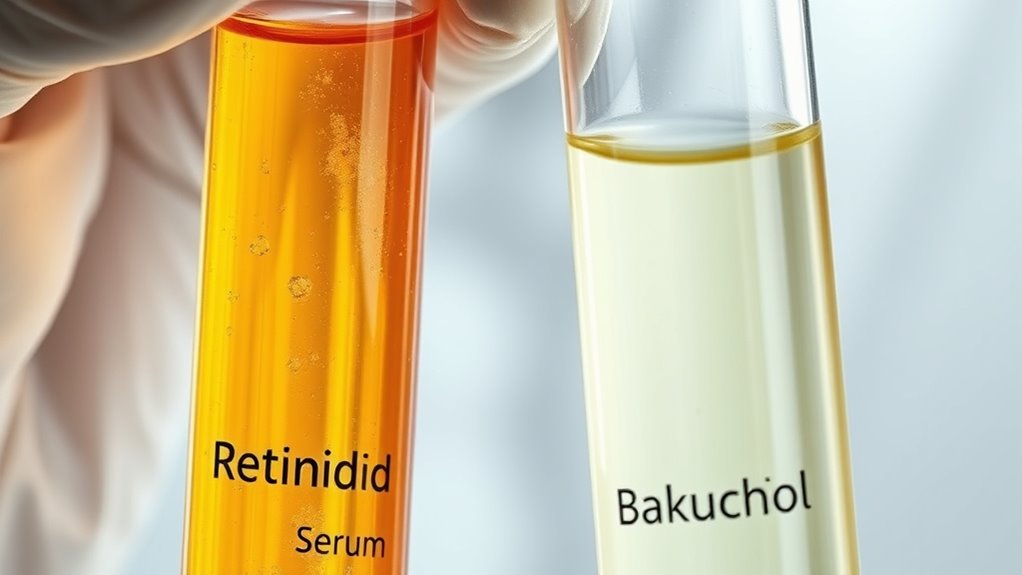

Retinoids are proven to boost collagen, reduce fine lines, and improve skin texture, making them highly effective for anti-aging. Bakuchiol offers similar benefits, such as wrinkle reduction and increased elasticity, but is gentler and suitable for sensitive skin. Emerging studies show that bakuchiol provides comparable results over time while causing fewer side effects. To discover how each option might work for your skin type and goals, keep exploring the details.
Key Takeaways
- Studies show bakuchiol matches retinoids in reducing wrinkles and improving skin elasticity over several weeks.
- Retinoids have extensive clinical backing, while bakuchiol’s efficacy is supported by emerging research.
- Bakuchiol offers similar skin-renewal benefits with fewer side effects like irritation and redness.
- Both ingredients enhance collagen production, but bakuchiol also provides antioxidant protection against free radicals.
- The choice depends on skin sensitivity and desired outcomes, with bakuchiol serving as a gentler, natural alternative.

Are retinoids really the only effective option for anti-aging and skin renewal, or is there a gentler alternative? You might be surprised to learn that bakuchiol, a natural plant-based compound, offers promising results without some of the drawbacks associated with traditional retinoids. Retinoids are well-known for their powerful ability to boost collagen production, reduce fine lines, and improve skin texture. However, they can also cause significant skin sensitivity, redness, and peeling, especially when you first start using them. That’s where bakuchiol comes into play. It’s gaining attention because it mimics many of the benefits of retinoids but tends to be gentler on your skin.
One reason bakuchiol is gaining recognition is its antioxidant properties. Antioxidants help neutralize free radicals, which are molecules that damage your skin cells and accelerate aging. By fighting oxidative stress, bakuchiol can contribute to a more youthful appearance over time. Unlike retinoids, which can sometimes cause irritation, bakuchiol is suitable for sensitive skin types, making it an attractive option if you’re concerned about skin sensitivity. Its soothing nature means you’re less likely to experience the redness or peeling often associated with retinoid use.
Bakuchiol’s antioxidant properties help neutralize free radicals and soothe sensitive skin, reducing redness and peeling.
When it comes to efficacy, studies show that bakuchiol can deliver comparable benefits to retinoids in terms of improving fine lines, wrinkles, and skin elasticity. In some cases, users notice improvements after consistent use for several weeks, similar to what you might expect from retinoids. But because bakuchiol is less irritating, you can often incorporate it into your skincare routine more comfortably, even if your skin is prone to sensitivity. This makes it a practical alternative for those who want anti-aging benefits without the harsh side effects.
While retinoids have a long-standing reputation backed by extensive research, bakuchiol’s emerging evidence suggests it can be an effective, natural substitute. If your skin reacts strongly to retinoids or you’re just starting your anti-aging journey, bakuchiol provides a promising option that balances efficacy with gentleness. Its antioxidant properties also add an extra layer of skin protection, making it a compelling choice for those seeking a more holistic approach to skin renewal. Additionally, dermatological research supports its safety and effectiveness, further validating its use as an alternative. Ultimately, whether you choose retinoids or bakuchiol, understanding your skin’s needs and tolerances will help you make the best decision for your anti-aging routine.
As an affiliate, we earn on qualifying purchases.
Frequently Asked Questions
Are Retinoids or Bakuchiol Better for Sensitive Skin?
If you have sensitive skin, you might wonder whether retinoids or bakuchiol is better. Dermatologists often recommend bakuchiol because it’s gentler and less likely to cause irritation, making it suitable for sensitive skin. Additionally, bakuchiol has good ingredient stability, ensuring it remains effective over time. While retinoids are powerful, their potential for irritation means bakuchiol may be a safer, more comfortable choice for your skincare routine.
How Do Retinoids and Bakuchiol Compare in Anti-Aging Effects?
You want to know how retinoids and bakuchiol compare for anti-aging effects. Retinoids are more effective at stimulating collagen and promoting skin renewal, leading to visible reductions in wrinkles and fine lines. Bakuchiol offers a gentler alternative with some similar benefits but may be less potent in boosting collagen and accelerating skin renewal. If you’re seeking maximum anti-aging results, retinoids are typically more effective, but bakuchiol is a good option if you prefer milder skincare.
Which Ingredient Has Fewer Side Effects: Retinoids or Bakuchiol?
You’re wondering which ingredient has fewer side effects, right? Generally, bakuchiol has a more favorable side effect profile and better ingredient tolerability compared to retinoids. Retinoids often cause irritation, dryness, and redness, especially for sensitive skin. Bakuchiol, on the other hand, is gentler and less likely to trigger these issues. So, if you’re looking for a lower risk of side effects, bakuchiol might be the better choice for you.
Can Bakuchiol Replace Retinoids in Skincare Routines?
You might wonder if bakuchiol can replace retinoids in your skincare routine. While it’s a natural alternative with fewer side effects, it may not deliver the same potent results for anti-aging and skin renewal. Bakuchiol’s ingredient stability is also advantageous, making it gentler and more suitable for sensitive skin. However, for maximum efficacy, some prefer combining it with other ingredients or sticking to retinoids if tolerated.
Do Retinoids or Bakuchiol Require a Prescription?
Did you know that over 50% of retinoids require a prescription? Retinoids generally need a prescription due to their potency and potential side effects, while bakuchiol is available over the counter. This makes bakuchiol more accessible for daily skincare without needing to visit a doctor. If you want a gentle option, bakuchiol is easy to find, but for stronger results, retinoids often require a prescription.
Conclusion
While retinoids deliver proven results against aging and acne, they often come with irritation. Bakuchiol offers a gentler alternative, mimicking retinoids’ benefits without the harsh side effects. Yet, its efficacy isn’t quite as robust. So, you face a trade-off: choose the potent, proven retinoids or opt for the milder, soothing bakuchiol. Ultimately, your skin’s needs and tolerance determine which path suits you best—powerful results or gentle care.