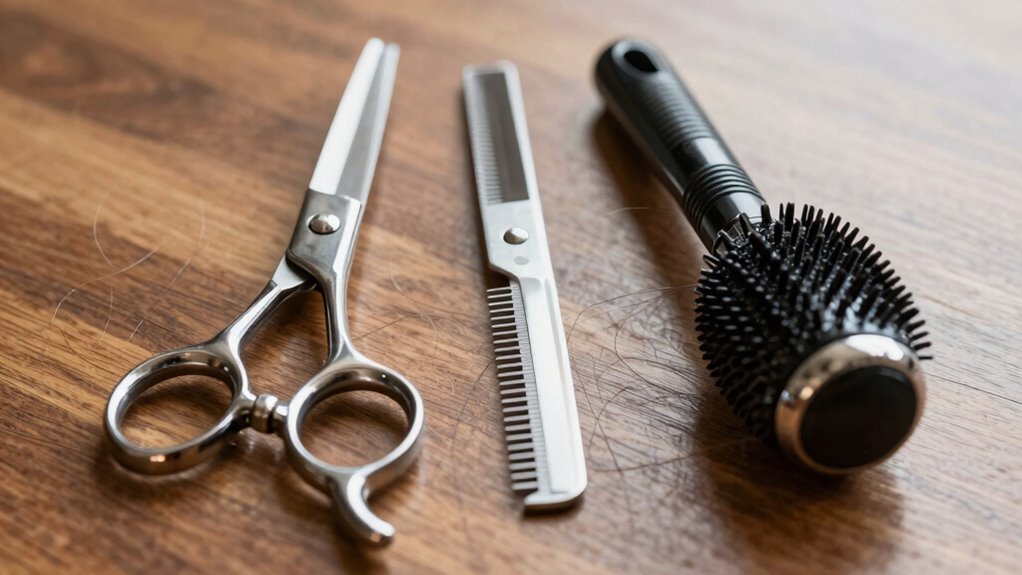
Thinning shears and texturizing tools are different tools that can seem similar, but they produce distinct results. Thinning shears are used to remove small amounts of hair carefully, making your hair look lighter, softer, and more blended. Texturizing tools, on the other hand, create movement, volume, and a more tousled style by adding pronounced texture. Understanding how each tool works can help you achieve the perfect look, and there’s more to discover if you keep exploring.
Key Takeaways
- Thinning shears remove small sections of hair to reduce bulk, while texturizing tools create movement and dimension.
- Thinning shears soften harsh lines and blend layers, whereas texturizing adds volume and a tousled look.
- Both tools shape hairstyles but are used for different effects—thinning for control, texturizing for texture.
- Overusing either tool can damage hair or produce uneven results; proper technique is essential.
- They can sometimes be used interchangeably, but each is optimized for specific styling outcomes.
When it comes to customizing your hairstyle, understanding the difference between thinning shears and texturizing tools is essential. Both are designed to shape and refine your hair, but they serve different purposes, especially when creating layered cuts or adding hair volume. Knowing how each tool impacts your hair will help you achieve the look you want without accidental damage or uneven results.
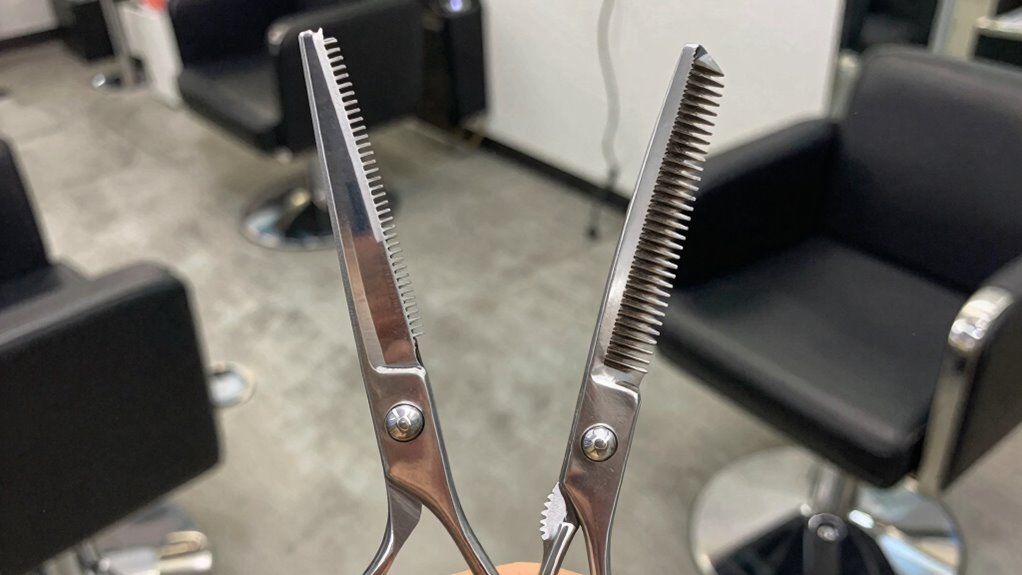
Thinning shears are primarily used to reduce bulk in thick hair or to blend layers smoothly. When you’re working on layered cuts, these shears are your go-to for softening harsh lines or thinning out densely packed sections. By selectively removing small amounts of hair, they help create a more natural, seamless transition between layers. If you want to add volume, thinning shears can also help by removing weight from thicker areas, making your hair appear lighter and more voluminous. The key is to use them carefully—overusing thinning shears can make your hair look stringy or uneven, so precision is vital.
Thinning shears soften harsh lines and reduce bulk in thick, layered hair with precision.
Texturizing tools, on the other hand, are designed to add movement and dimension to your hair. They often have a different blade design or teeth pattern that creates more pronounced effects. When you use a texturizing tool on layered cuts, it enhances the layers’ texture, giving your hairstyle a more dynamic and lively appearance. If you’re aiming for extra hair volume, texturizing tools can lift your hair by removing bulk in certain areas while leaving the overall length intact. This results in a fuller, more voluminous style without sacrificing length. Texturizing is especially effective when you want to avoid a flat look or add a bit of tousled texture for a casual, effortless vibe.
While both tools can sometimes be used interchangeably, it’s important to recognize their subtle differences. Thinning shears are best for delicate, controlled thinning and blending, especially in thicker hair. Texturizing tools excel at creating movement, adding dimension, and boosting volume in layered cuts. Using them correctly can greatly enhance your hairstyle, but improper use might lead to unwanted results like uneven layers or excessive thinning. If you’re unsure, consult a professional stylist who can recommend the right tool and technique based on your hair type and desired outcome.

COOLALA Stainless Steel Hair Cutting Scissors Thinning Shears 6.5 Inch Professional Salon Barber Haircut Scissors Family Use for Man Woman Adults Kids
- Size: 6.5 Inch professional hair scissors
- Material: High-grade Japanese stainless steel
- Blade Sharpness: Sharp blades for precise cuts
As an affiliate, we earn on qualifying purchases.
As an affiliate, we earn on qualifying purchases.
Frequently Asked Questions
Can Thinning Shears Be Used on Wet Hair?
Yes, you can use thinning shears on wet hair, but it’s best to be cautious. When your hair is humid or has high porosity, it tends to be more fragile, so using thinning shears wet helps prevent damage. Keep the shears clean and avoid over-thinning, especially on wet strands, to maintain your hairstyle’s integrity. Always work gently to avoid pulling or causing unnecessary breakage.
What Hair Types Benefit Most From Texturizing?
If you have thick, coarse, or overly dense hair, texturizing is your secret weapon for transforming your styling game. It works wonders by reducing bulk, adding movement, and creating a lightweight, airy feel. Fine or thin hair also benefits, as it adds dimension without weighing you down. No matter your hair texture, texturizing helps achieve a more dynamic, effortless look, making styling faster, easier, and more fabulous than ever.
Are There Risks of Damage With Thinning Shears?
Using thinning shears can pose risks of hair damage if you’re not careful. If you apply too much pressure or overuse them, they can weaken your hair strands or cause uneven thinning. To guarantee tool safety, always use gentle strokes and avoid cutting too close to the scalp. Proper technique minimizes damage, so you can achieve a natural look without compromising your hair’s health.
How Often Should I Replace My Thinning Shears?
You should replace your thinning shears when they become dull or damaged, which can affect shear maintenance and reduce tool longevity. Regularly inspect them for nicks or misalignment, and sharpen or service them as needed. Typically, with proper care, they last about a year or two. Prioritize maintenance to extend their lifespan, but don’t hesitate to substitute them if they no longer perform well to ensure you achieve clean, precise cuts.
Can I Combine Both Tools in One Haircut?
Think of your haircut as a symphony, where layering techniques and tool blending create harmony. Yes, you can combine thinning shears and texturizing tools in one haircut, like mixing instruments for a richer sound. Use thinning shears to subtly reduce bulk, then switch to texturizing for added dimension. This dynamic approach helps you achieve a balanced, natural look, giving your style depth and movement without sacrificing precision.
Conclusion
Ultimately, mastering the difference between thinning shears and texturizing tools lets you tailor your tresses to perfection. Whether you want to tame thick locks or add lively layers, knowing which tool to wield makes a world of difference. With a little practice, you’ll produce polished, personalized results that impress. So, pick your tool, play with the precision, and enjoy the process of creating your perfect hairstyle masterpiece. Your hair, your way, with wisdom and wonder!