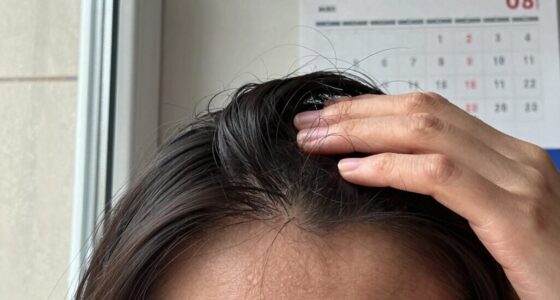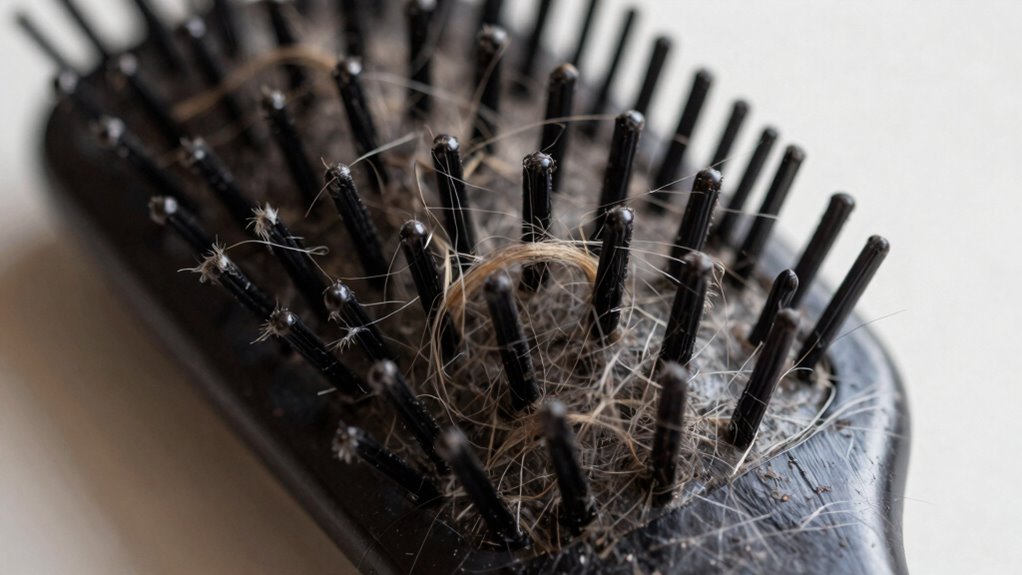

The biggest brush mistake that causes more breakage than heat styling is brushing aggressively or with improper technique. Using stiff-bristled brushes or starting at the roots pulls on hair and causes damage, especially when hair is wet and fragile. Pulling and tugging with harsh strokes weaken strands and lead to breakage over time. If you want to keep your hair strong and healthy, it’s essential to brush gently and use the right tools. Keep going to discover how to improve your hair care routine.
Key Takeaways
- Brushing too aggressively or with stiff brushes causes more hair breakage than heat styling.
- Using improper tools on wet hair increases tension and leads to more damage.
- Pulling or tugging on tangled hair during brushing can break strands more than heat damage.
- Neglecting gentle techniques and proper combs intensifies breakage risk.
- Rough brushing disrupts scalp health, weakening hair strength more than heat exposure.
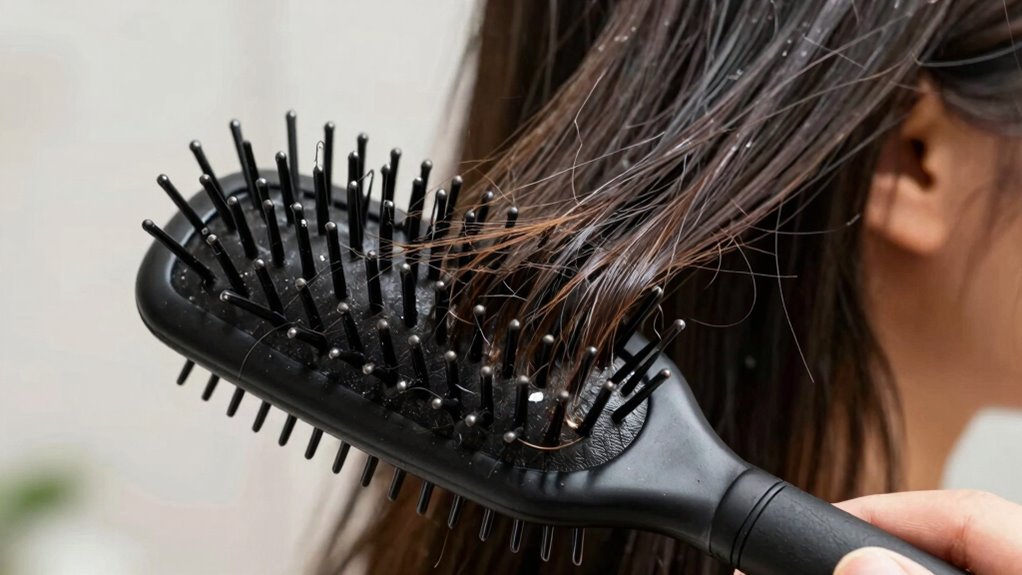
Many people unknowingly damage their hair by making a common brushing mistake that leads to increased breakage. That mistake is brushing too aggressively or with the wrong type of brush, which can cause significant harm to your strands. When you pull or tug at your hair, you not only risk breakage but also hinder hair growth. Healthy hair growth starts with a well-maintained scalp, but harsh brushing can disturb the scalp’s natural oils and cause irritation, reducing overall scalp health. If your scalp isn’t healthy, your hair struggles to grow strong and long, making proper brushing technique essential.
Gentle brushing preserves scalp health and promotes stronger, healthier hair growth.
Using the right brush and technique can make a noticeable difference. When you brush your hair, you should aim for gentle strokes, especially if your hair is wet or fragile. Wet hair is more vulnerable to breakage, so using a wide-tooth comb or a brush designed for detangling can help prevent damage. Avoid using brushes with stiff bristles, as they can snag and pull at your hair, causing unnecessary stress on your strands. Instead, opt for brushes with flexible bristles that glide smoothly through your hair, reducing the risk of breakage and promoting healthier hair growth. Incorporating gentle brushing techniques into your routine can significantly improve hair health.
Another key aspect often overlooked is how you start brushing. Many people begin brushing at the roots and work their way down, but this can lead to unnecessary tension at the scalp and scalp damage over time. Instead, start at the ends of your hair and work upward, gently detangling knots without pulling on your scalp. This approach minimizes stress on both your hair and scalp, encouraging better scalp health and creating a more favorable environment for hair growth. When you’re gentle and patient, you allow your scalp to breathe and produce natural oils, which nourish your hair naturally and improve overall scalp health. Regularly massaging the scalp during brushing can also help stimulate blood circulation and promote healthier hair growth. Additionally, paying attention to your hair texture can guide you to choose the most effective and gentle styling tools.
Furthermore, understanding the scalp health is crucial, as a healthy scalp provides the foundation for strong hair growth and resilience. Maintaining this mindful approach can also help prevent scalp irritation and promote healthier hair. Regular, careful brushing also stimulates blood circulation in your scalp, which can boost hair growth by delivering nutrients more effectively to hair follicles. However, this benefit only occurs if you’re not damaging your scalp with rough brushing. Take your time, and don’t rush through your routine. Incorporate this mindful approach into your daily hair care, and you’ll notice less breakage and healthier, more resilient hair. Remember, preventing breakage isn’t just about avoiding heat styling; it’s equally about how you treat your hair daily through proper brushing techniques. Your hair’s strength, shine, and growth depend on it.

Paul Mitchell Detangler Comb, Wide Tooth Comb Detangles Wet or Dry Hair
- Detangles Wet or Dry Hair: Easily detangles wet or dry hair
- Wide-Tooth Design: Glides through hair without pulling
- Reduces Breakage: Prevents damaging hair breakage
As an affiliate, we earn on qualifying purchases.
As an affiliate, we earn on qualifying purchases.
Frequently Asked Questions
Can Using a Different Brush Type Reduce Breakage?
Yes, using a different brush type can reduce breakage. Opt for brushes with alternative materials like boar bristles or silicone, which are gentler on your hair. Additionally, choose brushes with ergonomic handle designs for better control and less tugging. These choices help distribute natural oils, minimize pulling, and prevent damage, keeping your hair healthier. Switching to the right brush can make a significant difference in reducing breakage over time.
How Often Should I Replace My Hairbrush?
You should replace your hairbrush every six to twelve months to maintain healthy hair. Regularly updating your haircare routines and choosing brush materials suited for your hair type can prevent damage. Worn-out brushes with frayed bristles or buildup can cause more breakage than heat styling. Keep an eye on the condition of your brush, and swap it out when it shows signs of wear to protect your hair’s health and minimize breakage.
Does Brushing Dry Hair Cause More Damage Than Wet?
Did you know that brushing dry hair can cause up to 50% more breakage than brushing wet hair? If you have curly or textured hair, brushing dry strands often leads to increased damage, disrupting your styling routines. It’s better to gently detangle wet hair with a wide-tooth comb, then style once it’s damp or dry. This approach minimizes breakage and maintains your hair’s health and texture.
Are There Specific Techniques to Minimize Breakage?
To minimize breakage, use gentle detangling tips like starting at the ends and working your way up, avoiding aggressive pulling. Incorporate scalp stimulation during brushing to promote blood flow and healthy roots. Always opt for a wide-tooth comb or a brush designed for detangling. Be patient, especially with wet hair, and avoid brushing harshly. These techniques protect your strands and reduce damage over time.
What Signs Indicate My Brush Is Causing Damage?
If your scalp feels irritated or you notice buildup around your roots, your brush might be causing damage. Overly aggressive brushing can lead to scalp irritation, while poor-quality brushes can trap product buildup, weakening hair strands. You may also see increased hair breakage or split ends. Pay attention to these signs, switch to gentler, natural-bristle brushes, and confirm you’re not over-brushing to protect your hair and scalp health.
Conclusion
By avoiding the brush mistake that causes more breakage, you protect your hair’s strength and shine. It’s easy to think heat styling is the main culprit, but your brushing technique can do just as much damage—sometimes even more. Imagine your hair as a delicate garden; gentle care keeps it thriving, while harsh brushing pulls it apart. Choose your tools wisely and handle your hair with love—because a healthy mane isn’t just about heat, it’s about mindful habits.