Even if you’re careful with your nails, peeling can happen due to internal dehydration, environmental factors, or external damage. Drinking enough water and using nourishing oils helps keep nails resilient, but exposure to cold weather, dry air, or harsh chemicals can weaken them regardless of your routine. Frequent hand washing and using sanitizers also strip moisture. If you keep caring for your nails properly, you’re more likely to prevent peeling — and there’s more to discover on how to do that effectively.
Key Takeaways
- Internal dehydration from insufficient water intake weakens nail structure, causing peeling despite careful care.
- Environmental factors like dry air and temperature changes dehydrate nails, leading to peeling even with proper habits.
- Harsh chemicals in nail products and cleaning agents strip natural oils, damaging nails and causing peeling.
- Frequent hand washing and sanitizer use remove moisture, weakening nails and increasing peeling risk.
- External damage from everyday activities or lack of protective measures can compromise nail strength, causing peeling.
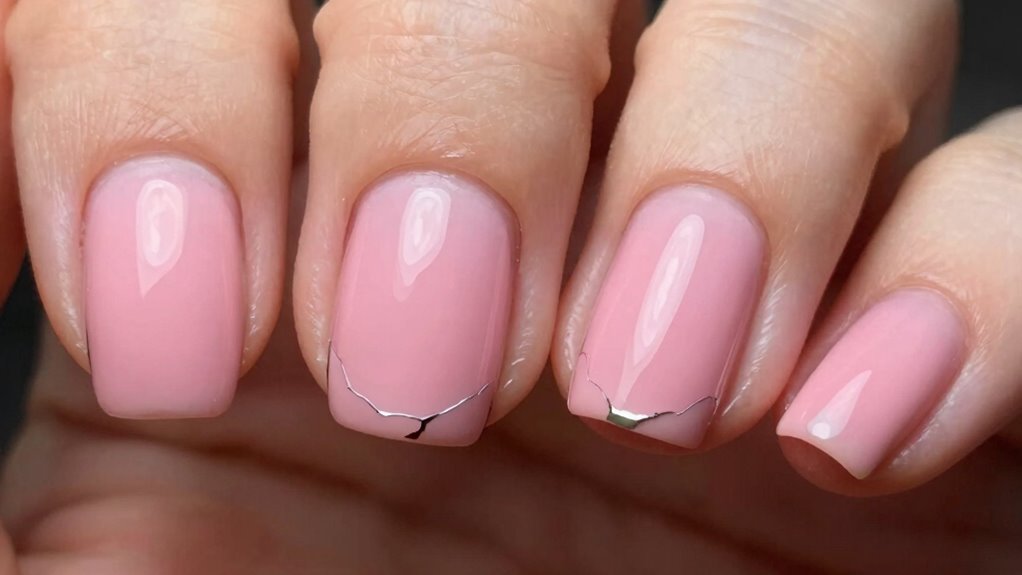
If your nails are peeling despite taking careful measures, you’re not alone. Many people face this frustrating issue, even when they’re diligent about their nail care routines. One common reason is that your nails might not be getting enough nail hydration. When your nails lack proper moisture, they become brittle and prone to peeling. Nail hydration isn’t just about applying moisturizer to your cuticles; it involves ensuring your nails are well-hydrated from within. Drinking plenty of water helps keep your nails supple, while using nourishing cuticle oils or hand creams can strengthen the nail plate. If you’re neglecting hydration, your nails become more fragile and more likely to peel, even if you’re avoiding harsh chemicals or aggressive manicures.
Environmental factors also play a significant role in why your nails peel. Exposure to frequent changes in temperature, dry air, or harsh weather conditions can weaken your nails over time. For example, if you live in a climate with cold winters and dry indoor heating, the constant fluctuation in moisture levels can cause your nails to become dehydrated and brittle. Additionally, exposure to chemicals like cleaning agents or solvents without proper protection can strip away natural oils from your nails, making them more susceptible to peeling. Nail care products that contain harsh ingredients, such as formaldehyde or acetone, can also contribute to the problem. Even if you’re careful about how often you polish or soak your nails, environmental factors can undo your efforts by weakening the nail structure from the outside. Regularly protecting your nails with gloves or barrier creams can help minimize damage from these external influences. Maintaining a consistent nail care routine that includes hydration and protection can go a long way in preventing peeling. Furthermore, incorporating nail strengthening treatments can help reinforce your nails and reduce peeling over time.
Another aspect to think about is how your daily habits impact your nails. Frequent hand washing or use of hand sanitizers that contain alcohol can strip moisture from your nails and surrounding skin, leading to dryness and peeling. Wearing gloves during chores or applying moisturizer after washing can help mitigate this damage. Over time, repeated exposure to these environmental elements wears down your nails’ natural resilience, making peeling more likely. Even if you’re cautious, these external factors can undermine your efforts, especially if you don’t take steps to protect and hydrate your nails regularly. Ensuring your nails receive adequate nail hydration can significantly improve their strength and reduce peeling.

Sally Hansen Nail Treatment Vitamin E Nail & Cuticle Oil™ | Enriched with Natural Essential Oils & Vitamin E | Deeply Nourishes & Conditions Dry Nails & Cuticles
- Softens and conditions cuticles: Softens and conditions cuticles
- Nourishes dry nails and cuticles: Nourishes dry nails and cuticles
- Enriched with natural essential oils: Contains Vitamin E, Apricot Kernel, Aloe
As an affiliate, we earn on qualifying purchases.
As an affiliate, we earn on qualifying purchases.
Frequently Asked Questions
Can Nail Polish Cause Peeling?
Yes, nail polish can cause peeling if it contains harsh ingredients like formaldehyde or toluene. These nail polish ingredients can weaken your nails over time. To prevent peeling, use a base coat, avoid excessive layers, and choose formulas with nourishing ingredients. Peeling prevention methods also include moisturizing your nails regularly and giving them breaks from polish. This helps maintain nail health and keeps your nails strong and less prone to peeling.
Do Diet and Nutrition Affect Nail Health?
Yes, your diet and nutrition impact nail health. Nutritional deficiencies, especially lacking biotin, iron, or zinc, can cause nails to become weak and peel. Poor dietary habits might not provide essential nutrients your nails need to stay strong and flexible. To improve nail health, focus on a balanced diet rich in vitamins and minerals, and consider supplements if necessary. Proper nutrition supports healthier, less peeling nails over time.
How Does Climate Impact Nail Peeling?
Climate effects, such as dry, cold air or humid conditions, can cause your nails to peel. Environmental factors like exposure to harsh weather or indoor heating and air conditioning strip moisture from your nails, making them brittle and prone to peeling. When you’re in these climates, your nails struggle to retain moisture, leading to peeling regardless of how careful you are. Protecting your nails from extreme environmental factors helps maintain their health.
Are Certain Medications Linked to Peeling Nails?
Ever wonder if medication side effects cause your nails to peel? Some medications, like retinoids or certain antibiotics, can indeed lead to peeling nails. They might trigger nail disorder symptoms, disrupting nail growth and strength. Are you taking any new drugs? If so, consult your doctor about potential side effects. Recognizing medication-related nail issues can help you address underlying causes and seek appropriate treatment to restore healthy nails.
Is Nail Peeling Hereditary?
Yes, nail peeling can be hereditary. Your genetic predisposition plays a role, especially if inherited conditions like nail dystrophy or psoriasis affect your nails. If family members have similar issues, it’s likely a genetic factor. While environmental factors matter, understanding your family history can help you identify if nail peeling runs in your family. Consulting a dermatologist can provide personalized guidance based on your inherited conditions.
Conclusion
So, don’t despair if your nails peel despite your careful care. Remember, sometimes it’s simply about understanding your nails’ needs and nurturing them with nourishing nutrients, gentle handling, and patience. With a little consistency and a lot of care, you can combat peeling and boost your nails’ strength. Stay steady, be gentle, and give yourself grace—beautiful, resilient nails are within your reach!