
TL;DR

Get beauty and skincare favorites delivered free with Prime
- Fast, free delivery on millions of items
- Prime Video, Amazon Music and more included
- Member-only deals all year
Dove released a limited-edition fine fragrance based on the scent of its Original Beauty Bar, giving consumers a new way to experience a familiar product. Cosmetics Business argues that the drop’s broader value may be the attention it directs back to Dove’s established bar, rather than perfume sales alone. The article does not provide sales figures or details about the fragrance’s production run.
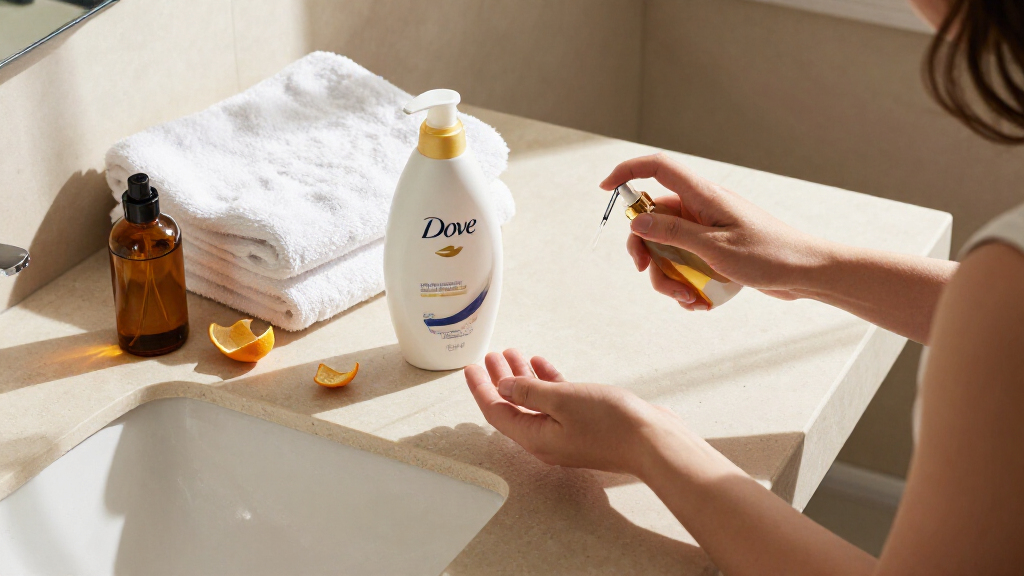
Dove released a limited-edition fine fragrance inspired by the scent of its Original Beauty Bar, extending the 69-year-old cleansing product into a new format. In an analysis published by Cosmetics Business, the drop is presented less as a move into perfume than as a way to draw attention back to a familiar product already sold by the Unilever-owned brand.
The fragrance, called Dove Original Fragrance, bottled the scent associated with the Original Beauty Bar. Cosmetics Business says the limited release sold out quickly, but the source does not give sales totals, the size of the production run or the dates and markets where it was available.
The article’s central argument is that a limited-edition product can work as a communications tool: it gives consumers something physical to notice, discuss and share, while renewing attention to the established item behind it. A perfume inspired by the bar may remind customers of its scent and prompt renewed interest in the bar, though the source offers no sales data showing that this occurred.
That distinction matters. The analysis suggests Dove may not have intended the fragrance primarily to become a large perfume business. It says the product likely involved a small run designed to create attention, but presents that as an interpretation rather than a confirmed company strategy. The available source excerpt does not include a statement from Dove explaining the launch’s goals.
A Novelty Product With a Familiar Anchor
For established beauty brands, the approach offers a way to make recognisable products feel newly discussable without abandoning what made them familiar. Consumers may already know a longstanding cleanser, lotion or shampoo; a limited item that references it can turn that existing recognition into a short-lived news moment.
The possible commercial benefit is indirect. A striking spin-off can generate conversation about the original product and potentially help it stay visible in a crowded market. That is a strategic possibility, not a result demonstrated by the available reporting: no evidence is provided on whether the fragrance lifted Beauty Bar sales, increased brand awareness or produced lasting customer interest.
The case also illustrates a trade-off. Scarcity can make a drop feel distinctive and encourage attention, but it can leave many interested customers unable to buy. Brands considering similar launches would need to weigh the value of a limited run against customer access, and judge performance using more than sell-out speed alone.
Products Worth Considering

Fitbit Sense 2 Smartwatch – Blue Mist / Pale Gold

Garmin Venu® 3 Premium Fitness Smartwatch 45mm Black

Oura Ring 4 Smart Ring – Silver – Size 8
As an affiliate, we earn on qualifying purchases.
From Beauty Bar to Brand Moment
The Original Beauty Bar is described by Cosmetics Business as a 69-year-old product. By translating its familiar scent into fine fragrance, Dove made an established product’s sensory identity the basis for a new item, rather than introducing an unrelated concept.
The article compares this idea with Heinz Vintage Drip, a 2022 collaboration between food company Heinz and resale platform thredUP. The collection featured ketchup-stained clothing. Cosmetics Business argues that the stains made the condiment itself the story: people could find the clothes amusing and think about Heinz without wanting to wear them.
In both examples, the unusual product acts as a prompt for conversation, while the core brand remains the subject. The comparison supports the article’s marketing argument, but it does not establish that the two campaigns had similar sales outcomes or audience reach.
Sales Impact and Launch Scale
The source does not state how many bottles Dove produced, where the fragrance was sold, its price, or how quickly it sold out. Cosmetics Business characterises the sellout as immediate, but supplies no timing or sales figures to quantify that description.
It is also unclear whether the launch led to higher Beauty Bar sales, brought new customers to Dove or changed consumer perceptions of the product. The claim that the fragrance was intended to direct attention to the bar is the article’s analysis; the available material does not include confirmation from Dove or Unilever about the campaign’s objectives or results.
Evidence of Lasting Brand Effects
The source does not announce a follow-up release or provide a timetable for further Dove fragrances. The next useful indicators would be any company comments on the launch’s purpose, availability and performance, as well as evidence of whether interest in the fragrance translated into attention or purchases for the Original Beauty Bar.
For other beauty brands, the example raises practical questions rather than offering a guaranteed formula: whether a spin-off has a clear link to a familiar product, whether the limited quantity serves a defined purpose, and whether the brand can measure effects beyond online conversation or a rapid sellout.
Key Questions
What did Dove release?
Dove released Dove Original Fragrance, a limited-edition fine fragrance inspired by the scent of its Original Beauty Bar.
Was the fragrance meant to replace the Beauty Bar?
No such plan is reported. The Cosmetics Business analysis treats the fragrance as a possible way to draw attention to the established bar, not as a replacement. Dove’s own stated intent is not included in the source material.
Did the fragrance sell out?
Cosmetics Business says the limited edition sold out quickly. It does not provide a sales total, exact sellout timing or the number of bottles produced.
Is there proof the launch increased Beauty Bar sales?
The source provides no sales data linking the fragrance launch to Beauty Bar purchases. That effect is presented as a potential marketing benefit, not a confirmed outcome.
What is the comparison with Heinz?
Cosmetics Business points to Heinz Vintage Drip, a 2022 collection of ketchup-stained clothes made with thredUP. The article argues that the clothing drew attention to Heinz and ketchup, much as Dove’s fragrance could refocus attention on the Beauty Bar.
Source: cosmeticsbusiness.com