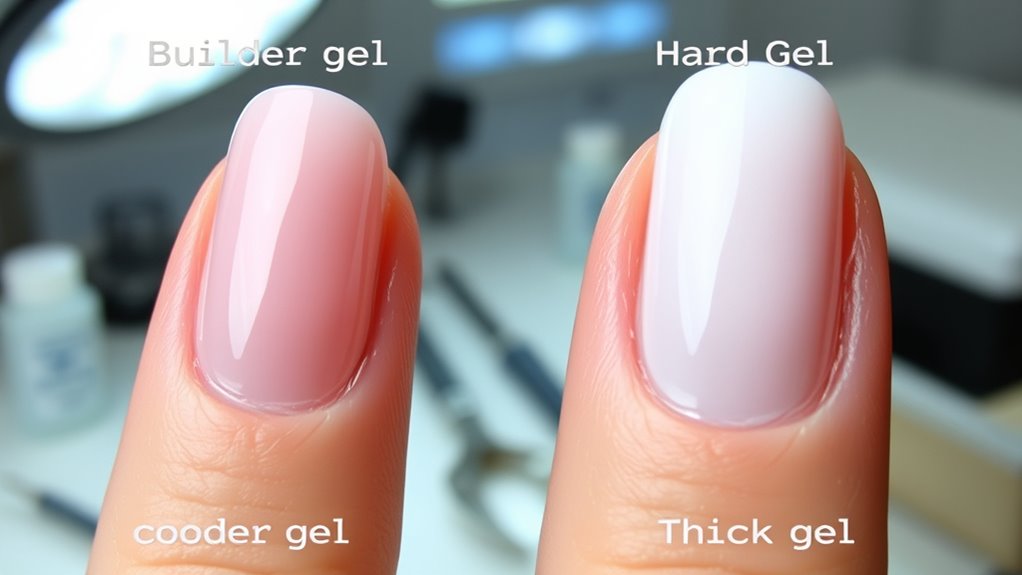

Builder gel offers a flexible, easy-to-work-with option that balances strength and bendability, making it great for natural-looking nail enhancements and overlays. Hard gel, on the other hand, provides a much more rigid and durable finish, ideal for long-lasting, glass-like nails. If you want a blend of strength and flexibility, builder gel is your best choice—while hard gel is perfect for a firmer, more resistant shell. Keep exploring to see which suits your style best.

Get beauty and skincare favorites delivered free with Prime
- Fast, free delivery on millions of items
- Prime Video, Amazon Music and more included
- Member-only deals all year
Key Takeaways
- Builder gel is more flexible and forgiving, making it ideal for natural nail enhancements and overlays.
- Hard gel is rigid and provides a stronger, glass-like finish but can be more brittle under flexing.
- Builder gel allows for easier sculpting and shaping, suitable for creating thicker, longer-lasting nails.
- Hard gel application is quicker and better for straightforward, durable manicures with less flexibility needed.
- Use builder gel for everyday wear and natural nail support; choose hard gel for a rigid, long-lasting shell.
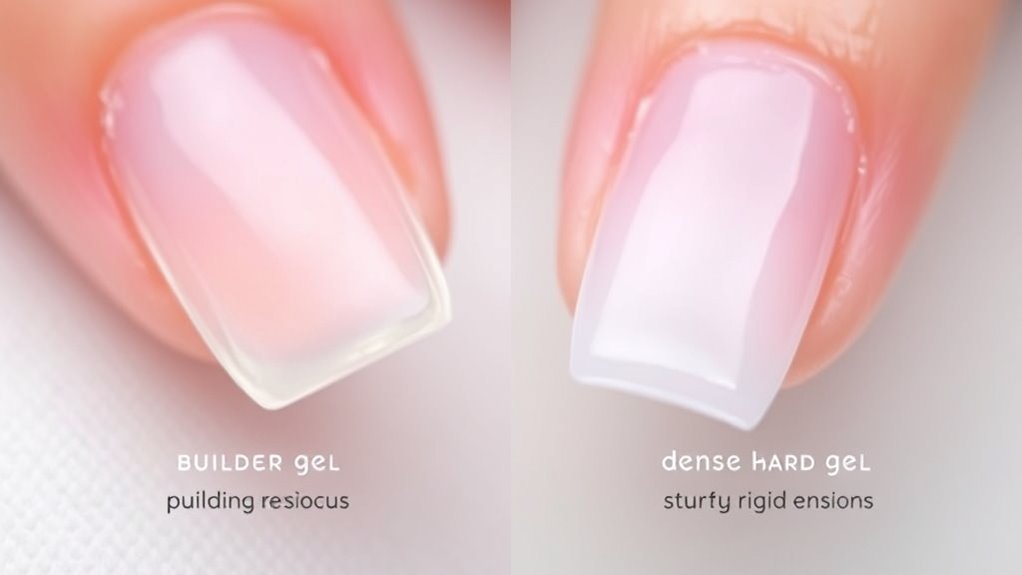
When choosing between builder gel and hard gel for your nails, understanding their differences can help you make the right decision. One of the most important factors to weigh is their durability comparison. Builder gel tends to be more flexible and forgiving, making it less prone to chipping or cracking under everyday stress. It’s often favored for creating thicker, more sculpted nails that can withstand daily wear and tear. Hard gel, on the other hand, is generally harder and more rigid. While it provides excellent strength and longevity, it can be more brittle, especially if your nails bend or flex considerably. If durability is your top priority, builder gel offers a balanced combination of strength and flexibility, making it suitable for both natural nail enhancements and overlays that last longer without cracking.
Application techniques are another key aspect to evaluate. Builder gel usually requires a more meticulous application process. You start by prepping your nails thoroughly—cleaning, lightly buffing, and applying a primer if needed. Then, you apply the gel in layers, often building up the thickness with each layer to achieve the desired shape and strength. Because builder gel is more pliable, it’s easier to sculpt and shape, giving you more control over the final look. Curing is done under a UV or LED light, just like hard gel, but the process may involve additional sculpting steps to create a smooth, even surface.
Hard gel application is typically quicker and more straightforward. It’s usually applied in thinner layers, which harden rapidly under the curing light. This makes it ideal if you want a quick, durable manicure. However, because it’s less flexible, hard gel is better suited for people with natural nails that don’t bend much or for those who prefer a more rigid, glass-like finish. When applying hard gel, you need to be precise with your layer thickness to avoid uneven curing or lifting later on. Both gels require proper surface preparation to ensure adhesion and longevity, but builder gel’s slightly more forgiving nature makes it easier for beginners to work with, especially when sculpting or building length.
As an affiliate, we earn on qualifying purchases.
Frequently Asked Questions
Can Builder Gel Be Used Over Natural Nails Without Damaging Them?
Yes, you can use builder gel over natural nails without damaging them if you prioritize nail health and application safety. Make sure to prepare your nails properly, gently clean and buff the surface, and avoid over-application. Use high-quality products, follow proper curing times, and avoid excessive filing. These steps help protect your natural nails while enjoying the benefits of builder gel, keeping them strong and healthy.
How Long Do Builder Gel and Hard Gel Typically Last?
Builder gel generally lasts about 2 to 3 weeks, while hard gel can stay intact for 3 to 4 weeks. Durability comparison shows hard gel often offers a longer lifespan due to its thicker consistency. Longevity factors like application technique, nail condition, and daily activities influence how long your gel nails stay perfect. To maximize their lifespan, follow proper maintenance and avoid excessive exposure to harsh chemicals or rough activities.
Are There Differences in Removal Process Between Builder Gel and Hard Gel?
Coincidentally, the removal process for builder gel and hard gel differs. Builder gel typically requires soaking in acetone for about 10-15 minutes before gently pushing it off, reflecting its softer, more flexible nature. Hard gel, being more durable, might take longer to remove and often needs filing or soaking longer. So, your durability comparison influences how easily you can gel removal, with builder gel generally being easier to take off.
Which Gel Is More Suitable for Nail Art and Intricate Designs?
For nail art intricacy and design flexibility, builder gel is more suitable. Its malleable texture allows you to create detailed, intricate designs with precision. You can sculpt, embed decorations, or add fine details easily. Hard gel is stiffer and less adaptable for complex art, making builder gel your best choice when aiming for elaborate, textured, or highly detailed nail art.
Can Builder Gel or Hard Gel Be Used for Extension Purposes?
Sure, you can totally use builder gel or hard gel for nail extension and gel overlay purposes. Think of them as the superhero capes for your nails—building up length and strength with ease. Builder gel, with its thick consistency, is perfect for creating sturdy nail extensions, while hard gel provides a reliable base for overlays. So go ahead, extend and enhance—your nails are begging for a little gel-powered magic!
Conclusion
Choosing between builder gel and hard gel is like picking the right brush for a masterpiece—you need what suits your style. Builder gel offers strength and flexibility for sculpting, while hard gel provides sturdy, long-lasting nails. Think of it as a dance between durability and versatility. Whichever you choose, remember it’s your canvas, and with the right product, you’re the artist creating beauty that lasts. Your perfect nail look is just a decision away!
Halloween Picks
halloween
As an affiliate, we earn on qualifying purchases.