Proper cuticle care is key to healthy nails. Do soften your cuticles with warm water before gently pushing them back, and use nourishing oils like vitamin E or jojoba regularly. Don’t cut or rip your cuticles, or use rough tools that cause tears, since this can lead to infections. Protect your nails from harsh environment and keep them moisturized. Continuing will help you master simple tips to keep your cuticles and nails in top shape.

Get beauty and skincare favorites delivered free with Prime
- Fast, free delivery on millions of items
- Prime Video, Amazon Music and more included
- Member-only deals all year
Key Takeaways
- Proper cuticle care involves gentle pushing back and moisturizing, avoiding cutting or ripping to prevent infections.
- Regularly apply nourishing oils like vitamin E or jojoba to keep cuticles hydrated and promote healthy nail growth.
- Do soften cuticles with warm water before pushing them back; don’t use harsh tools or aggressive removal methods.
- Protect nails from environmental damage by wearing gloves and keeping hands moisturized throughout the day.
- Good cuticle care strengthens nails, reduces hangnails, and enhances overall nail appearance and health.
Have you ever wondered why healthy cuticles are essential for beautiful nails? The truth is, your cuticles play a fundamental role in maintaining nail health. They act as a protective barrier, preventing bacteria and infections from sneaking in and causing damage. When your cuticles are well-maintained, your nails look cleaner, smoother, and more polished. Neglecting this area can lead to hangnails, dryness, and even infections, which can hinder nail growth and overall nail appearance. To keep your nails in top shape, it’s crucial to focus on proper cuticle care, especially moisturizing tips that nourish this delicate skin.
Healthy cuticles protect your nails and enhance their appearance. Proper care prevents damage and promotes growth.
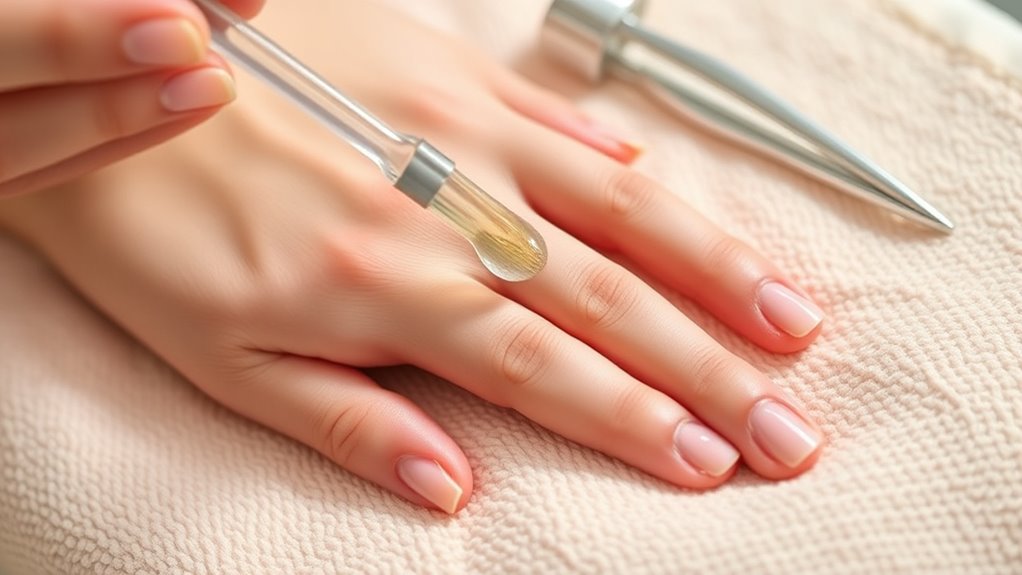
One of the easiest ways to improve nail health is by regularly moisturizing your cuticles. Dry, cracked cuticles not only look unattractive but also weaken the nails. Applying cuticle oil or a good quality moisturizer daily helps lock in hydration and keeps the skin soft. Look for products containing nourishing ingredients like vitamin E, jojoba oil, or shea butter. When you moisturize, gently massage the oil into your cuticles and surrounding skin, stimulating blood flow and encouraging healthy nail growth. Remember, consistency is key. Incorporate moisturizing into your daily routine, especially after washing your hands or taking a shower, when your skin tends to be more receptive to absorbing hydration.
Avoid harsh chemicals and overly aggressive cuticle removal. Cutting or pushing back cuticles aggressively can cause tears and damage the nail matrix, which can lead to infections and irregular nail growth. Instead, opt for gentle push-back tools and only do so after softening the cuticles with warm water or a cuticle softener. Never force or rip at your cuticles; patience and gentle care are essential to maintaining nail health. Also, steer clear of using rough files or buffers that can cause microtears, making your nails vulnerable to breakage.
In addition to moisturizing tips, don’t forget to protect your hands and nails from harsh environmental factors. Wear gloves when cleaning or working with chemicals, and always keep your hands moisturized throughout the day. Proper cuticle care isn’t just about aesthetics—it’s about supporting the overall health of your nails. When your cuticles are healthy, your nails grow stronger, look more uniform, and are less prone to damage. Using essential oils such as vitamin E or jojoba oil can provide extra nourishment and promote healthier nail growth. By paying attention to moisturizing tips and adopting gentle cuticle practices, you’ll set the foundation for beautiful, resilient nails that boost your confidence every time you look at them.
As an affiliate, we earn on qualifying purchases.
Frequently Asked Questions
How Often Should I Moisturize My Cuticles?
You should moisturize your cuticles daily to maintain proper cuticle hydration and support overall nail health. Regularly applying cuticle oil or moisturizer helps prevent dryness, cracking, and hangnails. If your cuticles tend to get very dry, consider moisturizing twice a day—morning and night. Consistent hydration keeps your cuticles healthy, promotes strong nails, and reduces the risk of infections. Don’t forget, healthy cuticles are key to beautiful, resilient nails.
Can Cuticle Oil Prevent Hangnails?
Imagine a shield protecting your nail health—cuticle oil acts as that barrier, preventing hangnails by keeping your cuticles flexible and moisturized. Regular cuticle maintenance with oil reduces dryness and splits, which often lead to hangnails. Applying oil daily creates a protective layer, promoting healthy nail growth. So, yes, consistent use of cuticle oil can effectively prevent hangnails, ensuring your nails stay strong and well-maintained.
Are There Specific Tools for Safe Cuticle Removal?
Yes, there are specific tools for safe cuticle removal, like cuticle removal tools and other nail health accessories. These tools are designed to gently push back or trim excess cuticle tissue without damaging your nail bed or causing infections. Always use sterilized tools and avoid digging too deep. Properly using these nail health accessories guarantees your cuticle removal is safe, effective, and keeps your nails healthy.
How Do I Reduce Cuticle Redness and Irritation?
Your cuticles are screaming for relief, and you can calm that fiery redness by avoiding irritation triggers like harsh chemicals and rough handling. To soothe the inflammation, apply nourishing remedies like cuticle oil infused with vitamin E or aloe vera gel. Keep your cuticles moisturized and protected, and give your nails a break from aggressive tools. With gentle care, you’ll see that redness fade, revealing healthy, happy cuticles.
When Should I See a Dermatologist for Cuticle Issues?
You should see a dermatologist if you notice persistent pain or signs of nail fungus, like discoloration or thickening. Seek professional help promptly if redness and irritation don’t improve after proper cuticle care, or if symptoms worsen. Ignoring these issues can lead to infections or more serious nail problems. A dermatologist can diagnose the condition accurately and recommend effective treatments to restore your nail health.
Conclusion
Now that you know the essential do’s and don’ts, you’re ready to transform your cuticle routine. But beware—ignoring these tips could lead to unexpected surprises, like infections or damaged nails. Are you prepared to take your nail health seriously? The choice is yours. Stay consistent, stay cautious, and reveal the true potential of your nails. The secret to stunning, healthy cuticles is just a decision away—will you take the leap?
Halloween Picks
halloween
As an affiliate, we earn on qualifying purchases.