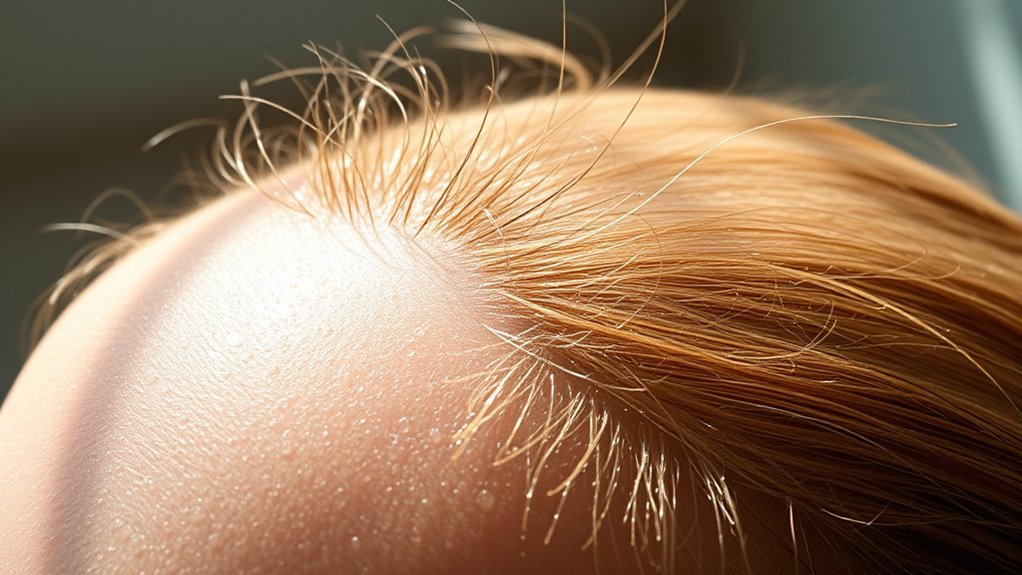

Detoxing your scalp means giving it a thorough cleanse to remove buildup from pollution, styling products, and dead skin, helping to balance oil levels and refresh your scalp. It’s especially helpful when you notice excess oil, dandruff, or irritation. A detox promotes healthier hair growth and a cleaner scalp environment. Usually, doing this once a week is enough, but you’ll learn more about signs and effective methods if you keep exploring.
Key Takeaways
- Scalp detox involves removing buildup from pollution, styling products, excess oil, and dead skin to promote scalp health.
- It helps prevent issues like dandruff, itchiness, and clogged hair follicles, supporting healthy hair growth.
- Regular detoxes (typically once a week) can refresh the scalp and maintain its natural balance.
- Natural ingredients like apple cider vinegar, baking soda, aloe vera, and tea tree oil are commonly used for DIY detoxes.
- Overdoing detox treatments can strip moisture and cause irritation; moderation and listening to scalp signals are essential.

Have you ever wondered if your scalp needs a detox? It’s a question many people ask, especially if you notice excess oil, dandruff, or irritation. Your scalp is the foundation for healthy hair, and just like your skin, it can accumulate buildup from pollution, styling products, and dead skin cells. When that happens, it’s time to think about a scalp detox. This process isn’t about harsh chemicals or expensive treatments; instead, it’s about using natural ingredients and DIY treatments to clear away impurities and restore balance. A detox can help remove excess sebum, dead skin, and product residue, promoting healthier hair growth and a refreshed scalp.
A scalp detox using natural ingredients helps remove buildup and promotes healthier hair.
You might be surprised to learn that you don’t need to invest in commercial products for a successful detox. Many effective DIY treatments rely on simple, natural ingredients that you may already have at home. For example, ingredients like apple cider vinegar, baking soda, aloe vera, and tea tree oil are popular choices for scalp detoxing. Apple cider vinegar, with its natural acidity, helps balance the scalp’s pH and removes buildup. Baking soda acts as a gentle exfoliant, loosening dead skin cells and excess oils. Aloe vera soothes inflammation and hydrates the scalp, while tea tree oil offers antibacterial and antifungal properties that combat dandruff and scalp infections. Incorporating filtration technology into your routine can also help maintain cleaner indoor air, reducing pollutants that may irritate your scalp and skin.
To perform a DIY scalp detox, you can start by mixing a cup of apple cider vinegar with water and using it as a rinse after shampooing. This will help break down residue and restore your scalp’s natural balance. For a deeper cleanse, you can create a scrub using baking soda and water or combine it with a few drops of tea tree oil. Gently massage this mixture into your scalp, then rinse thoroughly. Follow up with a soothing aloe vera gel or a gentle conditioner to keep your scalp hydrated. Doing this once a week can make a noticeable difference, especially if you’re dealing with buildup or scalp irritation.
It’s important to listen to your scalp’s signals. If you notice persistent dryness, itching, or flakiness despite regular cleansing, a detox might be the right step. Keep in mind that overdoing DIY treatments can strip too much moisture, leading to further irritation. The key is consistency and using gentle, natural ingredients that support your scalp’s health without causing harm. Incorporating these simple, natural DIY treatments into your hair care routine can help you maintain a clean, balanced scalp and healthier hair overall.
Frequently Asked Questions
How Often Should I Detox My Scalp?
You should detox your scalp once a month to effectively remove scalp impurities and prevent buildup. If you notice excess oil, dandruff, or irritation, it’s a good time to do a detox. Use natural remedies like clay masks or apple cider vinegar rinses to gently cleanse your scalp. Regular detoxing helps maintain a healthy scalp, promotes hair growth, and keeps your hair looking vibrant and refreshed.
Can Scalp Detoxing Cause Hair Loss?
You might worry that scalp detoxing could stir up some trouble, but it usually doesn’t cause hair loss if done correctly. If you have chemical buildup or scalp sensitivity, gentle detox methods help clear away debris and refresh your scalp. Overdoing it or using harsh products can irritate your scalp and potentially lead to hair shedding. Always listen to your scalp’s signals and choose soothing, natural treatments to keep your hair healthy.
What Ingredients Are Best for Scalp Detox?
You should look for ingredients like herbal extracts and clay masks for an effective scalp detox. Herbal extracts, such as tea tree or peppermint, soothe and clarify your scalp, while clay masks, like bentonite or kaolin, absorb excess oil and impurities. Together, these ingredients help remove buildup, reduce inflammation, and promote healthier hair growth. Make sure to choose products suited to your scalp type for the best detox results.
Is Scalp Detox Suitable for All Hair Types?
Is scalp detox suitable for all hair types? Think of your scalp as a delicate garden where balance is key. If your scalp’s pH is off or your hair porosity is high, a detox can help restore harmony. Generally, detoxing benefits most hair types, but sensitive scalps might need gentler options. Always consider your scalp’s unique needs and consult a professional if unsure, ensuring your scalp stays healthy and vibrant.
How Do I Know if My Scalp Needs Detoxing?
You can tell your scalp needs detoxing if you notice excess oil, buildup, itchiness, or dull hair. Poor scalp hygiene often causes these issues, leading to clogged follicles. Try natural remedies like apple cider vinegar rinses or charcoal masks to refresh your scalp. If your scalp remains irritated or flaky despite good hygiene, a detox can help remove impurities and restore balance, promoting healthier hair growth.
Conclusion
Remember, an ounce of prevention is worth a pound of cure. If your scalp feels greasy, itchy, or clogged, it’s time to give it a detox. Regular scalp detoxing helps remove buildup, promotes healthy hair growth, and keeps your scalp refreshed. Don’t wait until problems become serious—listen to your body and take action early. A simple detox can make all the difference, so stay attentive and keep your scalp happy and healthy.