
Embroidery transforms simple clothing into vibrant, meaningful pieces by blending traditional folk motifs with modern boho styles. You can customize your wardrobe with techniques that add texture, color, and personality, from bold geometric patterns to delicate floral designs. This art form reflects cultural history while allowing personal expression. As you explore further, you’ll discover how embroidery evolves across styles and how mastering different stitches can elevate your creative projects.
Key Takeaways
- Embroidery transforms traditional folk motifs into contemporary boho fashion, blending cultural symbolism with modern style.
- Different embroidery techniques create diverse textures and effects, enriching both folk and modern garment designs.
- Cultural influences like Mexican, European, Asian, and African embroidery inspire modern boho aesthetics through vibrant patterns.
- The evolution from traditional embroidery to boho styles incorporates vintage elements with innovative stitching for personalized expression.
- Developing embroidery skills allows for customization and storytelling, bridging historical heritage and modern fashion trends.
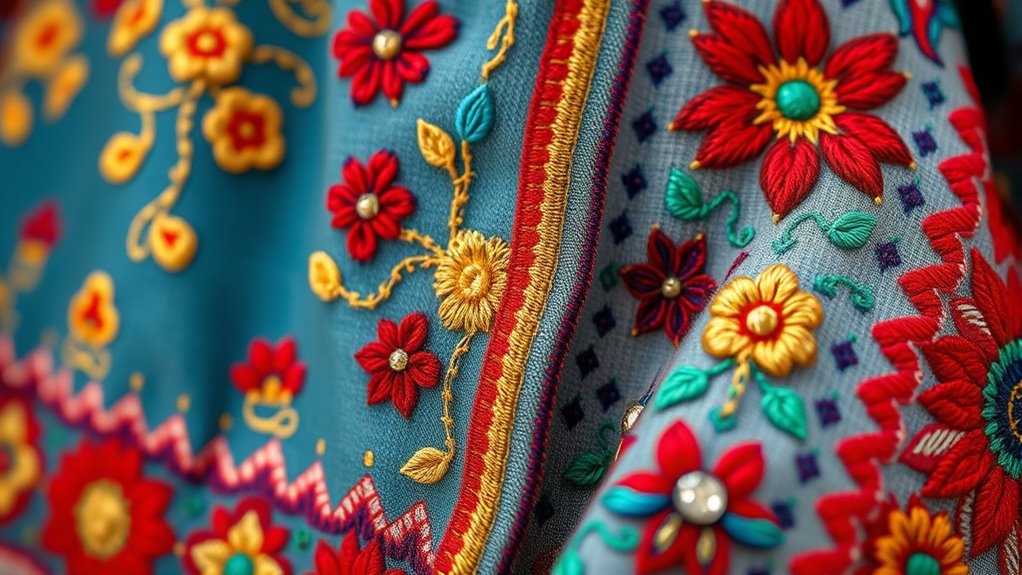
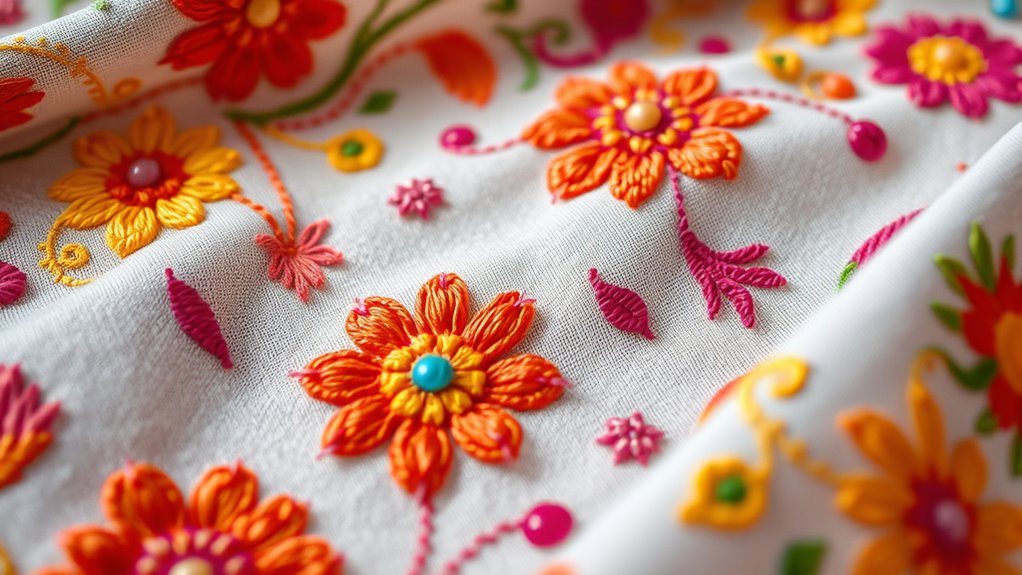
Embroidered details can transform a simple garment into a striking piece of art, adding texture, color, and personality. You might be surprised how a few stitches can elevate your wardrobe, making everyday pieces feel unique and meaningful. When exploring embroidery, understanding the techniques involved can help you appreciate the craftsmanship behind each design. From basic hand stitches like satin stitch or backstitch to intricate needlework such as crewel or goldwork, each method offers a different texture and visual effect. Learning these techniques allows you to customize your clothing and accessories, creating something truly one of a kind.
A few stitches can elevate your wardrobe into unique wearable art.
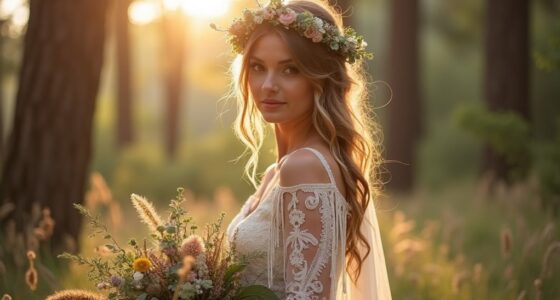
Cultural influences play a significant role in shaping embroidery styles around the world. For instance, you might notice vibrant floral patterns in Mexican Otomi embroidery, or delicate white-on-white embroidery in European bridal wear. Asian embroidery, such as Chinese silk embroidery, often features detailed motifs like dragons or phoenixes, symbolizing power and prosperity. African embroidery incorporates bold colors and geometric patterns, reflecting community stories and traditions. These cultural influences aren’t just aesthetic—they carry history, symbolism, and identity, making each embroidered piece a story in itself. When you incorporate these influences into your wardrobe, it’s like carrying a piece of history and culture with you.
As you explore different embroidery styles, you’ll see how traditional techniques have evolved into modern interpretations. Folk embroidery, for example, often emphasizes symbolic motifs and vibrant colors, rooted in community rituals and celebrations. Over time, these traditional styles have blended with contemporary boho aesthetics, characterized by free-spirited, eclectic designs. Today’s boho embroidery combines vintage influences with new techniques, using embroidery as a form of self-expression. Whether you’re adding a touch of folk charm to a denim jacket or creating a statement piece with modern floral motifs, embroidery bridges the past and present seamlessly.
Additionally, understanding embroidery techniques can help you better appreciate the skill involved and inspire your own creative projects. You don’t need to be a professional seamstress to incorporate embroidered details into your wardrobe. With patience and a little practice, you can learn basic stitches or even experiment with freehand embroidery. The key is to enjoy the process and embrace imperfections as part of the charm. As you develop your skills, you’ll find endless ways to personalize your clothing, blending cultural influences and your unique style. Embroidery isn’t just craft—it’s a way to tell your story through textile art, transforming simple garments into wearable masterpieces that reflect history, culture, and your individual creativity.
Frequently Asked Questions
What Are the Different Embroidery Techniques Used in Folk and Modern Styles?
You’ll find traditional stitches like satin, chain, and cross-stitch in folk embroidery, which create intricate, textured patterns. In modern embroidery techniques, you might see freeform stitching, applique, and machine embroidery, offering a more abstract and versatile look. Both styles emphasize craftsmanship, but modern methods allow for faster, experimental designs, while folk stitches preserve cultural heritage through detailed, handcrafted motifs.
How Can I Incorporate Embroidered Details Into My Everyday Wardrobe?
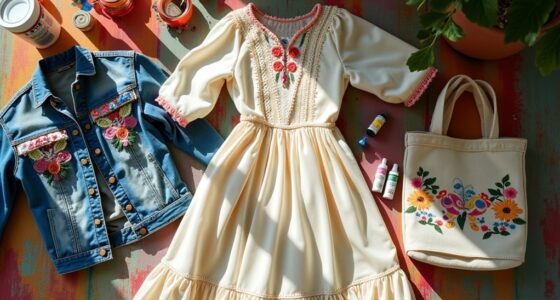
You can incorporate embroidered details into your everyday wardrobe by adding embroidery accessories like bags, shoes, or jackets. Try DIY embroidery projects to customize your clothing, giving simple pieces a unique touch. Pair embroidered items with casual outfits for a chic, boho vibe or elevate your look with subtle embroidered accents. This way, you effortlessly blend folk-inspired craftsmanship with modern style, making your wardrobe truly personal and stylish.
Are There Eco-Friendly Materials Commonly Used in Embroidery?
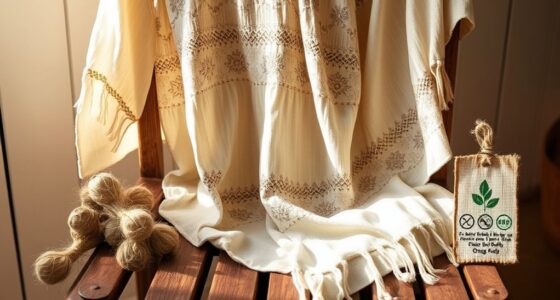
Yes, eco-friendly embroidery often uses sustainable fabrics like organic cotton, hemp, and bamboo. These materials are biodegradable and reduce environmental impact. Additionally, natural dyes derived from plants, roots, and minerals are commonly used to color fabrics, making the embroidery process more sustainable. By choosing garments made with these materials, you support eco-conscious fashion and enjoy beautiful, handcrafted details that are both stylish and environmentally friendly.
What Historical Cultures Influenced Embroidery Patterns in Boho Fashion?
Think of embroidery patterns as a tapestry woven from the threads of history, where each stitch tells a story. You’ll see influences from diverse cultures like Mexican Otomi, Indian Kantha, and Central Asian Suzani, all rich in cultural symbolism. These patterns serve as artistic expression, blending tradition with modern boho style. By embracing these designs, you honor a shared human desire to communicate identity and heritage through intricate craftsmanship.
How Do I Care for Embroidered Garments to Ensure Longevity?
To keep your embroidered garments looking their best, you should hand wash them gently in cold water with mild detergent and avoid harsh stain removal that could damage the embroidery. When not wearing them, store your pieces flat or folded in a cool, dry place, and keep away from direct sunlight. These storage tips and gentle cleaning practice will help preserve the vibrant embroidery details for years to come.
Conclusion
As you embrace embroidered details, you’ll discover how they effortlessly connect you to centuries of tradition and your own unique style. It’s funny how a simple stitch can carry so much history and emotion, making your look feel both timeless and personal. When you wear embroidery, you’re not just dressing up—you’re weaving stories into your everyday life. Who knew that a small detail could hold such a powerful, beautiful coincidence of past and present?