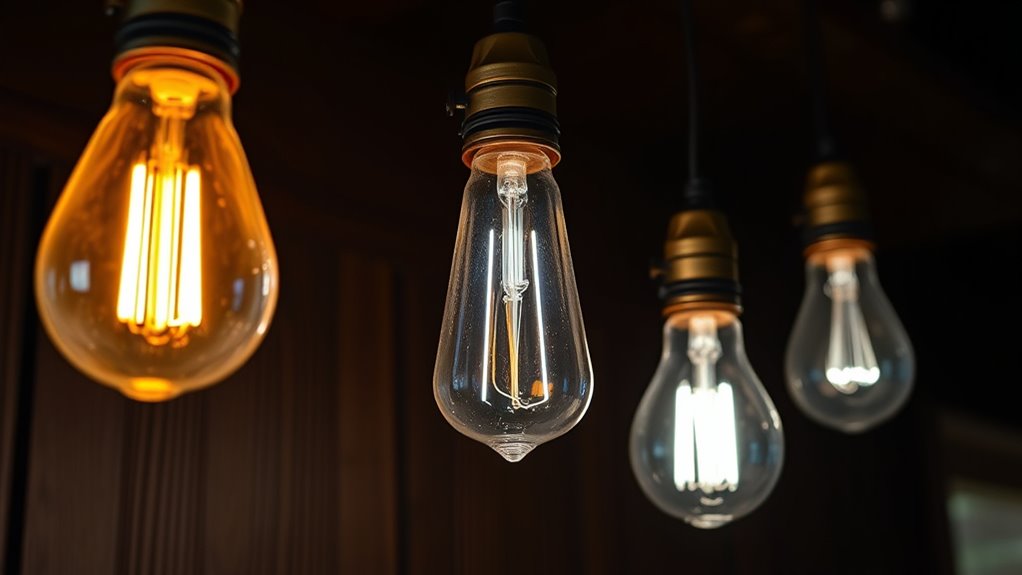

When choosing bulbs, consider the color temperature and CRI to get the right ambiance and true colors. Warm bulbs (2700K-3000K) create cozy, inviting spaces, while cooler ones (4000K-5000K) boost alertness and clarity. A high CRI (80 or above) guarantees colors appear accurate and vibrant, ideal for spaces needing color precision. Making the right choice enhances both mood and visual appeal—continue exploring to find tips on selecting perfect lighting for your needs.
Key Takeaways
- Select high CRI (80+) bulbs for accurate color rendering, especially in spaces needing color precision.
- Use warm white (2700K–3000K) for cozy, relaxing environments; cooler temperatures (4000K–5000K) for task areas.
- Balance lighting temperature and CRI to create desired ambiance and enhance visual clarity.
- High CRI ensures true-to-life colors, boosting aesthetic appeal and functionality.
- Consider the room’s purpose and mood when choosing the appropriate lighting temperature and CRI.
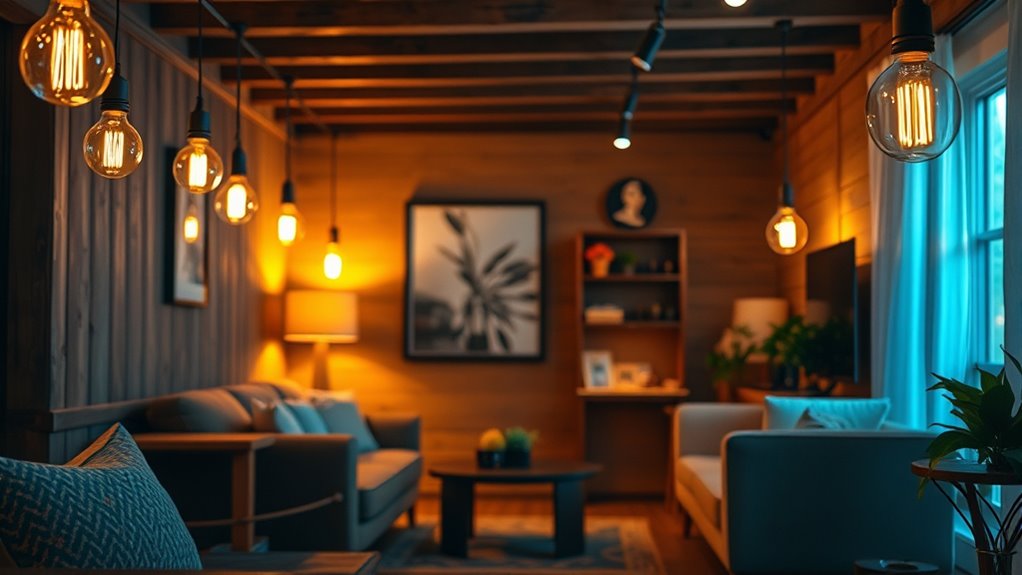
Lighting temperature and CRI are essential factors to contemplate when choosing lighting for any space, as they directly affect the mood, appearance, and functionality of the environment. When considering what bulbs to install, understanding how these elements influence overall lighting can help you create the perfect atmosphere and ensure colors appear natural and vibrant.
Color accuracy is a critical aspect tied closely to CRI, or Color Rendering Index. CRI measures how accurately a light source displays colors compared to natural daylight. If you’re in a space where color precision matters—like a kitchen, art studio, or retail store—you’ll want bulbs with a high CRI, typically 80 or above. This ensures that reds, blues, and other hues look true to life, making it easier for you to identify items correctly, match colors, or simply enjoy a more visually appealing environment. Low-CRI lighting can distort colors, making everything look dull or off-tone, which can be frustrating and diminish the overall aesthetic.
Lighting temperature, measured in Kelvin (K), plays a vital role in setting the mood of your space. Warm white bulbs (around 2700K to 3000K) emit a soft, yellowish glow that creates a cozy, inviting atmosphere. Think of relaxing at home or enjoying intimate dinners under warm lighting. On the other hand, cooler temperatures—such as 4000K to 5000K—produce a crisp, bluish light that feels energizing and bright. This type is ideal for workspaces, kitchens, or areas where alertness and focus are crucial. The right combination of temperature and CRI can dramatically influence how your environment feels and functions.
When choosing bulbs, you should consider what kind of mood you aim to achieve. If you want a calming, comfortable vibe, opt for warm, high-CRI bulbs that enhance natural skin tones and create a welcoming ambiance. Conversely, if your goal is to promote productivity or clarity, cooler, high-CRI lighting will help you see details more precisely and stay alert. Remember, the right lighting temperature combined with high CRI not only sets the mood but also ensures that colors are rendered accurately, making your space more functional and visually pleasing.
In short, balancing lighting temperature and CRI allows you to craft spaces that are both beautiful and practical. Whether you’re transforming a living room into a cozy retreat or setting up a workspace that boosts efficiency, paying attention to these factors makes all the difference. Choosing bulbs with the right color accuracy and mood setting capabilities ensures your environment looks vibrant, feels inviting, and functions seamlessly according to your needs.
Frequently Asked Questions
How Do Lighting Temperature and CRI Affect Mood and Productivity?
Lighting temperature and CRI directly influence your mood and productivity through color psychology. Cooler temperatures (blueish light) boost alertness, making you feel more energetic and focused, while warmer tones create a cozy, relaxing atmosphere. High CRI bulbs improve color accuracy, reducing eye strain. Choosing energy-efficient bulbs with the right temperature and CRI enhances your workspace, uplifting your mood and optimizing productivity without sacrificing sustainability.
Can Different Bulbs Be Combined for Optimal Lighting?
Yes, you can absolutely combine different bulbs for ideal lighting, and it’s like creating a symphony of illumination! Just make sure the bulbs are compatible and support lighting layering, blending warm, cool, and neutral tones seamlessly. This approach lets you customize ambiance, boost productivity, and reduce eye strain. Think of it as mixing colors on a palette—each bulb adds depth, dimension, and the perfect mood to your space.
How Often Should I Replace My LED Bulbs?
You should replace your LED bulbs when their bulb lifespan nears, typically around 25,000 to 50,000 hours of use. Replacement frequency depends on how often you use them; for daily use, check annually or every few years. Keep an eye on dimming or flickering, which signals it’s time for a replacement. Proper maintenance guarantees bright, efficient lighting while maximizing your bulbs’ lifespan.
Are There Health Risks Associated With Certain Lighting Temperatures?
Yes, certain lighting temperatures can pose health risks. High color temperatures emit more blue light, which can cause circadian disruption, affecting your sleep patterns and overall health. Exposure to blue light, especially in the evening, may lead to eye strain and fatigue. To minimize risks, opt for warmer bulbs in the evening and limit screen time before bed. Always choose lighting that supports your natural sleep-wake cycle.
How Does Outdoor Lighting Temperature Impact Plant Growth?
Outdoor lighting temperature directly impacts plant growth by influencing photosynthesis and flowering. Cooler temperatures with higher Kelvin ratings (like 5000K) mimic natural daylight, promoting healthy growth. Warmer temperatures (around 2700K) may encourage flowering but can slow overall development. You should choose outdoor lighting that matches your plants’ needs, ensuring they receive appropriate light spectrum and intensity. Properly selected lighting enhances growth, flowering, and overall plant health.
Conclusion
Choosing the right bulbs isn’t just about brightness; it’s about creating a space that feels just right. Think of lighting temperature and CRI as the brushstrokes painting your perfect ambiance. When you select wisely, you’re not only illuminating a room but also igniting warmth and comfort that makes your house truly feel like home. So, trust your instincts and let your lighting choices be the guiding star in your cozy sanctuary.