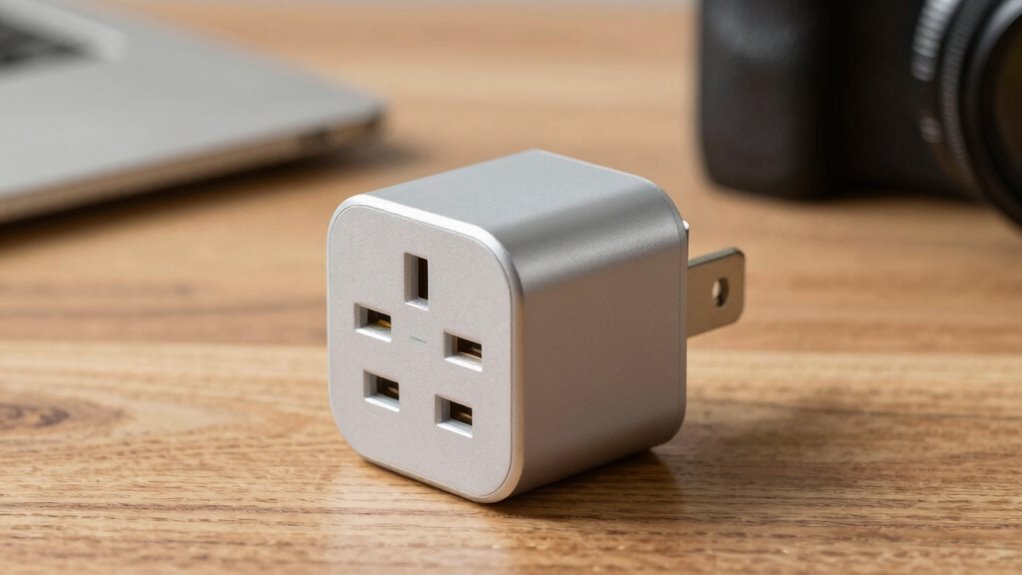

When traveling abroad, don’t assume a simple plug adapter will protect your devices; it only changes the shape of the plug, not the voltage. If your device isn’t dual voltage and you just use an adapter, you risk damaging it or causing safety hazards like sparks or fires. Always check if your device supports the local voltage or use a proper voltage converter. Continue exploring to learn how to keep your electronics safe and functional during your trips.
Key Takeaways
- Verify if your device is dual voltage before plugging in; using a non-dual voltage device without proper conversion can cause damage.
- Plug adapters only change plug shapes; they do not convert voltage, risking device failure if voltage standards differ.
- Use a voltage converter or transformer rated for your device’s wattage when traveling to regions with different voltage standards.
- Always check manufacturer labels or manuals to confirm your device’s voltage compatibility before use abroad.
- Avoid relying solely on plug adapters; improper setup can lead to electrical hazards or permanent device damage.
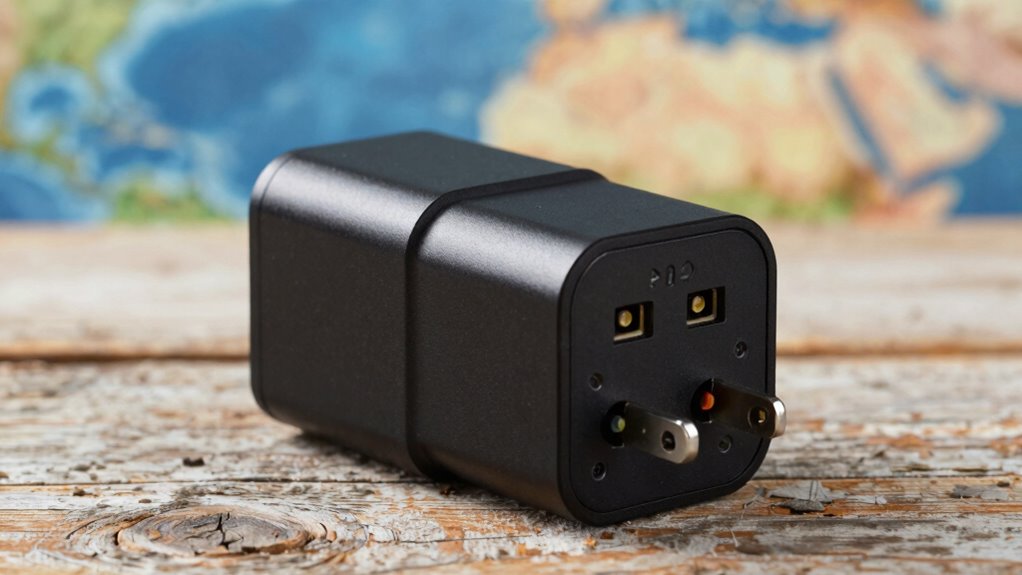
Traveling internationally can be tricky, especially when it comes to powering your devices. One common mistake travelers make is assuming that their plug adapter alone will handle different voltage standards. While a plug adapter changes the shape of your plug to fit foreign outlets, it doesn’t convert the voltage. This oversight can lead to serious damage to your electronics or, worse, safety hazards. To avoid this, you need to understand power conversion and follow proper safety precautions.
First, recognize that many countries operate on different voltage standards—some at 110V, like the United States and Canada, and others at 220V, such as most European countries, Australia, and parts of Asia. If your device is designed only for one voltage, plugging it directly into a different one can cause it to malfunction or burn out. That’s where a dual voltage travel tool becomes essential. Many modern devices, like laptops and camera chargers, are built to handle both voltages, but always double-check the label or manual before plugging in. If it isn’t compatible with the local voltage, you’ll need a voltage converter or transformer in addition to your plug adapter.
Power conversion isn’t just about keeping your devices safe; it’s also about ensuring safety precautions. Using the wrong setup can cause electrical shorts, sparks, or fires. Never assume that a simple plug adapter will automatically handle the voltage difference. Instead, use a reliable power converter rated for your device’s wattage. When selecting a converter, pay close attention to the device’s power requirements and ensure the converter can handle the load. Always follow manufacturer instructions and avoid improvising with makeshift solutions, which can be dangerous.
Using proper power converters and following instructions is essential for safety and device protection.
Furthermore, safety precautions extend beyond just using the right equipment. Always inspect your adapters and converters for any damage before use. Keep your devices away from water or damp environments, and avoid overloading your power sources. If you’re unsure whether your device is compatible with the local voltage, consult the manufacturer’s guidelines or seek advice from electronics professionals. Remember, protecting yourself and your devices isn’t just about convenience; it’s about avoiding accidents and costly repairs. Additionally, understanding the power standards of your destination can help you better prepare and prevent mishaps.
Frequently Asked Questions
Can I USe a US Plug Adapter in Europe Without Issues?
You can use a US plug adapter in Europe, but only if your device is dual voltage compatible. Check the voltage compatibility before plugging in; if your device isn’t designed for Europe’s higher voltage, you risk damage. Always prioritize adapter safety by choosing a quality, certified adapter. Using the wrong adapter or neglecting voltage differences can cause electrical issues, so double-check your device’s specs and use the correct adapter to avoid problems.
Do All Dual Voltage Devices Automatically Switch Voltages?
Like a trusty sidekick from your favorite sci-fi flick, dual voltage devices usually automatically switch voltages. You don’t need a magic wand—just check the voltage compatibility label. However, some devices lack built-in power conversion and may require a step-down converter. Always verify if your device can handle the voltage difference; otherwise, you risk damaging it. It’s better to be safe than sorry when traveling abroad.
How Can I Tell if My Device Is Dual Voltage?
You can tell if your device is dual voltage by checking its voltage compatibility on the device markings, usually near the power cord or on the label. Look for a range like “100-240V” or similar. If it shows this, your device is dual voltage and can handle different voltages worldwide. If it only shows a single voltage, you’ll need a voltage converter or a different device for international travel.
Are There Safety Concerns With Using Plug Adapters?
Yes, there are safety concerns when using plug adapters. You could risk electric shock if the adapter isn’t grounded properly, or a fire hazard if it overheats or doesn’t fit securely. Always make certain your adapter is compatible with your device and the power outlet. Avoid using damaged or cheap adapters, and never force a connection. Properly rated adapters keep you safe and prevent accidents during your travels.
Do I Need a Converter or Just a Plug Adapter?
Don’t put all your eggs in one basket—know what your device needs. If your device’s voltage compatibility matches the country’s voltage, a simple plug adapter suffices. However, if it doesn’t, you’ll need a converter to prevent damage. Always test your device beforehand to guarantee safety. Using just a plug adapter when a converter is needed can harm your device, so check specifications carefully.
Conclusion
Remember, using the right dual voltage travel tool can save you from costly mishaps. Did you know that over 60% of travelers have experienced device damage due to incorrect adapters? Avoid being part of that statistic by double-checking your tools before packing. A simple mistake could leave you powerless in a foreign country. Stay informed, pack smart, and enjoy your trip without worries—because the right adapter makes all the difference.