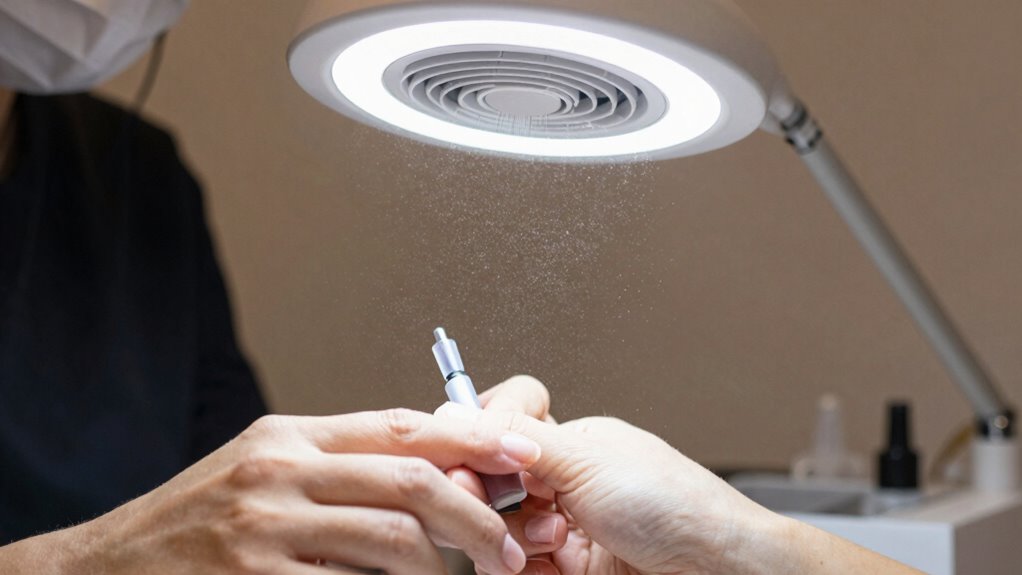
Proper ventilation is essential for controlling nail dust and protecting your respiratory health. It captures airborne particles before they settle on surfaces, reducing long-term health risks and ensuring compliance with safety regulations. Good airflow prevents dust buildup that can cause allergies or irritation, keeping your workspace clean and safe. Investing in effective ventilation systems not only improves air quality but also maintains a professional environment. Discover how the right setup can make a significant difference in your salon or home station.
Key Takeaways
- Proper ventilation captures airborne nail dust, preventing inhalation and reducing respiratory health risks.
- Effective air filtration systems remove dust particles before they settle, maintaining cleaner workspace air quality.
- Good ventilation minimizes dust buildup on surfaces, lowering allergy and irritation chances for clients and staff.
- Poor airflow increases dust accumulation, raising long-term health hazards and violating safety standards.
- Investing in ventilation ensures compliance, improves workspace safety, and creates a healthier environment for everyone.
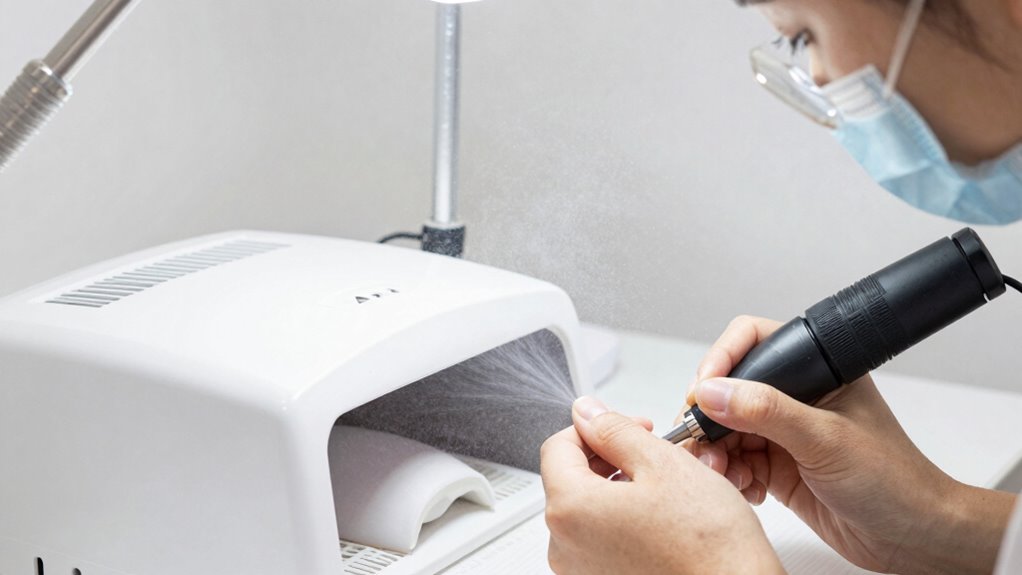
Are you tired of dealing with a cloud of nail dust every time you file or buff? That fine, airborne debris might seem like a minor inconvenience, but it can pose serious health risks if left unmanaged. Proper ventilation isn’t just about keeping your workspace tidy; it’s about protecting your lungs and complying with safety regulations. Air filtration systems play a pivotal role here, capturing dust particles before they settle on surfaces or become airborne. Investing in a quality air filtration unit ensures that the air you breathe remains cleaner, reducing the risk of respiratory issues caused by prolonged exposure to nail dust. Many safety regulations in salons and home setups emphasize the importance of controlled ventilation, making it a necessary component for any professional or hobbyist nail station.
Proper ventilation and air filtration are essential for health and safety in nail stations.
Understanding why ventilation matters more than you think helps you realize the importance of integrating effective air filtration solutions. Nail dust contains tiny particles that can easily become airborne, especially when you’re buffing or filing nails aggressively. Without proper airflow, these particles linger in the air, increasing inhalation risks over time. This isn’t just about comfort but about long-term health. Regulations often require salons to have ventilation systems that can remove contaminants efficiently, ensuring that workers and clients aren’t exposed to unnecessary hazards. Even in a home setting, following these guidelines can substantially improve indoor air quality and safeguard your health.
Good ventilation also prevents the buildup of dust on surfaces, which can contribute to allergies or irritation if inhaled repeatedly. It’s not enough to just sweep or wipe surfaces; the dust needs to be removed from the air itself. This is where a well-designed ventilation system with proper air filtration comes into play. Such systems actively draw in contaminated air, filter out the particles, and expel cleaner air back into the environment. This continuous process minimizes dust accumulation, keeps your workspace cleaner, and creates a healthier environment overall. Additionally, adhering to safety regulations isn’t just a legal formality—it’s about establishing best practices that ensure your workspace is safe and professional.
In essence, effective ventilation and air filtration are essential for controlling nail dust. They help you meet safety standards, protect your health, and maintain a cleaner, more comfortable environment. Whether you’re running a salon or doing nails at home, don’t overlook the importance of proper airflow. It’s an investment in your well-being and a step towards a more professional setup. Remember, good ventilation isn’t a luxury; it’s a necessity that makes a tangible difference in your day-to-day work and long-term health. Proper ventilation also enhances the air quality in your workspace, making it a healthier environment for everyone involved.
Frequently Asked Questions
How Often Should Nail Dust Extraction Systems Be Cleaned?
You should clean your nail dust extraction system at least once a week to maintain ideal dust filtration and airflow. Regular cleaning prevents buildup that can reduce efficiency and compromise air quality. If you notice decreased airflow or dust escaping, clean it immediately. Consistent maintenance ensures your system functions properly, keeps your workspace safe, and prolongs its lifespan. Prioritize cleaning to guarantee effective dust filtration and airflow enhancement every time you work.
Can Natural Ventilation Improve Nail Dust Control Effectively?
Think of natural ventilation as a gentle breeze clearing away nail dust like a fresh mountain air. It can improve dust control by increasing air exchange, reducing airborne particles. However, it’s often unpredictable and less reliable than mechanical systems. While natural ventilation helps, for consistent and effective dust management, you need a well-designed ventilation system that guarantees steady air exchange and keeps your workspace safe and clean.
Are There Specific Ventilation Standards for Nail Salons?
Yes, there are specific ventilation standards for nail salons. You need to adhere to local ventilation regulations and air quality standards to guarantee a safe environment. These standards often require proper exhaust systems and adequate airflow to remove dust and fumes effectively. By complying with these regulations, you protect yourself and your clients, maintaining healthier air quality standards and reducing health risks associated with nail dust.
What Are the Health Risks of Poor Nail Dust Ventilation?
Poor nail dust ventilation is like a ticking time bomb for your health. It can profoundly harm your air quality, leading to respiratory issues like asthma or allergies. Without proper airflow, tiny particles settle in your lungs, causing inflammation and long-term damage. You need effective ventilation to safeguard your respiratory health and keep the air clean, so you stay healthy and breathe easy every day.
Do Different Nail Products Produce Varying Levels of Dust?
Yes, different nail products produce varying levels of dust due to their composition and dust particle size. For example, powders like acrylic or dip powders generate more fine dust particles that stay airborne longer. Gel products produce less dust overall, but the dust created can still pose health risks. Understanding the composition helps you choose safer products and emphasizes the importance of proper ventilation to prevent inhalation of harmful dust particles.
Conclusion
Remember, proper ventilation isn’t just a minor detail—it’s your biggest weapon against nail dust chaos. Without it, you’re risking health hazards that could rival a toxic storm in your workspace. Don’t let dust settle into your lungs or your mind; prioritize ventilation like your safety depends on it—because it does. Equip yourself with the right airflow, and you’ll breathe easier, work smarter, and keep your salon sparkling—and dust-free—at all costs!