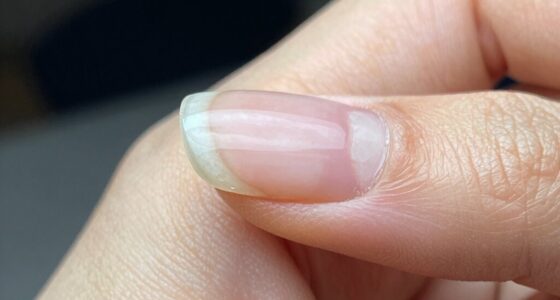

The “ring of fire” is a warning sign you should watch for during nail treatments. It appears as a reddish, inflamed ring around the cuticle or nail edge, signaling that you’ve over-filed or gone too deep. Ignoring this sign can lead to nail lifting, infections, and long-term damage. Recognizing this early helps you adjust your technique to protect your client’s nail health. If you want to learn how to prevent it altogether, keep going.
Key Takeaways
- The “Ring of Fire” appears as a reddish or inflamed zone around the nail edge after over-filing.
- It indicates excessive filing, risking nail damage, inflammation, and increased susceptibility to infections.
- Recognizing this sign prompts technicians to slow down and adjust their filing technique immediately.
- Ignoring it can lead to nail lifting, micro-tears, and long-term nail health issues.
- Proper filing with gentle strokes preserves natural nail health and prevents the “Ring of Fire” from developing.

If you notice your clients experiencing increased nail sensitivity, cracking, or thinning, it could be a sign you’re over-filing during treatments. These symptoms are warning signs that your nail tech practices might be compromising nail health and, ultimately, client safety. Over-filing can strip away the natural oils and protective layers of the nail plate, leaving your clients vulnerable to damage and discomfort. Recognizing this early helps you prevent long-term damage and guarantees your clients leave satisfied and healthy.
Over-filing causes nail sensitivity, cracking, and thinning—spot the signs early to protect your clients’ nail health.
One clear indicator of over-filing is what professionals refer to as the “ring of fire.” This term describes a visible, often reddish or inflamed zone around the cuticle or nail plate edge that appears after excessive filing. When you see this ring, it indicates you’ve gone beyond the safe threshold, exposing the sensitive skin and nail bed beneath. This inflammation is your signal to slow down and reassess your technique. Ignoring it can lead to further harm, such as nail lifting, infections, or even permanent damage to the nail matrix.
Maintaining proper nail health starts with understanding the importance of gentle, controlled filing. Instead of rushing through a treatment, focus on preserving the natural structure of the nail. Use fine-grit files and avoid aggressive strokes, especially near the cuticle area. Keep your motions light and precise, and remember that less is often more. This approach not only protects your client’s nail health but also enhances their overall experience, building trust and loyalty.
Client safety should always be your top priority. Over-filing can cause micro-tears, exposing the nail bed to bacteria and fungi that could cause infections. The redness and inflammation from the “ring of fire” are signs that your client’s skin and nails are under stress. It’s essential to pause and evaluate your technique whenever you see these signs. Proper sanitation, gentle handling, and awareness of your filing pressure help prevent these issues and promote healthier nails. Additionally, understanding the impact of contrast ratio can help you appreciate how lighting and visual cues influence your technique and awareness during treatments.
In addition, educate your clients about the importance of nail health. Explain that a gentle, cautious approach benefits their nails in the long run. Encourage them to communicate if they experience discomfort during a treatment. This dialogue allows you to adjust your technique immediately, preventing over-filing from escalating into more severe problems. Remember, protecting the natural nail structure ensures both the safety of your clients and the reputation of your salon.
Ultimately, recognizing the “ring of fire” as a warning sign empowers you to prioritize nail health and client safety. By refining your technique and listening to your clients’ responses, you can deliver beautiful results without compromising the integrity of their nails. Keep a watchful eye on inflammation, and always treat your clients’ nails with care and respect.
Frequently Asked Questions
How Can Clients Prevent Over-Filing at Home?
To prevent over-filing at home, you should focus on gentle filing techniques that protect your nail health. Use a fine-grit nail file and file in one direction rather than back and forth, which can cause damage. Avoid excessive filing, and stop if you feel any discomfort. Regularly moisturize your cuticles to keep nails strong. These steps help maintain healthy nails and prevent over-filing issues.
What Tools Are Best for Avoiding Over-Filing?
Did you know that using the right tools can reduce nail damage by 40%? To avoid over-filing, always choose a gentle nail buffer and a precise cuticle pusher. A quality nail buffer smooths without stripping, while a cuticle pusher helps shape nails carefully. These tools let you control pressure and prevent excessive filing, protecting your nails’ health and preventing the painful “Ring of Fire” over-filing warning signs.
Are There Specific Nail Conditions Caused by Over-Filing?
Over-filing can damage your nail health, leading to thinning, ridges, and increased brittleness. Aggressive filing techniques remove too much keratin, weakening the nail structure and making it prone to breakage. To prevent this, use gentle, controlled filing techniques and avoid excessively rough motions. Proper filing preserves nail strength and prevents conditions like peeling or splitting, ensuring healthier nails and a better overall manicure experience.
How Often Should a Professional Check for Over-Filing Signs?
Think of checking for over-filing signs as your nail health’s early alarm clock—set it to ring regularly. You should inspect your clients’ nails every 10-15 minutes during filing. This routine helps maintain salon safety and prevents damage like the “Ring of Fire.” Staying vigilant guarantees you catch over-filing before it worsens, protecting your clients’ nails and your professional reputation. Regular checks keep everyone safe and happy.
Can Over-Filing Lead to Long-Term Nail Damage?
Over-filing can indeed cause long-term nail damage, especially if you constantly irritate the cuticle area. It weakens the nail’s structure and can hinder healthy nail growth over time. You might notice compromised cuticle health, which increases the risk of infections. To protect your nails, avoid excessive filing and give your nails time to recover, ensuring they stay strong and healthy for future growth.
Conclusion
Pay attention to the “ring of fire” — it’s your silent warning that over-filing is burning too close to the bone. Just as a ring encircles and protects, this sign reminds you to maintain healthy boundaries between beauty and harm. By respecting this symbol, you safeguard your craft and your clients’ well-being. Let it be a glowing sign that guides you toward balance, ensuring your artistry shines without leaving scars behind.