
Nail lamps use specific wavelengths and power levels to guarantee your gel cures properly. LED lamps emit light around 365-405 nm, curing faster and more energy-efficiently, while UV lamps cover a broader spectrum that may take longer. Higher wattage lamps typically cure gels quicker and with better quality, but choosing the right combination of power, wavelength, and lamp type impacts how durable and shiny your manicure will be. Keep exploring to discover how to optimize your curing results.
Key Takeaways
- Nail lamps use UV or LED light to cure gel polish, with wavelength ranges affecting curing efficiency.
- LED lamps emit specific wavelengths (365-405 nm), curing gel faster and more energy-efficient than UV lamps.
- UV lamps have broader spectrum light (360-400 nm) but typically require longer curing times.
- Power (measured in watts) influences curing speed; higher wattage generally results in quicker, more even curing.
- Proper maintenance and correct wavelength selection ensure optimal cure quality and long-lasting manicures.

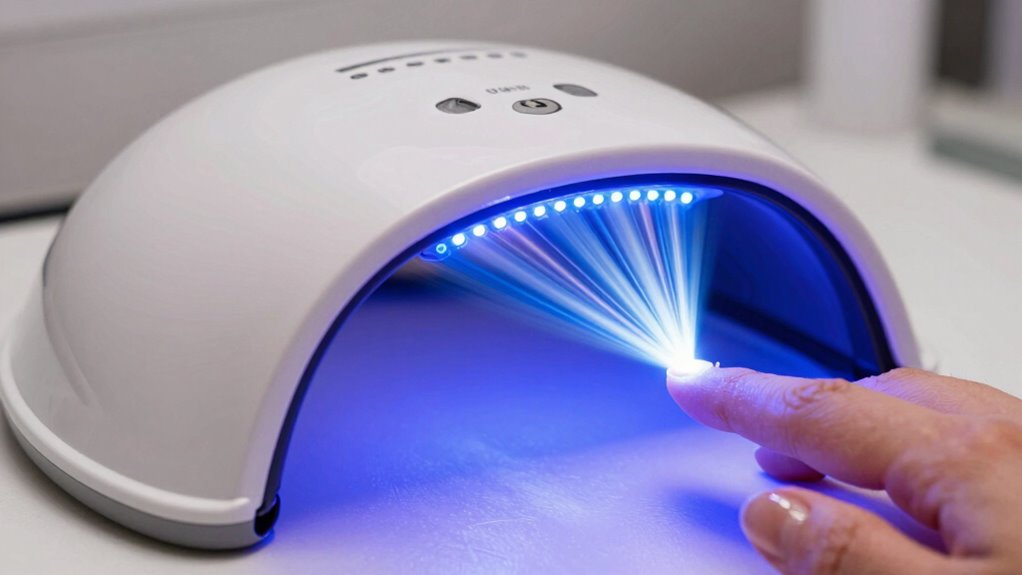
A nail lamp is a device that cures gel nail polish quickly and efficiently. It’s a vital tool for achieving long-lasting, shiny manicures that look salon-finished. When choosing a nail lamp, you’ll notice options like LED and UV lamps, each with distinct features and benefits. LED lamps use light-emitting diodes to emit specific wavelengths, typically around 365-405 nanometers, which are optimized for curing gel polish. UV lamps, on the other hand, emit ultraviolet light across a broader spectrum, generally 360-400 nanometers. This difference impacts curing time, lamp lifespan, and safety considerations. LED lamps tend to cure gel polish faster—often in 30 to 60 seconds—while UV lamps may take around 2 minutes per coat. Both types can produce excellent results; however, LED lamps are more energy-efficient and have a longer lifespan, often lasting tens of thousands of hours before needing replacement. Proper lamp maintenance** is essential to guarantee consistent curing performance and prolong the device’s life. For LED lamps, maintenance is relatively simple—just keep the surface free of dust, dirt, and oils that could block the light. Occasionally, check the LEDs for signs of wear or malfunction; since they rarely burn out, replacement is usually not needed unless the entire lamp fails. UV lamps require a bit more attention; the bulbs need replacing when they no longer emit adequate light, which can be after several hundred hours of use. Always follow the manufacturer’s instructions for bulb replacement, and handle bulbs with care, avoiding touching the glass with your fingers to prevent oil transfer that can shorten their lifespan. Regular cleaning of the lamp’s interior and exterior helps maintain ideal light output. Additionally, guarantee the fan or cooling system** functions properly to prevent overheating, which can damage the LEDs or UV bulbs and reduce curing efficiency.
Frequently Asked Questions
How Do LED and UV Nail Lamps Differ in Curing Effectiveness?
LED and UV nail lamps differ mainly in curing efficiency. LED lamps cure nails faster and are more energy-efficient, thanks to their specific wavelength targeting gel polymers directly. UV lamps, however, emit broader wavelengths, which can take longer to cure and may cause more skin exposure. If you want quick, effective curing with less damage, LED vs UV lamps are the better choice for efficient, reliable results.
What Safety Precautions Should I Take When Using Nail Lamps Regularly?
Imagine yourself in a bright, well-ventilated space, wearing protective gear like gloves and eye protection. Always guarantee proper ventilation to avoid fumes, and take breaks to minimize skin exposure to UV or LED light. Keep your nail lamp clean and follow manufacturer instructions. Regularly check for signs of skin irritation or discomfort, and consult a professional if needed. Your safety makes your nail care routine truly worry-free.
Can Nail Lamps Cause Damage to Natural Nails or Skin?
Nail lamps can potentially cause damage to your natural nails or skin if not used with proper nail lamp safety. To protect your skin, always wear UV or LED protective gloves and avoid overexposure. Make sure the lamp’s power isn’t too high and follow manufacturer instructions carefully. Regular skin protection minimizes risks, ensuring your nail curing process remains safe and effective.
How Long Does a Typical Nail Curing Session Last?
A typical nail curing session lasts about 30 to 60 seconds per coat. Interestingly, studies show that proper curing time is essential for durability and preventing damage. During your session, the curing time varies depending on the lamp’s power and the gel type. Be sure to follow the manufacturer’s recommendations for ideal results, ensuring your nails are fully cured without risking overexposure.
Are There Specific Nail Polishes Compatible With Certain Lamp Types?
You should check your gel polish’s compatibility with your lamp type to guarantee proper curing. Some gel polishes are designed specifically for LED or UV lamps, so using the wrong lamp can lead to incomplete curing or reduced durability. Always read the gel polish manufacturer’s instructions and choose a lamp type that matches their recommendations. This way, you’ll get the best results and longer-lasting, beautifully cured nails.
Conclusion
So, don’t worry if choosing the right nail lamp feels overwhelming. By understanding power, wavelength, and cure quality, you can pick one that works best for your nails. Sure, some might think higher wattage means faster curing, but it’s all about balance. With the right lamp, you’ll get professional results at home without the hassle. Trust your judgment, and you’ll enjoy long-lasting, flawless nails every time.