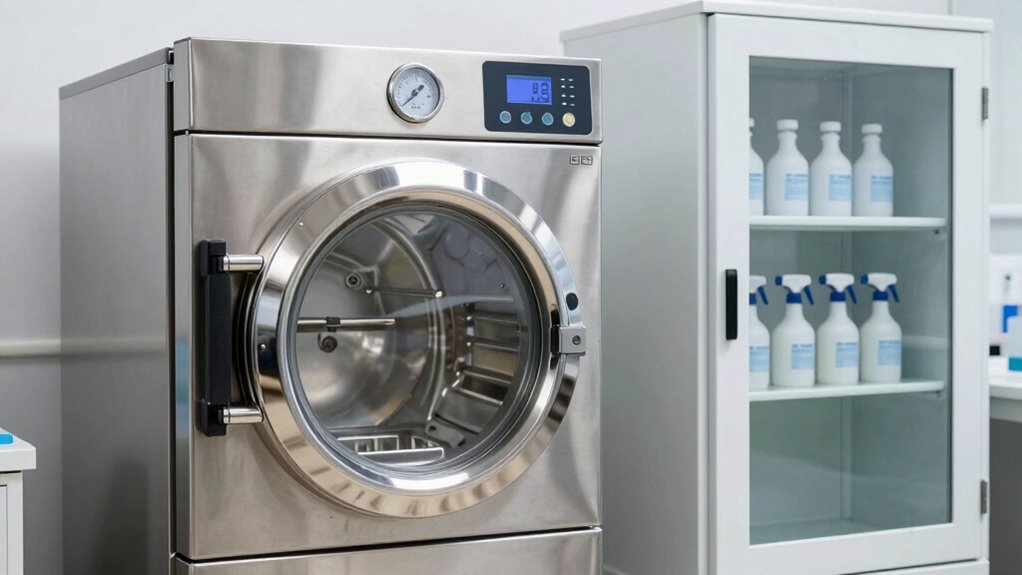
Autoclaves use high-pressure steam at high temperatures to completely sterilize medical instruments, killing even the most resistant microbes, making them ideal for surgical tools and reusable devices. Disinfectant cabinets, on the other hand, clean non-critical items quickly with disinfectant solutions but don’t achieve full sterilization. If you want to understand the key differences and proper uses of each method, keep exploring how they play essential roles in healthcare and facility safety.
Key Takeaways
- Autoclaves use high-pressure saturated steam to achieve complete sterilization, destroying all microorganisms, including spores.
- Disinfectant cabinets clean and disinfect items but do not provide full sterilization or kill resistant microorganisms.
- Autoclaves are ideal for sterilizing surgical tools and reusable medical devices requiring full microbial eradication.
- Disinfectant cabinets are suitable for quick, routine cleaning of non-critical equipment and plastic utensils.
- Proper maintenance of each ensures effective performance: autoclaves require pressure and temperature calibration, while disinfectant cabinets need regular cleaning and inspection.
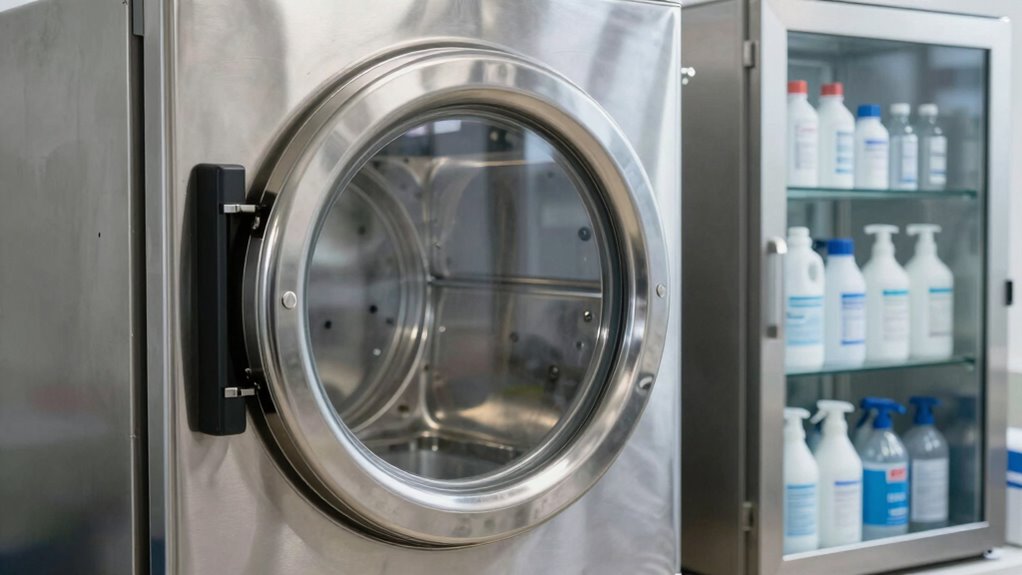
Autoclaves are considered the gold standard in sterilization methods, especially in medical, dental,, or laboratory settings where the highest level of cleanliness is essential. They are highly effective at destroying even the most resistant microorganisms when used correctly. Proper equipment maintenance is imperative to keep autoclaves functioning efficiently. Regularly checking pressure gauges, replacing seals, and calibrating temperature controls ensure that the sterilization process is consistent and reliable. Neglecting equipment maintenance can lead to incomplete sterilization, risking contamination and compromising safety. High-temperature sterilization is crucial for ensuring the complete eradication of pathogens that might survive milder disinfecting methods.
Autoclaves are the gold standard for sterilization, ensuring safety and reliability when maintained properly.
Disinfectant cabinets are more straightforward to operate, often requiring less maintenance but also offering a different level of sterilization. They are ideal for disinfecting items that don’t need full sterilization or for quick, routine cleaning of tools. While disinfectant cabinets are convenient, you should still follow manufacturer instructions carefully, ensuring disinfectants are fresh and properly applied. Equipment maintenance involves checking that the cabinets’ heating elements and circulation systems are in good working order to prevent mold or bacterial growth within the cabinet itself.
It’s essential to recognize that sterilization methods serve different purposes. Autoclaves are better suited for instruments that must be completely sterile, such as surgical tools or reusable medical devices. Disinfectant cabinets work well for items like plastic utensils, non-critical equipment, or tools that won’t be used in sterile procedures. Regularly maintaining your sterilization equipment not only prolongs its lifespan but also guarantees consistent performance. This includes cleaning, inspecting, and replacing parts as needed, which ultimately safeguards your staff and clients from potential infections.
Frequently Asked Questions
Can Autoclaves and Disinfectant Cabinets Be Used Together?
Yes, you can use autoclaves and disinfectant cabinets together, but you need to ascertain equipment compatibility and follow sterilization standards. Autoclaves handle sterilization through high-pressure steam, while disinfectant cabinets use chemical solutions for disinfection. Using both properly can enhance infection control, but always verify that tools are suitable for each method and adhere to your facility’s sterilization protocols to maintain safety and effectiveness.
What Are the Maintenance Requirements for Each Device?
You need to regularly maintain both devices to make certain effective sterilization procedures and prolong device longevity. For autoclaves, routinely check seals, calibration, and clean the chamber to prevent buildup. Disinfectant cabinets require frequent surface cleaning and filter replacement. Follow manufacturer guidelines for scheduled maintenance, including safety checks and servicing. Proper upkeep minimizes breakdowns, maintains sterilization efficacy, and extends each device’s lifespan.
Are There Safety Risks Associated With Autoclaves?
Yes, there are safety risks with autoclaves. You need to handle liquid sterilization substances carefully to avoid burns or chemical exposure. Always follow proper chemical safety protocols and wear protective gear. Be cautious with high-pressure steam, as it can cause burns or injuries if not managed properly. Regular maintenance and safety checks help prevent accidents, ensuring safe operation and minimizing risks associated with autoclaves.
How Long Does Each Cleaning Process Typically Take?
Think of autoclaves as time-traveling devices—sterilization duration typically takes about 15 to 30 minutes, depending on the load. Disinfectant cabinets, on the other hand, act faster, with cleaning time usually lasting 10 to 20 minutes. You’ll find that autoclaves require a longer, more thorough process to guarantee sterilization, while disinfectant cabinets offer quick, effective surface disinfection, making them ideal for routine cleaning.
Which Is More Cost-Effective in the Long Run?
You’ll find that autoclaves tend to be more cost-effective in the long run due to their durability and ability to sterilize multiple items quickly, reducing overall replacement and cleaning costs. Disinfectant cabinets, while cheaper upfront, may incur higher ongoing expenses because of the need for frequent refills and less extensive sterilization. A thorough cost comparison shows that investing in an autoclave offers better long-term savings.
Conclusion
Understanding the differences between an autoclave and a disinfectant cabinet helps you select the right sterilization method. For example, if you’re running a dental practice, using an autoclave ensures tools are thoroughly sterilized, preventing infection. Meanwhile, a disinfectant cabinet works well for quick surface cleaning but isn’t as effective for sterilizing instruments. Knowing when to use each saves you time, money, and keeps your patients safe. Make the right choice for your specific needs.