When choosing upholstery for your salon furniture, consider vinyl, PU, and leather’s benefits. Vinyl is highly resistant to stains, water, tears, and UV rays, making it ideal for busy environments. PU offers a good balance of durability and affordability but needs gentle cleaning to prevent cracking. Leather looks luxurious but requires proper maintenance to avoid scratches and fading. To discover the best options for your salon’s style and needs, keep exploring these materials further.
Key Takeaways
- Vinyl is highly durable, water-resistant, and easy to clean, making it ideal for high-traffic salon environments.
- PU offers a balance of affordability, decent resistance to scratches and stains, and easier maintenance than leather.
- Leather provides a luxurious look but requires regular care and maintenance to prevent scratches, fading, and cracking.
- Vinyl is less luxurious but more resistant to spills and UV rays, while leather offers elegance but needs diligent upkeep.
- Material choice impacts salon aesthetics, client comfort, and maintenance requirements, influencing long-term furniture durability.
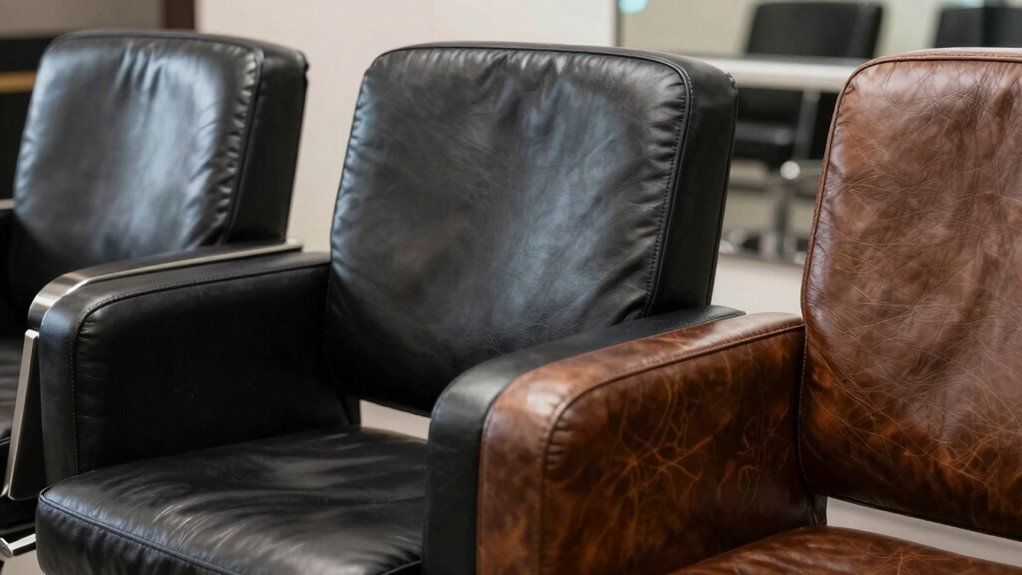
If you’re looking to keep your salon furniture looking fresh and inviting, understanding upholstery basics is essential. One of the first considerations is choosing the right material—whether vinyl, PU (polyurethane), or leather—since each offers unique benefits and challenges. Knowing how to properly clean and maintain these materials is key to extending their lifespan and preserving their appearance.
Choosing the right upholstery material and proper maintenance keeps salon furniture fresh and durable.
Cleaning tips vary depending on the material, but a general rule is to stay consistent with regular maintenance. For vinyl, you’ll find that it’s quite resistant to stains and water, making it relatively easy to clean. Use a soft cloth dampened with mild soap and water to wipe down surfaces, and avoid harsh chemicals that could cause cracking or discoloration. PU, often more affordable and versatile, also responds well to gentle cleaning with a damp cloth and mild cleaner. It’s important to avoid abrasive scrubbers, as they can damage the surface. Leather, on the other hand, requires more delicate handling; a damp cloth and specialized leather cleaner are best to prevent drying out or cracking. Regular conditioning with leather-specific products helps maintain suppleness and prevents wear over time. Additionally, understanding the material durability of each option allows you to select the best fit for your specific salon environment and usage patterns.
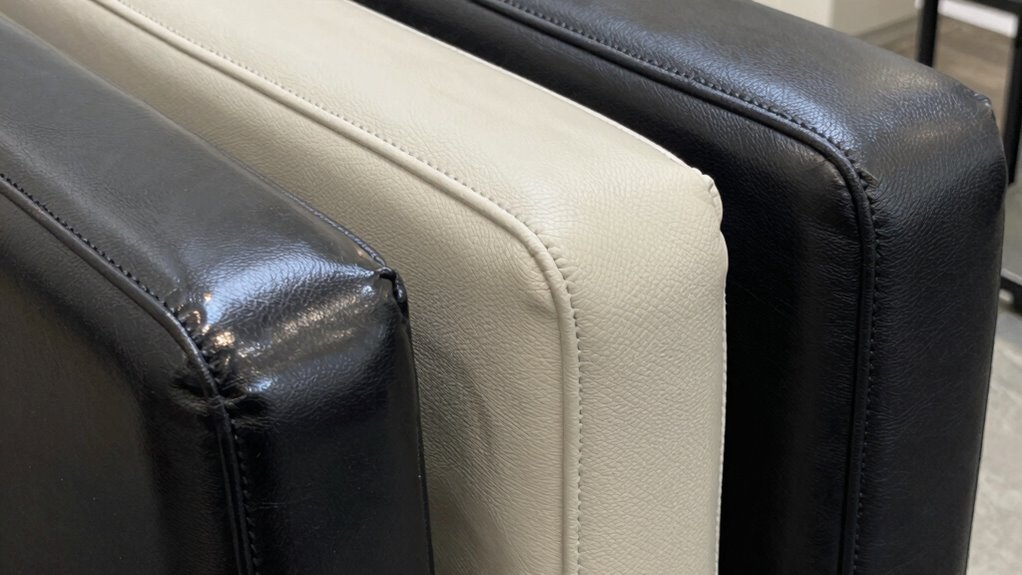
Material durability plays a significant role in your selection process. Vinyl is highly durable and resistant to spills, tears, and UV rays, making it a popular choice for busy salons. However, it can sometimes feel less soft or luxurious compared to leather. PU offers a good balance of durability and affordability, with decent resistance to scratches and stains, but it can be prone to cracking if not properly maintained or if exposed to extreme temperatures. Leather is often viewed as the most luxurious option, but it demands more care. While high-quality leather can last many years with proper maintenance, it’s more susceptible to scratches, fading, and cracking if neglected.
Understanding these differences helps you make informed decisions based on your salon’s needs and environment. For high-traffic areas, vinyl’s resilience might be ideal, while leather adds a touch of elegance but requires diligent upkeep. PU can serve as a middle ground, offering decent durability without the higher cost of leather. Whichever material you choose, consistent cleaning and proper care are vital to maximizing its lifespan. Keeping your salon furniture in top shape not only enhances your space’s aesthetic appeal but also creates a comfortable, inviting atmosphere for your clients. By learning the specific cleaning tips and understanding the material durability of vinyl, PU, and leather, you’re better equipped to maintain your furniture’s quality over time.
Frequently Asked Questions
How Do Vinyl, PU, and Leather Compare in Durability?
Vinyl, PU, and leather differ in durability, and your choice impacts material maintenance and aesthetic appeal. Vinyl is highly durable and easy to clean, making it ideal for busy salons. PU offers a softer look with moderate durability but requires more upkeep. Leather is the most luxurious and durable long-term but needs regular conditioning to maintain its aesthetic appeal. Consider your salon’s usage and maintenance preferences to pick the best fit.
Which Upholstery Is Most Eco-Friendly for Salons?
If you wanna save the planet while looking fabulous, go for eco-friendly upholstery. Sustainable materials like organic cotton or hemp are your best bet, crafted through eco-conscious manufacturing practices. They’re guilt-free, biodegradable, and gentle on the environment—no leather’s carbon footprint or plastic’s pollution here. Choose these options to keep your salon stylish and sustainable, proving that beauty and eco-responsibility can go hand in hand without sacrificing comfort or quality.
How Do Cleaning Requirements Differ Among the Materials?
You’ll find that cleaning techniques vary for each material. Vinyl and PU are highly stain-resistant and easy to wipe clean with a damp cloth, making maintenance simple. Leather, however, requires gentle cleaning with specialized leather cleaners and conditioners to uphold its appearance. Regular cleaning helps prevent damage, and using the right techniques ensures your salon furniture stays looking fresh and lasts longer.
Are There Health Differences Between the Materials?
You might notice health implications and allergy considerations differ among vinyl, PU, and leather. Vinyl and PU are synthetic, so they typically emit fewer allergens but can contain chemicals that irritate sensitive skin or respiratory systems. Leather, a natural material, is less likely to cause allergies but may harbor dust and allergens if not properly maintained. Choose your upholstery based on your clients’ allergy sensitivities and health priorities.
What Is the Typical Lifespan of Each Upholstery Type?
You’ll find that vinyl typically lasts 5-7 years, offering good durability and a wide range of upholstery color options at a lower material cost comparison. PU usually endures around 3-5 years, being affordable but less durable. Leather, while more expensive, can last 10-15 years with proper care, providing a classic look. Your choice depends on your budget, desired lifespan, and style preferences for your salon furniture.
Conclusion
Choosing the right upholstery is like selecting the perfect canvas for your salon’s vibe. Vinyl offers a sleek, easy-to-clean look; PU provides a softer, more flexible feel; and leather exudes timeless elegance. Think of each as a different brushstroke—some bold and vibrant, others subtle and refined. By understanding their unique textures and qualities, you’ll create a space that’s both inviting and resilient, turning your salon into a masterpiece clients can’t resist.