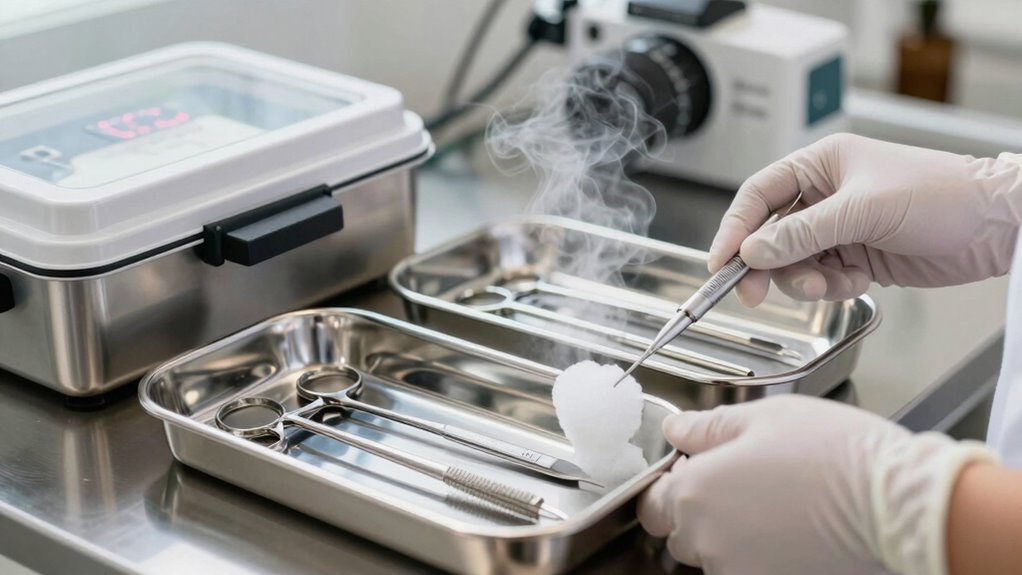
In your salon, understanding sterilization levels is key to safety. Cleaning removes dirt and debris but doesn’t kill germs. Disinfecting reduces bacteria and viruses but may leave some pathogens behind. Sterilizing completely destroys all microorganisms, including spores, providing maximum safety. To guarantee hygiene, you’ll want to combine methods, like using UV sterilization after cleaning. Keep exploring to discover effective techniques that help maintain the highest standards of cleanliness and client trust.
Key Takeaways
- Cleaning removes dirt and debris but does not eliminate all germs or pathogens from surfaces.
- Disinfecting reduces bacteria and viruses but may leave residues and not kill all resilient microorganisms.
- Sterilizing destroys all microorganisms, including spores, ensuring maximum safety for salon tools and surfaces.
- UV sterilization offers a chemical-free, quick method to effectively sterilize surfaces and equipment.
- Combining cleaning, disinfecting, and sterilizing practices ensures comprehensive hygiene and infection control in salons.
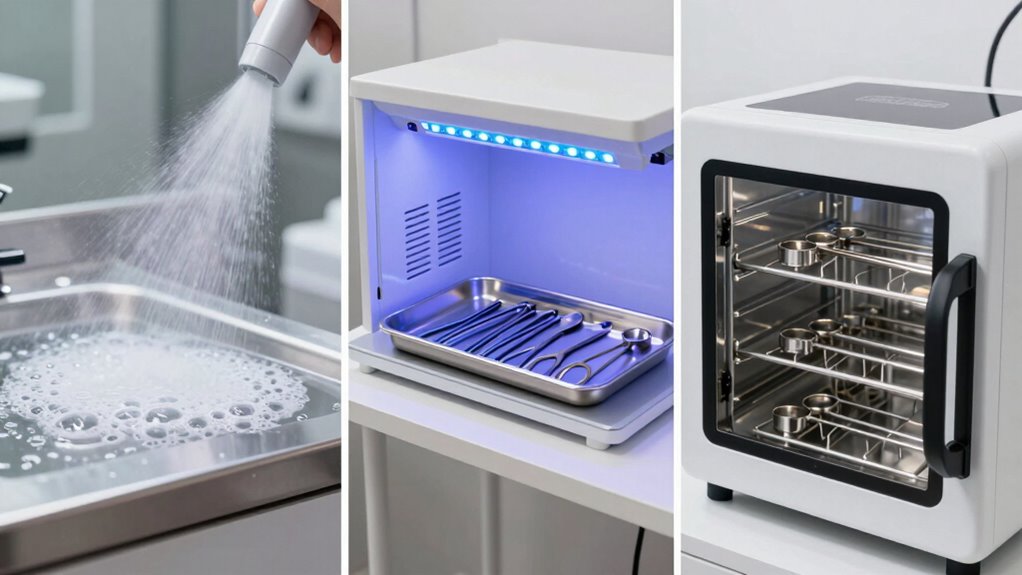
Have you ever wondered how clean your salon really is? It’s easy to assume that wiping down surfaces and using disinfectants keeps everything safe, but there’s more to it. Understanding the differences between cleaning, disinfecting, and sterilizing can make a big impact on your salon’s hygiene. When it comes to surface contamination, simply cleaning isn’t enough. Cleaning removes dirt and debris, but it doesn’t eliminate all germs. Disinfecting reduces the number of bacteria and viruses on surfaces, yet some resilient pathogens can survive. Sterilizing, on the other hand, destroys all microorganisms, including spores, guaranteeing the highest level of safety.
Cleaning removes dirt but doesn’t eliminate all germs; sterilizing destroys all microorganisms for maximum safety.
One advanced method gaining popularity is UV sterilization. This process uses ultraviolet light to kill bacteria, viruses, and other pathogens on surfaces. UV sterilization is especially effective because it doesn’t rely on chemicals, making it ideal for sensitive equipment and surfaces. When you incorporate UV sterilization into your routine, you markedly reduce surface contamination without the mess or residue associated with chemical disinfectants. It’s a fast and efficient way to guarantee that tools and surfaces are truly germ-free between clients. This method has proven particularly useful for sterilizing tools, chairs, and workstations, where surface contamination can pose a serious health risk.
However, UV sterilization isn’t a standalone solution. It’s important to understand that it works best as part of a thorough sterilization protocol. Surfaces should be thoroughly cleaned first to remove dirt and organic matter, which can block UV light and reduce its effectiveness. Once cleaned, UV sterilization can be employed to target any remaining microorganisms. This layered approach maximizes hygiene and minimizes the risk of cross-contamination. Regularly integrating UV sterilization can help you maintain a safer environment, reassure your clients, and uphold your salon’s reputation.
In addition to UV sterilization, you should be aware of other sterilization methods like autoclaving or chemical sterilants for tools that can withstand such processes. But for everyday surfaces prone to surface contamination, UV sterilization offers a quick and chemical-free option. It’s essential to understand that surface contamination isn’t just a minor concern; it’s a pivotal factor in preventing infections and ensuring client safety. By elevating your sterilization practices with technologies like UV sterilization, you’re taking proactive steps to create a cleaner, healthier salon environment. In the end, it’s about protecting your clients and staff while maintaining the highest standards of hygiene. Incorporating effective sterilization practices into your routine can further enhance your salon’s safety measures.
Frequently Asked Questions
How Often Should Salon Tools Be Sterilized?
You should sterilize your salon tools after each client to guarantee safety and prevent cross-contamination. Follow a strict tool sterilization schedule, especially for items used on skin or nails. Regular sterilization frequency is vital—disinfect tools daily, and sterilize implements like scissors and tweezers between uses. By maintaining consistent sterilization practices, you protect your clients and uphold your salon’s hygiene standards effectively.
What Are the Health Risks of Improper Sterilization?
Imagine passing a tiny, invisible thief who spreads germs—improper sterilization risks this cross contamination, leading to infections. If tools aren’t properly sterilized, you could transmit bacteria, fungi, or viruses to clients, causing serious health issues like infections or even hepatitis. To prevent this, follow strict infection prevention strategies, such as sterilizing tools after each use. Neglecting this can jeopardize your clients’ health and damage your reputation.
Can Sterilization Equipment Be Used at Home?
You can use sterilization equipment at home, but you need to be cautious. DIY sterilization is possible with home sterilizer options like UV sterilizers or boiling methods for small tools. However, professional-grade equipment guarantees proper sterilization levels, reducing health risks. Always follow manufacturer instructions, and remember that some tools require specific sterilization techniques to be safe for reuse, especially in a salon setting.
What Certifications Verify Proper Sterilization Practices?
You should look for certifications like the CDC, OSHA, or ANSI that verify proper sterilization practices. These certification programs ensure your salon meets strict sterilization standards, keeping clients safe. When choosing sterilization equipment or procedures, verify it has been tested and approved by recognized organizations. Certification helps confirm that your sterilization practices are reliable, consistent, and meet industry regulations, safeguarding both your clients and your reputation.
Are There Eco-Friendly Sterilization Options Available?
Imagine a green leaf symbolizing freshness—eco-friendly sterilization options do exist. You can choose sustainable sterilization methods like UV sterilization or using plant-based, non-toxic disinfectants that minimize environmental impact. These eco-friendly sterilization options protect your clients and the planet. By opting for sustainable methods, you guarantee safety and sustainability go hand-in-hand, creating a healthier salon environment that aligns with your commitment to eco-conscious practices.
Conclusion
Remember, choosing the right sterilization level is like tending to a garden—you nurture each tool with care, safeguarding your clients’ trust and health. Cleaning is the gentle rain, disinfecting the nourishing sunlight, and sterilizing the strongest shield against unseen threats. By understanding these symbols, you become the gardener of safety, ensuring your salon blooms with confidence. Commit to thorough sterilization, and watch your reputation grow, rooted in care and unwavering dedication.