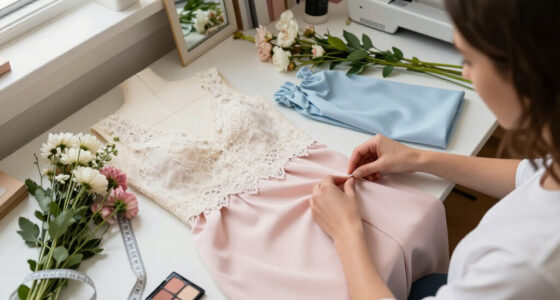

The Closet Edit Rule helps you keep only your best pieces, making daily dressing simple and intentional. You evaluate each item based on fit, style, and how much joy or purpose it brings you. Be honest about what works and avoid holding onto things out of habit or guilt. By doing so, you create a curated wardrobe that’s sustainable, versatile, and true to your style. Keep going to discover how to master this process and transform your closet.

Get beauty and skincare favorites delivered free with Prime
- Fast, free delivery on millions of items
- Prime Video, Amazon Music and more included
- Member-only deals all year
Key Takeaways
- Focus on keeping only high-quality, versatile items that truly bring joy or serve your lifestyle needs.
- Be honest and ruthless when evaluating each piece’s fit, condition, and relevance.
- Create a curated wardrobe by removing worn, ill-fitting, or style-misaligned clothing.
- Organize items by category to identify gaps and prevent overbuying.
- Incorporate sustainable disposal methods for discarded pieces to support eco-friendly wardrobe management.

If your closet feels overwhelming or cluttered, the Closet Edit Rule offers a simple way to regain control. It’s all about identifying and keeping only your best pieces, making it easier to get dressed each day and avoid decision fatigue. This rule encourages you to be honest about what truly brings you joy or serves a purpose, rather than holding onto items out of habit or guilt. When you approach wardrobe organization with this mindset, you’re not just tidying up—you’re creating a curated collection of clothing that reflects your style and needs.
One of the key benefits of applying the Closet Edit Rule is that it promotes sustainable shopping. When you know exactly what you already own and love, you’re less tempted to buy duplicates or trend-driven pieces that quickly lose appeal. Instead, you focus on investing in quality items that stand the test of time, reducing waste and supporting more mindful consumption. This approach helps you build a wardrobe that’s both functional and eco-friendly, saving you money in the long run while minimizing your environmental impact.
To start, pull out everything from your closet and lay it out. Be ruthless in your assessment—ask yourself whether each piece fits well, suits your lifestyle, and makes you feel confident. Keep the items that check those boxes, especially your go-to favorites and versatile staples. If an item is worn out, doesn’t fit, or no longer aligns with your style, it’s time to let it go. You can donate, sell, or recycle these pieces responsibly, keeping the cycle of sustainable shopping in mind. Incorporating environmentally conscious practices into your wardrobe management ensures your choices are aligned with your values. Developing awareness of clothing lifecycle can also help inform better disposal and repurposing decisions. Recognizing the impact of fast fashion is essential in making more sustainable wardrobe choices. Additionally, understanding how clothing production affects the environment can motivate more mindful purchasing decisions.
As you refine your wardrobe, think about how each item contributes to your overall wardrobe organization. Group similar items together, like all your blouses, jeans, or dresses, to see what you have plenty of and what might be missing. This clarity helps prevent overbuying and makes it easier to mix and match outfits. Over time, your closet becomes a reflection of your personal style—a space where each piece has a purpose and a place, making daily dressing effortless.
The Closet Edit Rule isn’t just about decluttering; it’s about creating a sustainable, organized wardrobe that works for you. By focusing on quality, reducing clutter, and eliminating unnecessary purchases, you build a closet that’s both functional and aligned with your values. Incorporating biodiversity and environmentally conscious practices into your shopping habits ensures that your wardrobe choices contribute positively to the planet. The result is a simplified, stylish collection of your best pieces—clothes you love and wear, with less stress and more confidence.
high-quality versatile wardrobe staples
As an affiliate, we earn on qualifying purchases.
As an affiliate, we earn on qualifying purchases.
Frequently Asked Questions
How Often Should I Update My Closet Edit?
You should update your closet edit every six months or seasonally, depending on your wardrobe needs. Incorporate fashion psychology to understand which pieces truly serve your style and boost confidence. Regular wardrobe organization helps you identify items that no longer fit or suit you. Updating periodically guarantees your closet remains functional, inspiring, and aligned with your evolving fashion preferences, making it easier to choose outfits effortlessly.
What if I Love an Item but Rarely Wear It?
If you love an item but rarely wear it, embrace your fashion nostalgia and keep it for sentimental value. After all, some pieces aren’t just clothes—they’re memories in fabric. But don’t let them clog your closet like relics of a bygone era. Rotate them occasionally, wear them for special occasions, or display them proudly. Who says emotional attachment can’t coexist with practical wardrobe management?
How Do I Decide Which Pieces to Keep or Donate?
To decide which pieces to keep or donate, consider seasonal rotation and sentimental value. Keep items that suit your current climate and style, and donate those you haven’t worn in a while. For sentimental pieces, ask if they truly bring you joy or hold meaningful memories. If not, let them go. This approach keeps your closet functional, filled with pieces you love, and free of clutter.
Can This Rule Be Applied to Accessories and Shoes?
Absolutely, you can apply this rule to accessories and shoes. Think of your accessories as the icing on the cake—only keep the ones that truly enhance your style. For shoes, practice a good rotation to avoid clutter. When organizing, focus on accessory organization and shoe rotation, keeping only what sparks joy and serves a purpose. This way, your collection stays manageable, stylish, and ready to elevate any look effortlessly.
What Are Common Mistakes to Avoid During Editing?
When editing your wardrobe, avoid mistakes like holding onto pieces just for sentimental value or following fleeting seasonal trends. Focus on keeping versatile items that truly suit your style and current needs. Don’t forget to regularly reassess your clothing, and be honest about what fits or makes you feel confident. This way, you guarantee your closet stays functional, stylish, and free of clutter, saving you time and money.
Conclusion
So, are you ready to transform your wardrobe and make every piece count? By applying the closet edit rule, you’ll not only simplify your mornings but also discover what truly makes you feel confident. Think about how much easier your mornings will be when you stop holding onto items that no longer serve you. Isn’t it time to embrace a closet that works for you and not against you? Your best pieces are waiting—are you ready to let go?
Fall Picks
fall essentials
As an affiliate, we earn on qualifying purchases.