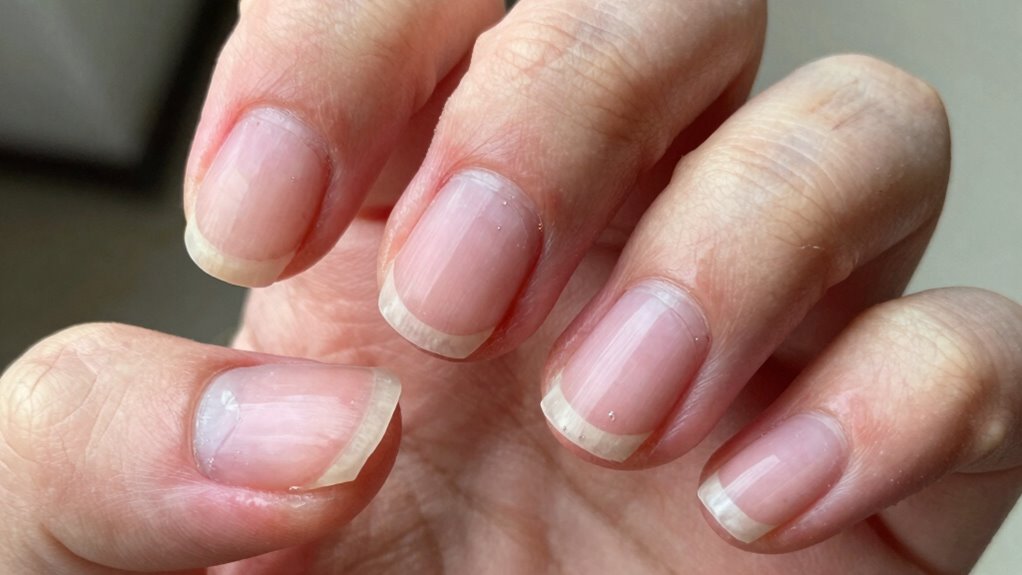

You might notice your nails becoming dull, brittle, or developing ridges, which shows they’re overworked. Dry, cracked cuticles and white spots or streaks are signs of damage and stress. Peeling or splitting nails indicate they need a break to recover. If you see these early signs, it’s time to pause manicures and nourish your nails with proper care. Keep going, and you’ll discover how to restore your nail health effectively.

Get beauty and skincare favorites delivered free with Prime
- Fast, free delivery on millions of items
- Prime Video, Amazon Music and more included
- Member-only deals all year
Key Takeaways
- Dry, cracked, or inflamed cuticles indicate nail overuse and need a break.
- Dull, ridged, or brittle nails suggest stress and require nourishment and rest.
- White spots or streaks from trauma signal early damage, prompting a pause in manicures.
- Peeling or splitting nails reflect overtaxing, needing time to recover and strengthen.
- Signs of poor cuticle health increase infection risk, highlighting the importance of a nail break.
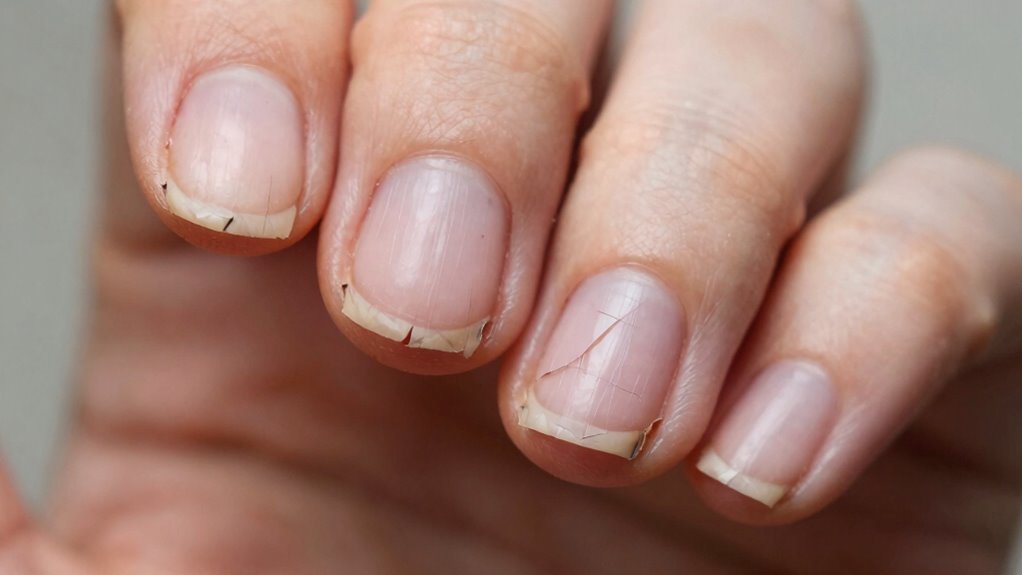
Your nails often give you subtle hints when they’re overworked or stressed, so paying attention to these signs can help prevent more serious damage. One of the earliest indicators is changes in cuticle health. If you notice your cuticles becoming dry, cracked, or inflamed, it’s a sign that your nails need a break. Healthy cuticles act as a protective barrier, but when they’re compromised, your nails become more vulnerable to infections and further damage. Neglecting these signs can lead to a cycle of weakening, where your nails become brittle and prone to splitting or peeling.
Pay attention to dry, cracked cuticles to prevent nail damage and maintain healthy, resilient nails.
In addition to cuticle issues, you might observe your nails losing their natural luster or becoming more brittle than usual. When nails start to look dull or develop ridges, it’s often a sign that your nail cells aren’t regenerating properly. This can be a result of overexposure to harsh chemicals, frequent use of nail polish or artificial nails, or inadequate nail strengthening routines. If you’re experiencing these symptoms, giving your nails a break allows them to recover and regain strength. During this time, focus on nourishing your nails with cuticle oils and strengthening treatments that promote resilience. Proper nail care techniques can help restore their health and prevent future damage. Incorporating nutrient-rich foods into your diet can further support nail regeneration and overall health.
Another warning sign is the appearance of white spots or streaks on your nails. While these may seem minor, they often indicate stress or trauma to the nail matrix, the area responsible for nail growth. Repeated damage can lead to permanent changes in nail structure, so it’s essential to pause and let your nails rest. Excessive filing or buffing can also weaken the nail surface, leading to increased susceptibility to chips and tears. When you notice these signs, it’s time to reduce the frequency of manicures and avoid aggressive grooming practices. Recognizing and addressing early warning signs can help prevent long-term damage and promote healthier nail growth.
Finally, if your nails start to peel or split easily, it’s a clear sign that they’re overtaxed. Weak nails can’t withstand everyday activities, especially if they’re already compromised by poor cuticle health or insufficient nail strengthening. Taking a break from nail polish, acrylics, or gels, and focusing on a nourishing routine helps your nails rebuild their strength. Incorporate foods rich in biotin and vitamins, and consistently use cuticle oils to support overall nail health. Recognizing these early signs and addressing them promptly can save you from more extensive damage, ensuring your nails stay healthy, strong, and resilient in the long run. Additionally, understanding the importance of proper nail care can significantly reduce the risk of future damage.
Products Worth Considering

BowFlex Results Series SelectTech Dumbbells

Oura Ring 4 Smart Ring – Silver – Size 8

Withings Sleep Under-Mattress Sleep Tracking Pad
As an affiliate, we earn on qualifying purchases.
Frequently Asked Questions
Can Nail Polish Cause Damage Even if Nails Look Healthy?
Yes, nail polish can cause damage even if your nails look healthy. You might experience nail polish allergies, leading to redness or itching, or suffer from chemical damage from harsh ingredients like formaldehyde or toluene. These substances can weaken your nails over time, making them more prone to breakage. To protect your nails, give them regular breaks from polish and choose formulas free from harmful chemicals.
How Long Should a Nail Break Typically Last?
Sometimes, a nail break coincides with your busy schedule, signaling it’s time to pause. Generally, a break lasts about one to two weeks, giving your nails time to recover. During this period, prioritize nail hydration techniques like cuticle oil and moisturizing hand creams, and avoid nail polish removal harsh chemicals. This pause helps strengthen your nails, preventing future breaks and maintaining healthy growth.
Are There Specific Foods That Strengthen Nails?
Yes, certain foods can strengthen your nails. Focus on nutrient-rich options like eggs, nuts, and leafy greens, which provide essential vitamins and minerals. Nutrient deficiencies in biotin, zinc, and iron can weaken nails, so consider dietary supplements if needed. Incorporate foods high in protein and vitamins A, C, and E to promote healthier, stronger nails, reducing the risk of breakage and damage over time.
Do Nail Treatments Accelerate Damage or Promote Health?
Think of nail treatments like a double-edged sword; they can help or harm. Nail polish removal with harsh chemicals can weaken nails over time, and acrylic nail risks include brittleness and peeling. When you overuse treatments, it’s like constantly bending a stick—eventually, it snaps. Proper care, like giving nails a break and using nourishing products, promotes health, while excessive treatments accelerate damage.
When Should I See a Dermatologist About Nail Issues?
You should see a dermatologist if you notice persistent nail issues like discoloration, thickening, or separation, which could indicate a nail infection or nail fungus. If you experience pain, swelling, or if the problem doesn’t improve with home treatment, it’s time to seek professional help. Early diagnosis guarantees effective treatment and prevents the condition from worsening, so don’t hesitate to consult a specialist when symptoms persist or worsen.
Conclusion
Taking a break from nail treatments isn’t just about aesthetics; it’s essential for your nails’ health. When you notice signs like peeling, brittleness, or discoloration, give your nails some reprieve. Some might worry it’ll ruin their style, but prioritizing your nail health actually enhances their strength and appearance in the long run. Remember, a little patience now guarantees beautiful, resilient nails later—so don’t hesitate to pause and pamper yourself.